
Are Online Chess Lessons Effective for Kids?
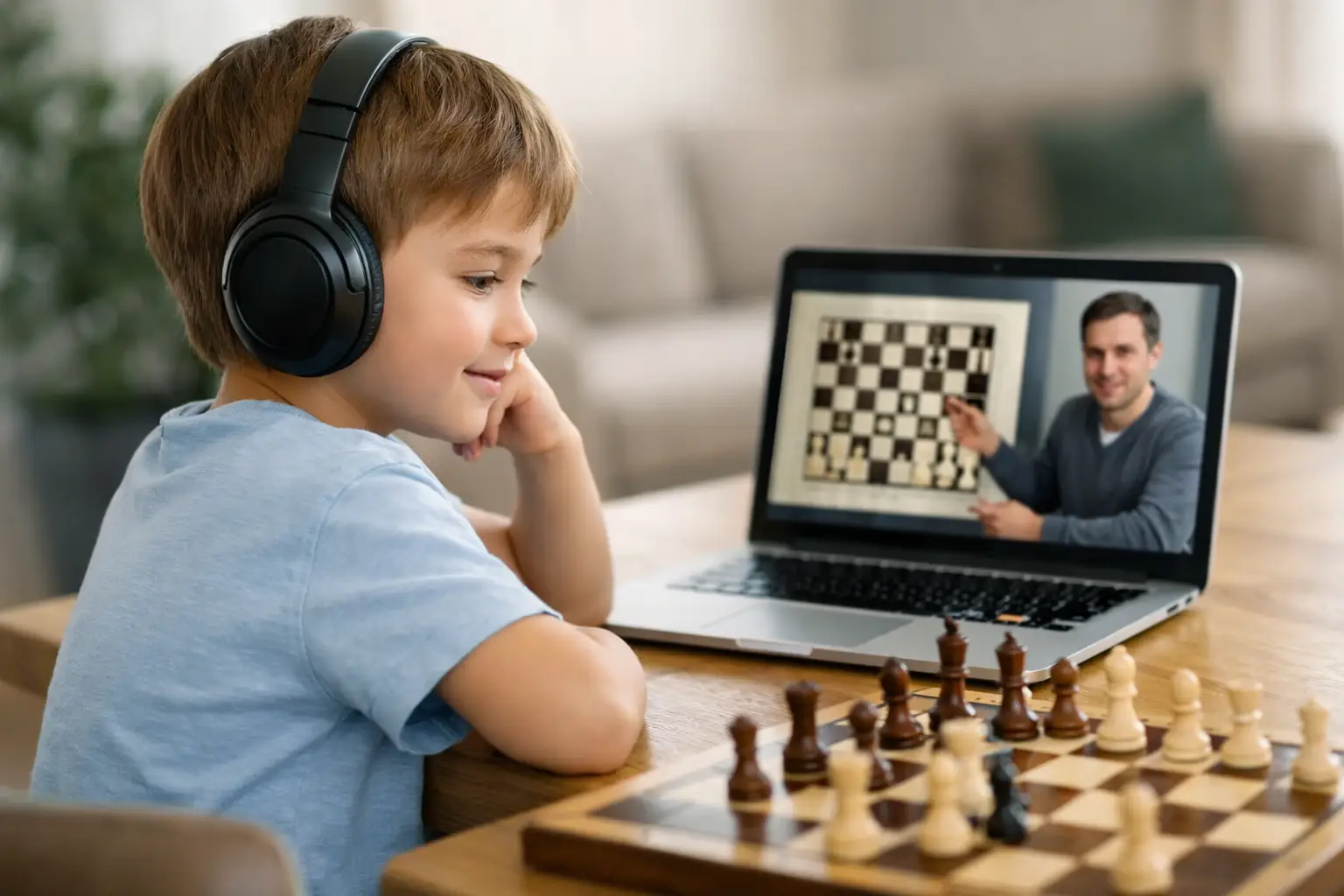
A child is five moves into a game, spots a fork, and grins before the coach says a word. That moment answers the question many parents start with: are online chess lessons effective? Yes, they can be - and for many children, they are every bit as effective as in-person lessons, sometimes more so. The difference is not the screen. The difference is the structure, the teacher, and how well the lesson fits the child.
Parents usually are not just asking whether chess can be taught online. They are asking whether their child will actually pay attention, improve steadily, and enjoy it enough to keep going. Those are the right questions. Online chess works best when it is live, interactive, and built around clear progress rather than passive watching.
Are online chess lessons effective when a child is just starting?
For beginners, online lessons can be an excellent fit. Chess is already played on a board with clear visual patterns, so it translates naturally to a digital format. A coach can share positions instantly, highlight key squares, demonstrate tactics, and move from explanation to practice without wasting time setting pieces up over and over.
That matters for young learners. Kids do better when lessons keep moving. In a strong online class or private session, there is very little downtime. The coach can shift quickly from rules to mini-games, from puzzles to guided play, and from review to the next skill. That pace helps beginners stay engaged while building confidence step by step.
There is another advantage for new players: comfort. Many children are more relaxed learning from home, in a familiar space, without the pressure of walking into a new classroom. That can make it easier for shy kids to ask questions, make mistakes, and try again.
Still, beginner success depends on the teaching style. A child who is simply placed in front of videos and left alone may lose interest fast. A child with a patient coach, clear goals, and regular interaction usually has a very different experience.
What makes online chess lessons effective?
The strongest online lessons are not just convenient. They are organized in a way that helps children improve faster.
Live instruction is the first big factor. Chess is full of small misunderstandings that can slow progress - how pieces coordinate, why a move is risky, when to trade, when not to. A live coach can catch those mistakes immediately and explain them in language a child understands.
Personalization is just as important. One child may need help with attention and board vision. Another may already know the rules and need opening habits, tactical patterns, or endgame basics. When lessons adjust to the student instead of forcing every child through the same material at the same speed, progress is usually much stronger.
Good online programs also create visible progression. Parents should be able to see what their child is learning and what comes next. That might mean mastering piece movement, then checkmate patterns, then tactical themes, then game analysis, then tournament prep. Children stay motivated when they can feel themselves moving forward.
Finally, engagement matters. Young students learn best when the coach keeps them involved. That means asking questions, letting them solve positions aloud, reviewing their actual games, and balancing challenge with encouragement. A child who feels seen and successful is much more likely to stick with chess long enough to become good at it.
Where online lessons beat in-person lessons
Some parents assume in-person instruction is automatically better. It is not always that simple.
Online lessons often save time and energy for families. There is no commuting, no rushing across town after school, and no losing an hour to logistics around a 45-minute class. That convenience sounds minor until you realize it often determines whether lessons happen consistently. And consistency is what drives progress.
Online teaching can also be more efficient for chess itself. Coaches can pull up puzzles instantly, annotate games in real time, and review mistakes move by move with the student. Many children actually learn positions more clearly on a digital board because the visuals are clean and focused.
For kids interested in competition, online learning also matches the way modern chess is played and studied. They get comfortable with digital boards, clocks, notation, and analysis tools that are part of the broader chess world.
There is also access. Online lessons let families work with strong coaches regardless of location. That is a major benefit, especially if local options are limited or inconsistent.
Where online chess lessons can fall short
Online learning is effective, but it is not magic. There are trade-offs, and honest answers help families make better decisions.
Some children need more hands-on support to stay focused, especially at younger ages. A four- or five-year-old may need shorter lessons, more movement between activities, and occasional parent help getting settled. Even older kids can drift if the lesson is too long or too lecture-heavy.
Screen fatigue is another real issue. If a child has already spent hours online for school, a poorly paced chess lesson can feel like one more thing to sit through. That is why lesson design matters so much. Interactive sessions with active participation feel very different from passive screen time.
There is also the question of fit. A great coach can make online learning lively and productive. A weak coach can make it flat. Parents should not judge the format by one bad experience. Often the issue is not that online chess does not work - it is that the teaching was not structured well for that child.
How parents can tell if an online chess program will work
The best signs are usually practical, not flashy.
Look for live, coach-led teaching rather than a library of videos. Look for individualized instruction or at least a clear sense that your child will not be treated like just another square on the board. Ask how the program tracks progress, how coaches handle beginners, and how lessons change as a child improves.
It also helps to ask what happens inside a session. Is the child only listening, or solving, speaking, playing, and reviewing? Active learning almost always works better.
Parent communication is another strong signal. Families do not need a long report after every class, but they should know what their child is working on and whether progress is happening. That builds trust and helps parents support practice at home without guessing.
A trial lesson is often the clearest test. When a child finishes a session excited, focused, and eager to play again, that tells you a lot. Strong programs make that first experience easy to evaluate because parents can see both the coach's style and the child's response.
Are online chess lessons effective for advanced players too?
Yes, especially when coaching becomes more targeted.
As children move beyond the basics, online lessons can be very powerful for opening preparation, calculation training, positional ideas, and game analysis. Advanced students benefit from reviewing their own tournament games with a coach who can explain not just what went wrong, but why.
That said, stronger players usually need more than casual weekly exposure. They need a training plan. That might include lesson work, puzzle practice, game review, and competitive play. Online coaching fits very well into that model because it allows focused instruction without adding travel and scheduling stress.
For tournament-minded kids, the key is not just playing more games. It is studying the right things at the right time. A coach who knows how to build that progression can make online instruction highly effective.
The real answer parents should use
So, are online chess lessons effective? They are effective when they are live, structured, personalized, and engaging. They are especially strong for children when the coach knows how to teach kids - not just how to play chess.
That is the part parents should keep in focus. Chess improvement does not come from the format alone. It comes from consistent lessons, a supportive teacher, and a learning path that makes sense for the child's age and level. For many families, online lessons make that easier, not harder.
At Savushkin Chess, that is exactly why the online model works well for children. When lessons are built around clear instruction, warm coaching, and steady progress, kids do not just log in. They learn, they improve, and they start seeing the board in a whole new way.
If you are deciding whether to try online chess for your child, look less at the screen and more at what happens through it. A good lesson should feel focused, encouraging, and active from the very first moves. When it does, the results usually follow.

Ready to see chess click for your child?
Book a free 20–30 minute trial lesson with one of our coaches — no commitment, no payment needed.


