Child Chess Coach Review Criteria for Parents
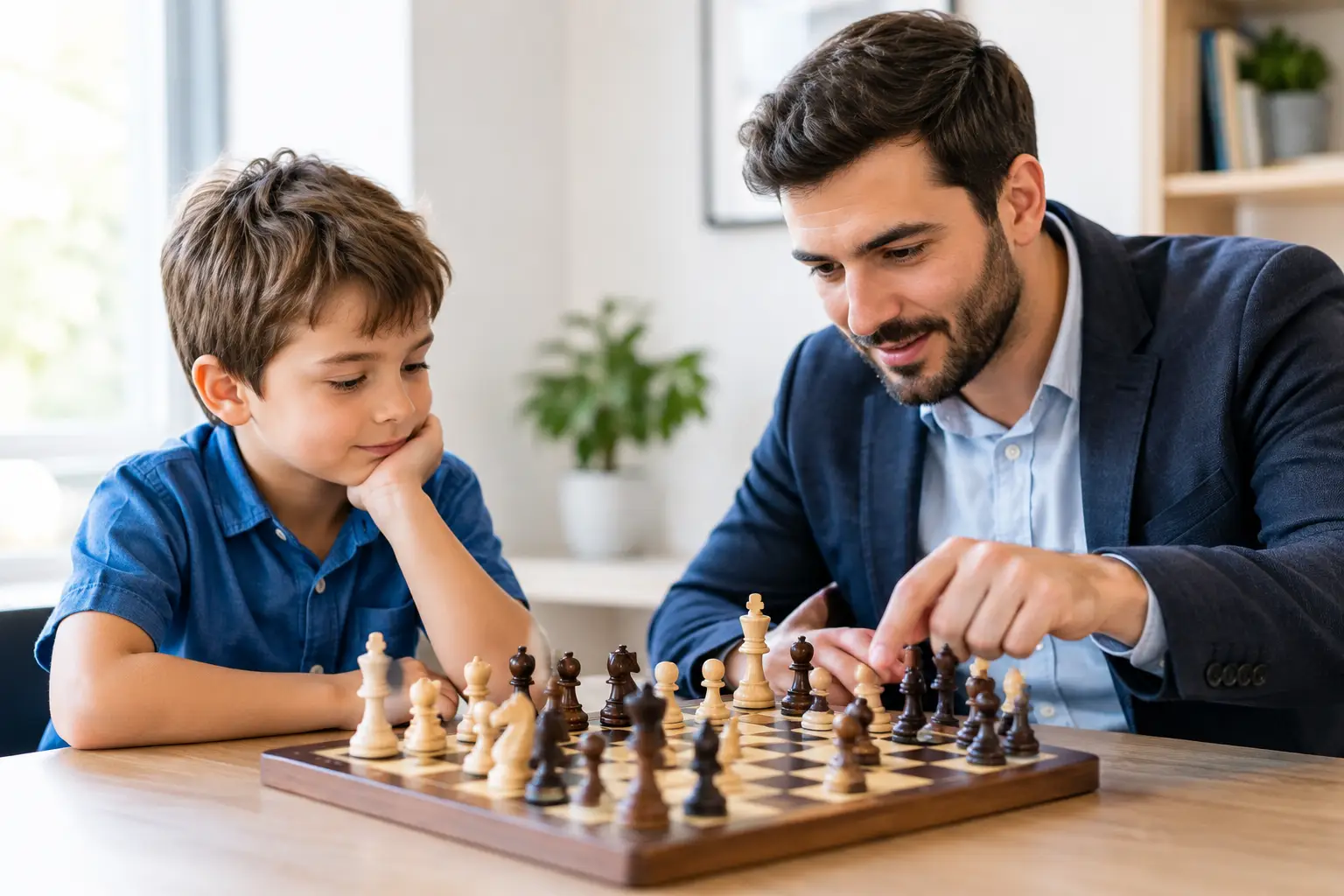
Your child may light up after winning a game one week and refuse to open a chessboard the next. That is why child chess coach review criteria should go beyond star ratings and big promises. The right coach does more than know chess well. They know how to meet a child at the right level, hold attention, build confidence after mistakes, and turn small wins into real progress.
Parents are right to be selective. A coach will shape not only how your child plays, but how they feel about learning a challenging skill. Here is what to look for before you book ongoing lessons.
Child Chess Coach Review Criteria That Matter Most
A five-star review is a helpful starting point, but it does not tell the whole story. Read the words behind the rating. The strongest reviews describe specific changes parents have seen: a child who can now focus through a full game, explain a basic opening idea, recover calmly after losing a piece, or enter a first tournament with confidence.
Look for patterns across several reviews rather than one glowing comment. If families repeatedly mention that the coach is patient, organized, responsive, and good at making lessons enjoyable, that is meaningful. If reviews only say “great teacher” without explaining why, ask more questions before committing.
Pay attention to whether the reviewer’s child is similar to yours. A coach who is excellent with ambitious tournament players may not be the best first instructor for a shy six-year-old beginner. Likewise, a coach who creates a wonderful introduction to chess may not be the right match for a motivated 13-year-old who needs advanced strategy and competition preparation.
Specific progress is more useful than general praise
The best parent feedback includes evidence. It might mention improved calculation, stronger checkmate patterns, better time management, or a child becoming more willing to think before moving. For younger beginners, progress may look different: sitting through a 30-minute lesson, remembering how pieces move, or learning to finish a game without becoming frustrated.
Results should feel believable. No coach can honestly guarantee that every child will become a champion in a few weeks. Chess growth is individual, and it depends on age, starting point, practice habits, and motivation. A trustworthy coach explains the path forward instead of selling instant transformation.
Look for reviews about the learning experience
Children learn faster when they feel safe asking questions. Reviews that mention encouragement after losses, clear explanations, and a coach who adapts to a child’s personality are especially valuable.
For online lessons, parents should also watch for comments about engagement. Does the coach use the board actively? Do they ask the child to explain ideas rather than lecture for the full lesson? Are puzzles, mini-games, and real positions used to keep the session lively? A child can have fun and still receive serious instruction. In fact, that combination is often what keeps them progressing.
Check the Coach Behind the Reviews
A coach’s playing background matters, especially once a child moves beyond the basics. But rating alone is not enough. Teaching chess to children is a separate skill.
Ask how the coach works with beginners, what age groups they teach, and how they assess a new student. A good first lesson should not feel like a test your child can fail. It should help the coach understand what your child knows, how they think, and what will make them want to return.
For a younger child, patience and simple language may matter more than advanced tournament credentials. For an experienced player preparing for rated events, you may want a coach with clear competitive experience and a plan for openings, calculation, game analysis, and tournament habits. The right choice depends on the goal.
It is also reasonable to ask about child-safety practices and parent communication. You should know who is teaching your child, how lessons are conducted, and how you will receive updates. Clear, professional answers are a positive signal.
What a Strong Coaching Plan Looks Like
Reviews can tell you whether families are happy. The coach’s process tells you whether that satisfaction has a foundation.
A quality program begins with an assessment, even if it is informal. A complete beginner needs a different starting point than a child who already knows a few openings from school chess club. Without an assessment, lessons can become too easy, too difficult, or disconnected from what the student actually needs.
After that, look for a learning plan with visible steps. Early lessons may cover piece movement, check, checkmate, basic tactics, and good opening habits. As a child develops, the focus can shift toward calculation, strategy, endgames, analyzing their own games, and tournament preparation.
The plan should be structured, but not rigid. A child who is fascinated by tactics may need extra puzzles before moving on. A child who loses interest after long explanations may benefit from shorter activities and more practical games. Good coaching adjusts the route without losing sight of the destination.
Progress should be visible to parents
You do not need a technical report after every lesson. You do deserve a clear sense of what your child is learning and what comes next. Useful updates might include a new skill covered, a puzzle theme to practice, a game habit to work on, or a milestone the child is approaching.
Be cautious if the coach offers no direction beyond “we played some games.” Playing is essential, but coaching should help a child understand what happened in those games. The lesson needs a purpose.
At Savushkin Chess, that purpose begins with understanding the child first, then building a personalized progression that keeps chess enjoyable while developing practical skills.
Evaluate the Trial Lesson, Not Just the Sales Conversation
A trial lesson is often the clearest way to judge fit. Before the session, tell the coach what you hope chess will provide: a fun intellectual activity, better focus, stronger competitive skills, or tournament readiness. A thoughtful coach will listen rather than give the same pitch to every family.
During the lesson, notice your child’s body language. Are they involved? Do they get chances to answer, make choices, and think aloud? Does the coach correct mistakes kindly and specifically? Children do not need constant praise, but they do need to feel that mistakes are part of learning.
Afterward, ask your child a simple question: “Would you want another lesson with this coach?” Then ask what they remember. Excitement is a good sign, but so is being able to name one new idea. Enjoyment without learning will eventually stall. Instruction without enjoyment will be hard to sustain.
Consider Format, Scheduling, and Value
A wonderful coach is only helpful if lessons fit family life. Check available lesson lengths, time zones, rescheduling policies, and whether the coach can provide a consistent weekly time. Younger children often do best with focused 30-minute sessions. Older children or tournament-focused players may benefit from 45 or 60 minutes, especially when game analysis becomes more detailed.
Price matters, but the lowest rate is not always the best value. Consider what is included: individual attention, a tailored plan, parent updates, practice recommendations, and continuity with the same coach. Group classes can be social and affordable, while one-on-one lessons allow the coach to respond directly to your child’s strengths and gaps. Neither format is automatically better.
Ask for straightforward package details before you purchase. You should understand the lesson length, number of sessions, expiration rules, cancellation terms, and whether there is pressure to commit immediately. Clear pricing and no fine print make it easier to focus on the decision that matters: whether this coach is right for your child.
Watch for These Warning Signs
A few concerns do not automatically mean a coach is unsuitable, but several together deserve attention. Be careful with promises of guaranteed ratings, pressure to buy a large package before a child has tried a lesson, vague answers about experience, or teaching that feels like a one-way lecture.
Also notice if a coach dismisses your child’s pace. Some children advance quickly. Others need repetition, reassurance, or a break after a difficult loss. Progress is not less valuable because it is gradual. The goal is a child who keeps thinking, keeps learning, and wants to come back to the board.
Choose a coach who can see both the player your child is now and the player they can grow into. One patient, well-planned lesson at a time can turn curiosity into confidence - and confidence into a lasting love of chess.

Ready to see chess click for your child?
Book a free 20–30 minute trial lesson with one of our coaches — no commitment, no payment needed.