A Beginner to Tournament Chess Example for Kids
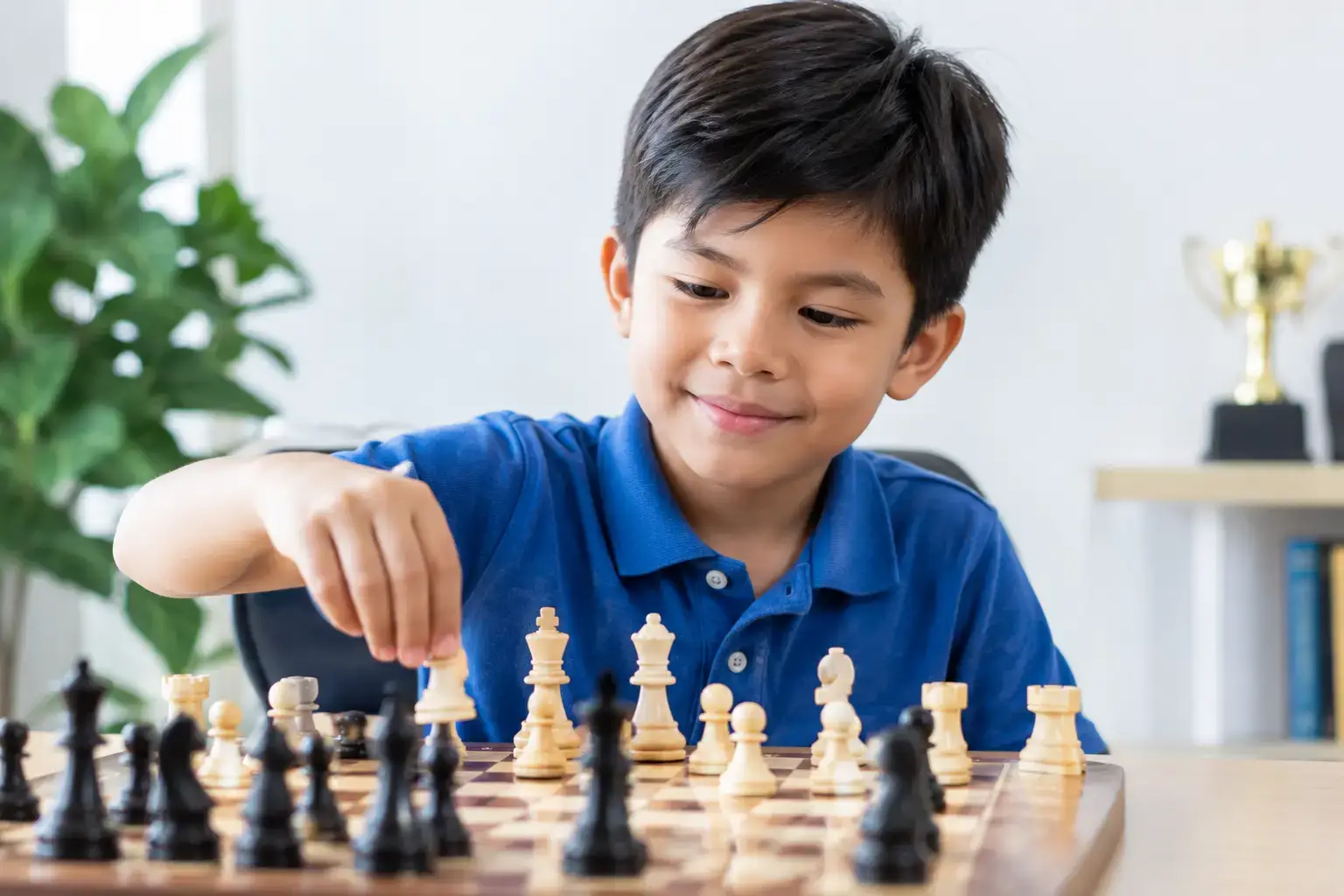
A child does not need to be a chess prodigy to sit down at their first tournament board. They need a clear path, patient coaching, and enough real-game experience to feel prepared rather than overwhelmed. This beginner to tournament chess example follows a realistic progression for a young player, showing what parents can expect between a child's first lesson and a first rated or school tournament.
Meet Maya, age 8. She knows how the pieces move because her grandfather taught her at home, but she rushes, forgets to look at her opponent's threats, and gets discouraged after losing a queen. Her story is not a promise that every child will progress on the same schedule. It is an example of what steady, well-matched instruction can look like when chess stays fun and goals stay clear.
Beginner to Tournament Chess Example: Maya's Path
Month 1: Building the board basics without boredom
Maya's first coaching sessions are not spent memorizing long opening lines. She needs the foundations that let every later lesson make sense: piece movement, legal moves, check, checkmate, stalemate, and the value of each piece. Her coach also watches how she thinks. Does she learn best by seeing a position, talking it through, or playing short games? Can she focus for 30 minutes, or does she need a more active lesson pace?
For a child this age, confidence matters as much as correctness. Instead of hearing only that a move is wrong, Maya hears what she could check first: “Is any piece hanging?” and “What is your opponent attacking?” Those simple questions begin to slow her down.
At home, her family keeps practice short. Ten minutes of puzzles or one focused game is usually more productive than asking for an hour when she is tired. The goal is to make chess part of a healthy routine, not another source of pressure.
Months 2 and 3: Turning rules into useful habits
Once Maya can play a complete legal game, the work becomes more interesting. She learns why developing pieces early matters, why the king needs safety, and why moving the same piece repeatedly can leave the rest of the team behind. She practices basic checkmates with a queen and rook, then begins to recognize common tactical ideas such as forks, pins, and simple discovered attacks.
This is often the stage when parents see a meaningful change. A beginner may still lose games, but the losses are no longer random. Maya can explain that she missed a knight fork or opened a line toward her own king. That reflection is progress. It helps a coach choose the next lesson and helps the child understand that a mistake is something to learn from, not proof that they are “bad at chess.”
Her coach gives her a simple thinking routine before each move: check for checks, captures, and threats. At first, Maya needs reminders every few moves. With repetition, she starts using the routine on her own. That habit is one of the biggest differences between casual play and tournament-ready play.
Months 4 and 5: Learning to compete kindly
A child can know tactics and still feel unready for a tournament. Tournament chess has its own skills: using a clock, recording moves when required, staying seated, handling a loss, and beginning the next game with a fresh mindset.
Maya starts playing longer practice games during lessons. Her coach introduces a clock gradually, perhaps with a comfortable time control at first. The purpose is not to make her anxious. It is to teach her that she has time to think and that she should not spend all of it on one move.
She also learns practical tournament etiquette. She says good luck before the game, keeps comments until the game is over, raises her hand if she needs help from an arbiter, and shakes hands afterward. These details can sound small, but they give children a sense of control in an unfamiliar room.
There is a trade-off here. Entering an event too early can make a sensitive child feel defeated if every game is confusing. Waiting until a child is “perfect,” however, means waiting forever. A good first-tournament standard is simpler: the child can play independently, understands basic checkmate and stalemate, can use a clock with support, and is willing to try even if they might lose.
What Tournament Readiness Actually Looks Like
Tournament readiness is not a specific rating or a certain number of trophies. It is the ability to manage the experience. Maya is ready when she can set up the board, make legal moves, notice obvious one-move threats more often, and stay composed after a mistake.
Her coach may also use practice positions to test readiness. Can Maya find a mate in one? Can she avoid leaving a queen undefended? Does she understand that being ahead in material means she should trade carefully and protect her king? These are practical skills that show up in real games.
Just as important, Maya has begun reviewing her games. After a practice game, she and her coach identify one good decision and one moment to improve. They do not analyze every move until chess feels like homework. One clear lesson from each game is enough to build momentum.
For parents, the best sign is often emotional rather than technical. A tournament-ready child says, “I want to try,” not “I know I will win.” That willingness to compete, learn, and return after a hard game is a valuable result in its own right.
Maya's First Tournament Day
Maya enters a local scholastic event with several rounds. Her parents know the day may be long, so they arrive early, bring water and a simple snack, and remind her that the goal is to use her thinking routine. Winning is exciting, but it is not the only measure of success.
Before round one, Maya feels nervous. That is normal. Her coach has prepared her for this feeling by explaining that nearly everyone in the room is concentrating hard, including experienced players. Nerves do not mean she is unprepared. They mean the game matters to her.
In her first game, Maya develops her pieces, castles, and spots a fork that wins a rook. Later, she gets excited and misses a threat to her queen. She loses the game. It stings, but she finishes respectfully. Between rounds, her parents avoid giving a long post-game lecture. They offer a snack, ask whether she is okay, and save detailed analysis for later.
By the end of the event, Maya has one win, two losses, and a draw. The score is less important than what happened at the board: she used the clock, stayed until each game ended, recovered after mistakes, and recognized tactics she had practiced. She has crossed the gap from playing chess to competing in chess.
A first tournament can also reveal the next training priorities. Maybe Maya needs more opening discipline, stronger endgame knowledge, or help managing time pressure. This is exactly why tournament play is useful. It gives a child and coach honest information that puzzles alone cannot provide.
How Parents Can Support Progress Without Taking Over
Parents do not need to become chess experts to be helpful. The strongest support is consistent and calm. Ask your child what they enjoyed in a game before asking what went wrong. Praise effort that is specific: taking time before a critical move, showing good sportsmanship, or returning to the board after a difficult loss.
Try not to analyze every game immediately after it ends. Young players often need a break before they can learn from a loss. A coach can later turn the game into a focused lesson, explaining one or two key moments in language the child understands.
It also helps to match expectations to the child. A 5-year-old may need short lessons, playful mini-games, and a longer runway before competition. A motivated 12-year-old may be ready to play tournament games sooner, especially if they already enjoy strategy and can concentrate for longer periods. Progress depends on age, prior experience, practice habits, and temperament.
At Savushkin Chess, personalized lessons can make that path clearer because a coach can adjust the pace, choose the right practice games, and communicate progress directly with parents. The aim is never to rush a child into competition. It is to help them arrive feeling capable, supported, and excited to play.
The best first tournament memory is not always a medal. Sometimes it is a child packing up the pieces after a tough round, looking up at a parent, and saying, “Can I play another one?”

Ready to see chess click for your child?
Book a free 20–30 minute trial lesson with one of our coaches — no commitment, no payment needed.