7 Beginner Chess Mistakes Children Make Early
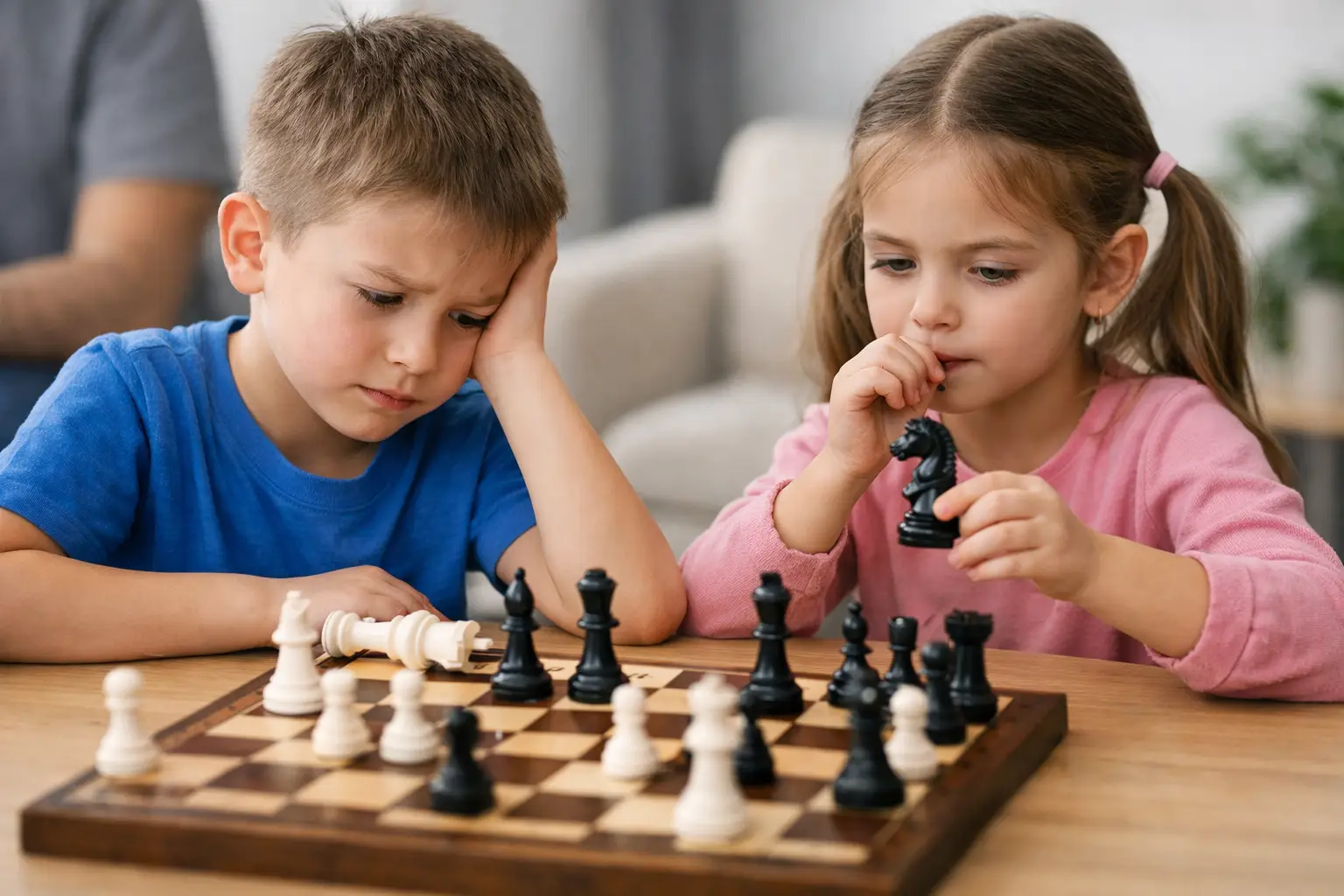
A child proudly spots a checkmate pattern, then loses their queen to a pawn on the very next move. That is not a sign they are “bad at chess.” It is exactly how learning works. The beginner chess mistakes children make are usually not about intelligence or effort. They come from trying to process a new board, new rules, and a new opponent all at once.
For parents, the goal is not to prevent every mistake. It is to help a child notice what happened, stay encouraged, and build one useful habit at a time. Those habits turn early blunders into real progress.
Why Mistakes Are Part of a Child’s Chess Growth
Chess asks children to pause before acting, imagine consequences, and recover calmly when a plan does not work. Those are big skills, especially for younger players who naturally want to move quickly and see what happens.
A four- or five-year-old may be learning how each piece moves. An older beginner may know the rules but struggle to see an opponent’s threat. Both children need clear instruction, repetition, and games that feel achievable. The right response after a mistake is not, “You should have seen that.” Try, “What changed on the board after that move?” This keeps the focus on learning rather than embarrassment.
Here are seven common beginner chess mistakes children make and practical ways to help.
1. Moving Too Fast Without Checking the Board
Many children see a move they like and play it immediately. They may spot a chance to capture a piece, give check, or move a favorite knight forward. What they miss is the opponent’s simple reply.
This is one of the most common beginner chess mistakes children make because fast play feels exciting. A child is often thinking about their own idea, not yet scanning the whole board.
Teach a short pre-move routine: stop, look, and ask three questions. Is my king safe? Is the piece I am moving protected? What can my opponent capture or check after my move? Younger children can start with just one question: “Can they take my piece?”
Do not expect this habit to appear in every game right away. A gentle reminder before a few moves is more effective than correcting every decision afterward.
2. Giving Away Pieces for Free
A “free piece” is a piece that can be captured without the opponent giving up something of similar value in return. Beginners often leave a bishop, knight, or queen where an enemy pawn or piece can take it.
Children may know that the queen is valuable but not yet understand why a knight left on an unprotected square can matter just as much. Rather than introducing too many rules at once, use simple language: every time you move a piece, check whether it has a defender.
It also helps to explain that not every capture is a good capture. If a child takes a pawn but loses their queen in return, they have traded too much. Over time, they can learn basic piece values: pawn 1, knight and bishop 3, rook 5, and queen 9. These numbers are guides, not magic. Position and checkmate threats can change the value of a move, but basic values give beginners a useful starting point.
3. Bringing the Queen Out Too Early
The queen is exciting. It moves far, gives checks, and looks like the strongest piece on the board. That is exactly why children often move it out early and chase pawns around the board.
The problem is that an early queen can become a target. The opponent develops smaller pieces while the queen keeps moving again and again. The child may feel active but fall behind in getting their own king safe.
A better opening goal is simple: develop knights and bishops, control the center, and castle when possible. You do not need to teach a long list of named openings to make this stick. Set up a few short practice positions and ask, “Which piece can join the game without getting in the way?” This makes development feel like teamwork among the pieces.
4. Forgetting to Protect the King
Young players often attack first and think about king safety later. They may leave the center open, move the pawns in front of their king too far, or delay castling until it is no longer possible.
Castling can feel like a small rule to memorize, but it gives children a clear purpose: move the king to a safer place and bring the rook into the game. Explain that chess is not only about attacking. Before a team can attack well, it needs a safe home base.
There is a trade-off here. A child should not castle automatically into danger just because they learned it is usually good. Still, in most beginner games, early castling is a reliable habit that prevents many painful checkmates.
5. Missing One-Move Threats
A child may be planning a clever attack while their opponent is threatening checkmate, a queen capture, or a fork on the next move. This happens because beginners tend to see their own plans first.
Build the habit of asking, “What is my opponent threatening?” after every move. At first, this question may slow the game down. That is okay. Thoughtful chess is supposed to be slower than impulsive chess.
Short puzzle practice is especially useful here. Start with positions where there is only one immediate threat or tactic to find. A child who learns to recognize checks, captures, and threats will make faster progress than one who only memorizes opening moves.
6. Not Using All the Pieces
It is common to see a beginner move the same knight several times while both bishops, a rook, and the other knight wait at home. Children often repeat moves because one piece feels familiar or because they are chasing an opponent’s piece.
A helpful opening benchmark is to try to develop several pieces before moving the same piece again, unless there is a clear reason. Ask your child after the opening, “Which of your pieces are still sleeping?” This is a fun visual that younger players understand quickly.
There are exceptions. Sometimes a piece must move again to avoid being captured, give check, or win material. The lesson is not “never move a piece twice.” It is “make each move have a reason.”
7. Resigning Emotionally After a Mistake
One lost queen can make a child want to quit, restart, or declare the game unfair. This is understandable. Chess makes mistakes visible, and that can be frustrating for children who care deeply about doing well.
Help them learn that a lost piece does not always mean a lost game. Encourage them to look for the next best move. Can they protect their king? Can they win back material? Can they create a threat? Even when the position is difficult, finishing the game teaches resilience and gives a coach or parent something concrete to review.
Avoid turning every loss into a long lecture. Choose one moment from the game and celebrate one thing the child did well, too. Maybe they remembered to castle, found a check, or took time before a key move. Confidence grows when effort is noticed alongside results.
How Parents Can Help Without Taking Over
You do not need to be a strong chess player to support your child. A calm routine matters more than perfect analysis. After a game, ask what they enjoyed, what surprised them, and what move they would change. Let them explain the board in their own words before offering an answer.
Regular, focused practice is usually better than a long session once in a while. Ten or fifteen minutes of puzzles, piece-movement review, or a slow game can be enough for a young beginner. For children who are ready to compete, structured coaching adds accountability and helps them work on the right skill at the right time instead of repeating the same errors.
At Savushkin Chess, coaches use child-friendly lessons to turn these moments into specific goals, whether a student needs to slow down, spot threats, or feel more confident in tournament games.
The next time your child drops a piece, resist the urge to fix the whole game. Help them take one breath, find one lesson, and make the next move with more care. That is where stronger chess habits begin.

Ready to see chess click for your child?
Book a free 20–30 minute trial lesson with one of our coaches — no commitment, no payment needed.