10 Best Chess Exercises Kids Can Do at Home
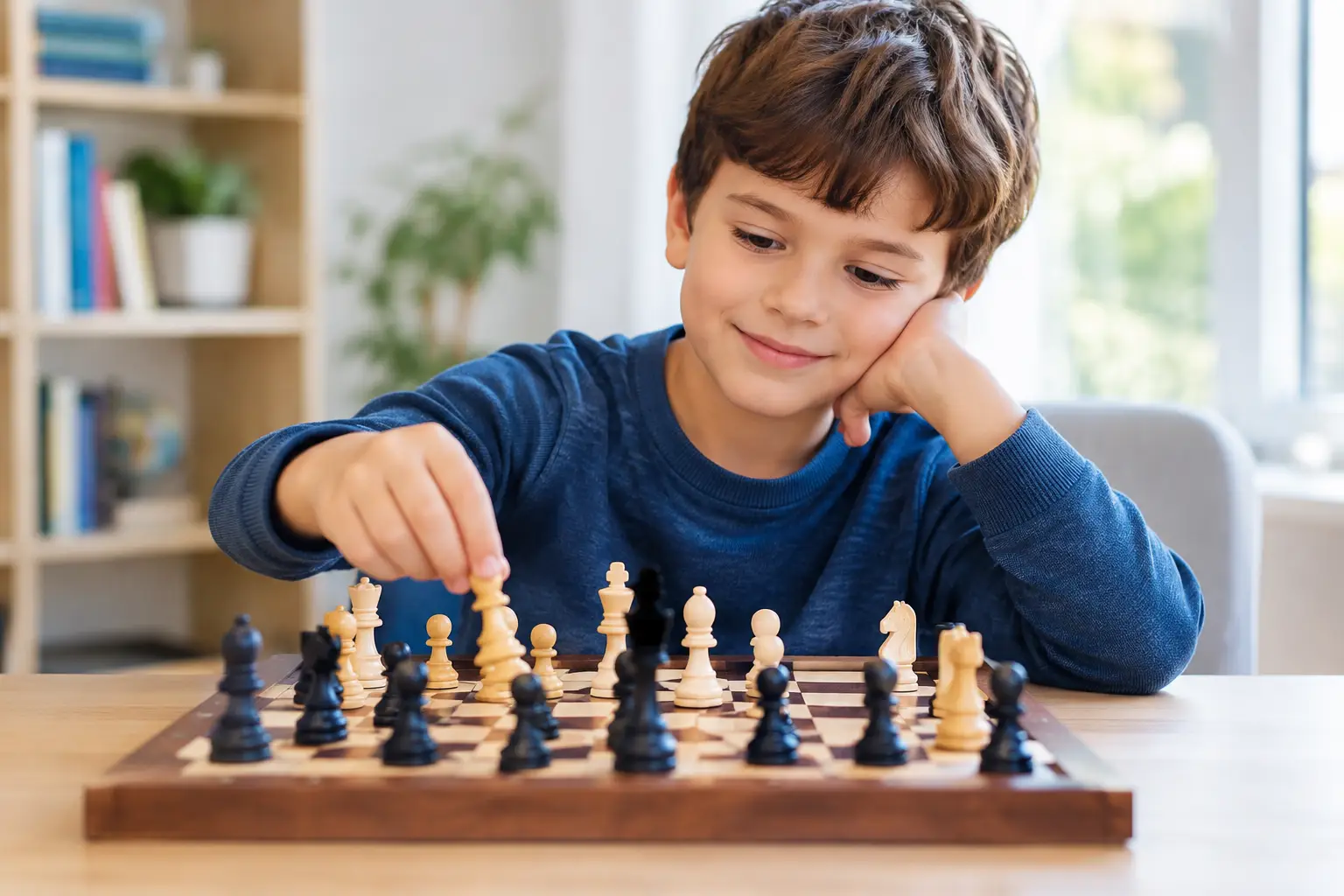
A child can know how every piece moves and still freeze when an opponent leaves a queen hanging. That gap is where the best chess exercises kids can practice make a real difference. Short, focused activities teach children to spot patterns, slow down before moving, and feel proud when they solve a position on their own.
For most young players, a 10-minute chess exercise is more effective than a long lecture or an unfocused hour of online games. The goal is not to pile on worksheets. It is to make each activity clear, achievable, and just challenging enough that your child wants to try one more.
Best Chess Exercises Kids Need First
The right exercise depends on a child’s current level. A brand-new player needs confidence with the board and the pieces. A child who already plays full games needs help noticing threats, planning simple combinations, and reviewing mistakes without feeling discouraged.
Start with one or two exercises at a time. Repeat them over several days, then raise the difficulty once your child is getting most answers right. Consistency beats cramming, especially for children ages 4 to 10.
1. The piece-movement challenge
Set up a single piece on an empty board and give your child a target square. Ask, “Can the bishop get there in one move?” Then change the piece and the target. Keep the tone playful: the knight can be a jumper, while the rook is a train that only travels on straight tracks.
This simple exercise prevents a common beginner problem: children understand the rule when it is explained, but forget it during a real game. For younger kids, use only one piece type per round. Older beginners can identify every legal move from a square before choosing the target.
2. Pawn promotion races
Place one white pawn and one black pawn on opposite sides of an otherwise empty board. Let each player move one pawn per turn, racing to promotion. Soon, add a king that can stop a pawn or a rook that can give checks.
Pawn races are exciting because the result is easy to see. They also introduce an advanced idea in a child-friendly way: tempo. A child begins to understand that one move can be the difference between getting a new queen and losing the race.
3. Find the attacked piece
Set up a position with one unprotected piece under attack. Ask your child to point to the piece that is in danger before asking what to do about it. At first, do not require the best move. Simply noticing the threat is the win.
Many children move the piece they want to use rather than the piece their opponent can capture. This exercise builds the habit of checking the whole board. Try the same question before every practice game: “What is my opponent attacking?”
4. One-move checkmate puzzles
One-move mates are among the best chess exercises for kids because they reward careful looking without taking too long. Set up a king near the edge of the board, place a few supporting pieces, and ask your child to find checkmate in one.
Teach the difference between check and checkmate as you go. After your child finds a move, have them explain why the enemy king cannot capture the checking piece, run away, or block the attack. That explanation turns a lucky answer into real understanding.
5. Capture or protect?
Create a small position with two choices: a tempting capture and a move that saves or protects a more valuable piece. Ask your child which move they would play and why. If they choose the capture, let them see what happens next.
This is a gentle way to teach piece value and trade-offs. Children do not need to memorize every point value immediately, but they should gradually recognize that losing a queen for a pawn is usually not a good deal. Use simple language: “Would you trade your strongest helper for their smallest helper?”
6. The knight’s tour mini-game
Put a knight in the center of an empty board. Challenge your child to visit a series of marked squares without landing on the same square twice. For a younger child, give them three destinations. For an older child, make it a race against a timer or ask them to capture a line of pretend coins.
Knights are tricky because they do not move in straight lines. This game helps children visualize the L-shape until it feels natural. It also improves board awareness, which carries over to forks and other tactical patterns later.
7. Check, capture, threat
Before moving in a practice position, ask your child to look for three things in this order: checks, captures, and threats. A check attacks the king. A capture wins material. A threat creates a problem the opponent must answer on the next move.
At first, sit beside your child and ask the questions aloud. Over time, encourage them to whisper the checklist to themselves. This is one of the most useful routines for tournament-bound players because it replaces random moves with a repeatable thinking process.
8. Play from a small starting position
Full chess games can overwhelm beginners. Instead, begin with kings, a few pawns, and one or two pieces each. A rook-and-pawn game, for example, teaches attacking, defending, and promotion without 32 pieces competing for attention.
Small games also allow more repetition. Your child might play three short rook games in the time it takes to finish one full game. After each one, ask a single question: “What move helped you most?” Keep feedback specific and encouraging.
9. Replay one key moment
After a game, do not analyze every move. Choose one moment where your child lost a piece, missed a check, or made a strong decision. Reset the board to that position and ask, “What did you notice then?” Next, ask, “What would you look for now?”
This exercise teaches children that mistakes are information, not a verdict on whether they are good at chess. A patient coach can guide this process, but parents can do it too by staying curious rather than critical. The goal is one useful lesson your child can carry into the next game.
10. The timed focus round
Give your child a simple puzzle or position and set a short timer, usually one to three minutes. The rule is that they cannot touch a piece until they have named what they see: checks, loose pieces, and possible captures.
The timer should create focus, not pressure. If your child becomes frustrated, remove it and return to untimed puzzles. For a child who rushes moves, however, this exercise can build the valuable habit of pausing before acting.
How Parents Can Make Chess Practice Stick
Keep the routine predictable. Ten to fifteen minutes after homework, before dinner, or during a quiet weekend morning is enough. A visible progress chart can help younger children, but praise should focus on effort and thinking: “You checked for threats before moving,” is more useful than, “You are so smart.”
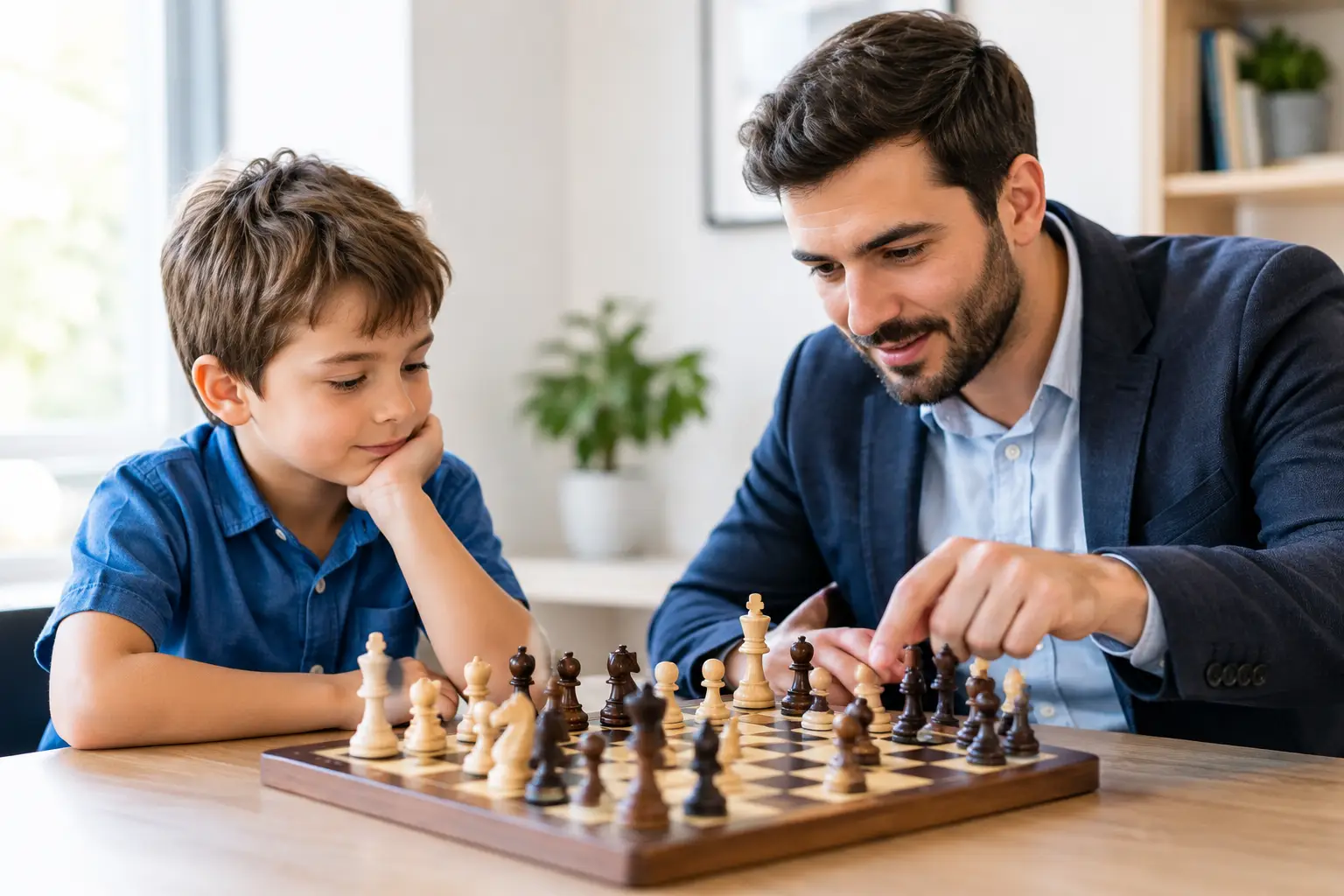
Avoid correcting every mistake during a game. Interrupting too often can make chess feel like a test. Let your child finish the idea, then explore the position together afterward. If they are winning easily, add a challenge. If they are losing interest, simplify the board or return to a favorite mini-game.
Children also benefit from playing different opponents. Parents, siblings, friends, and a skilled instructor each create different learning opportunities. At Savushkin Chess, live lessons use this same principle: clear structure, age-appropriate challenges, and coaching that helps children understand not only what move to play, but why it works.
When Exercises Should Lead to Real Games
Exercises build patterns, but games show whether those patterns are becoming habits. Once your child can spot basic attacks and one-move mates, mix short practice games into the week. Use a little extra time after each game for one positive observation and one position to revisit.
The best progress often looks quiet at first: fewer pieces left undefended, more thoughtful pauses, and a child who can explain a move with confidence. Keep the board accessible, keep the sessions short, and let each small success make them eager to sit down for the next one.

Ready to see chess click for your child?
Book a free 20–30 minute trial lesson with one of our coaches — no commitment, no payment needed.