Chess Confidence Building for Kids: 7 Steps
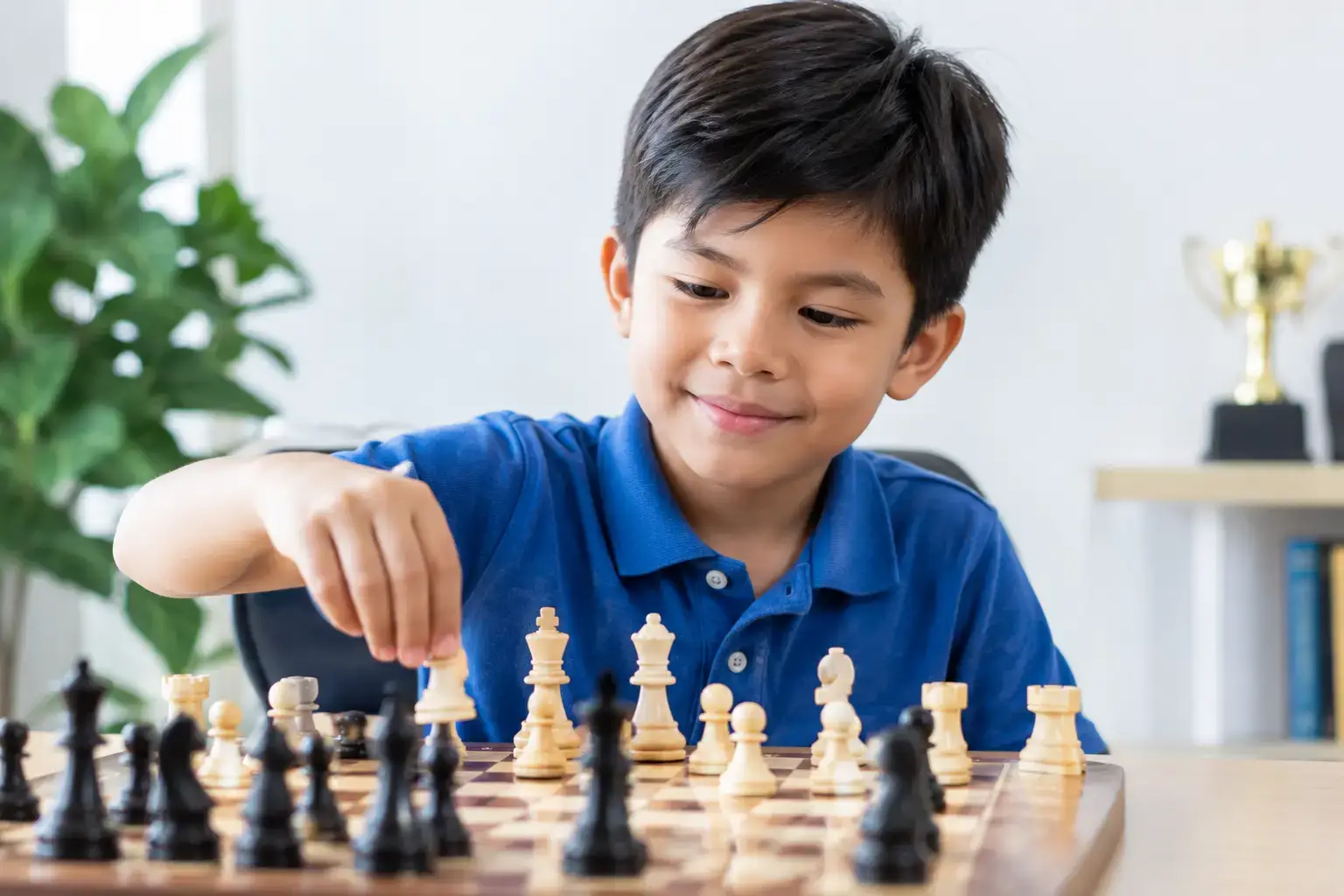
A child stares at the board, sees an opponent’s move, and suddenly says, “I don’t know what to do.” That moment is not proof that they are bad at chess. It is the exact moment when chess confidence building for kids begins.
Confidence in chess is not loudness, a winning streak, or pretending not to care after a loss. It is the willingness to think, choose a move, learn from the result, and sit down for the next game ready to try again. For parents, that is a far more valuable goal than collecting quick wins.
Why Chess Can Feel Personal to Kids
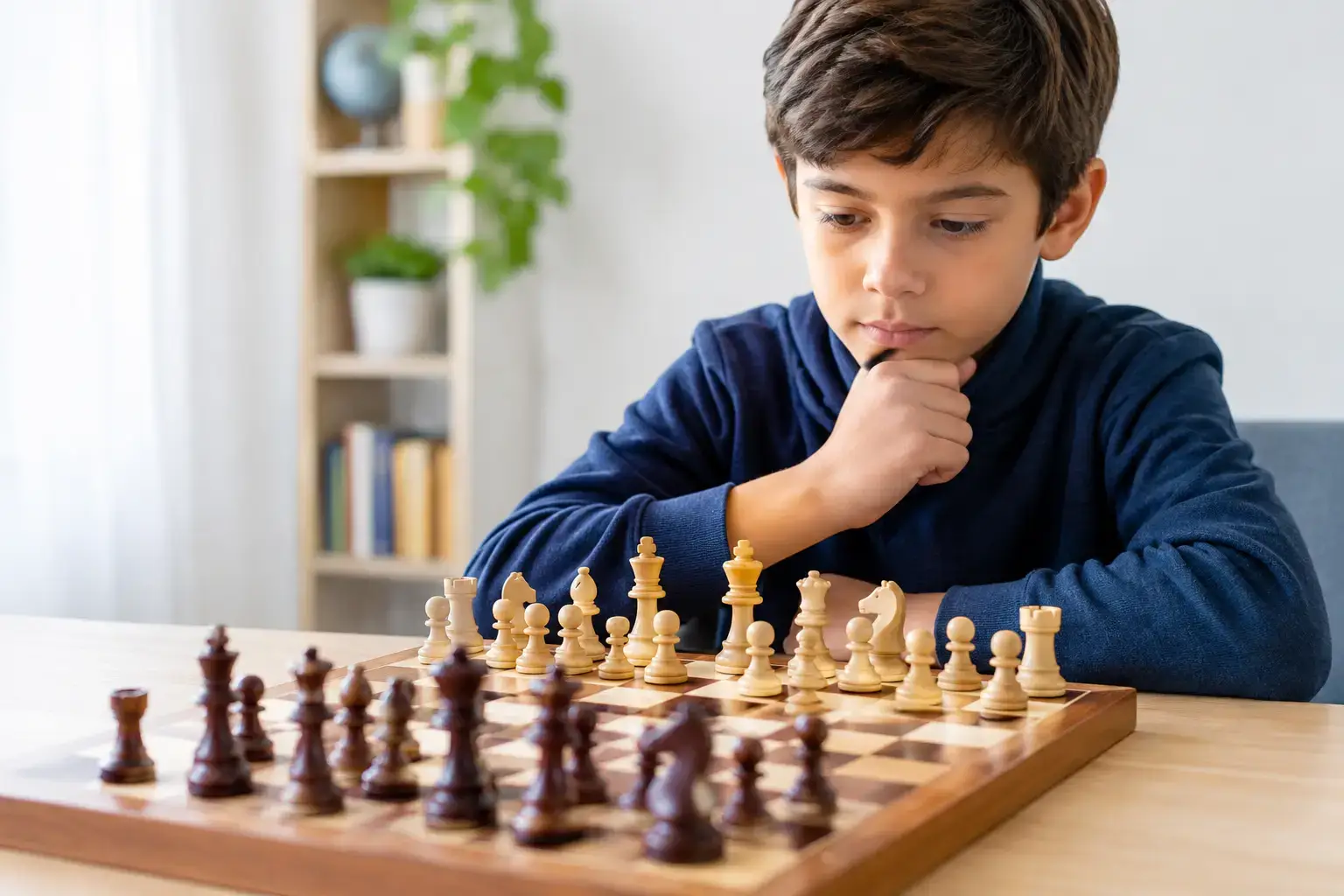
Chess puts a child’s decisions right on the board. When a move loses a piece, there is no teammate to share the responsibility. Younger players can take that personally, especially when they are still learning how to handle frustration.
That is also why chess can be such a powerful confidence-building activity. Every game gives children a safe, structured way to practice making decisions under pressure. They learn that a mistake is information, not an identity. With the right support, a child who once froze after losing a queen can learn to pause, look for the best next move, and keep playing.
The key is not protecting children from every difficult game. It is giving them an experience level that is challenging without being discouraging. A total beginner who repeatedly plays much stronger opponents may decide chess is not for them. A child who only plays games they can win easily may never build resilience. Progress lives in the middle.
7 Ways to Build Chess Confidence in Kids
1. Start with positions they can understand
Children gain confidence when they know what they are trying to do. Early lessons should not feel like a flood of rules, openings, and complicated vocabulary. Begin with the basics: how the pieces move, how to protect them, how to check for threats, and how to spot a simple checkmate.
A child who can confidently answer, “What is my opponent threatening?” has a useful tool for every game. That is more motivating than memorizing ten moves of an opening they do not understand.
2. Make small progress visible
Adults often see improvement over months. Children need to see it sooner. Point out specific gains: “Last week you forgot to castle. Today you remembered on your own,” or “You stopped and checked whether your knight was safe before moving it.”
Praise should be accurate. Saying “You’re a genius” after one good move can create pressure to prove it again. Saying “You took your time, checked the board, and found the fork” teaches a child what they did well and how to repeat it.
A simple progress path also helps. When children know they are moving from piece safety to checkmates, then tactics, then game planning, chess feels learnable rather than mysterious.
3. Teach a reset after mistakes
Every young player will blunder. The question is what happens next.
A calm reset can be as simple as three questions: What changed? What is my opponent threatening now? What is my best move from here? This turns a disappointing moment into a thinking task.
Parents can help by avoiding instant analysis during an emotional loss. If a child is upset, start with, “That was a tough game. Do you want a minute, or do you want to find one thing you did well?” Once emotions settle, look at one key moment rather than reviewing every error.
4. Let children make their own moves
It is tempting to point at a better move when you can see it. But if adults solve every position, children learn that the board belongs to someone else.
Instead, ask a helpful question: “Which pieces are attacked?” “Do you have any checks?” “What happens if you move there?” These prompts guide their thinking without taking away ownership. Even when their chosen move is not best, they are practicing the habit that creates independent players.
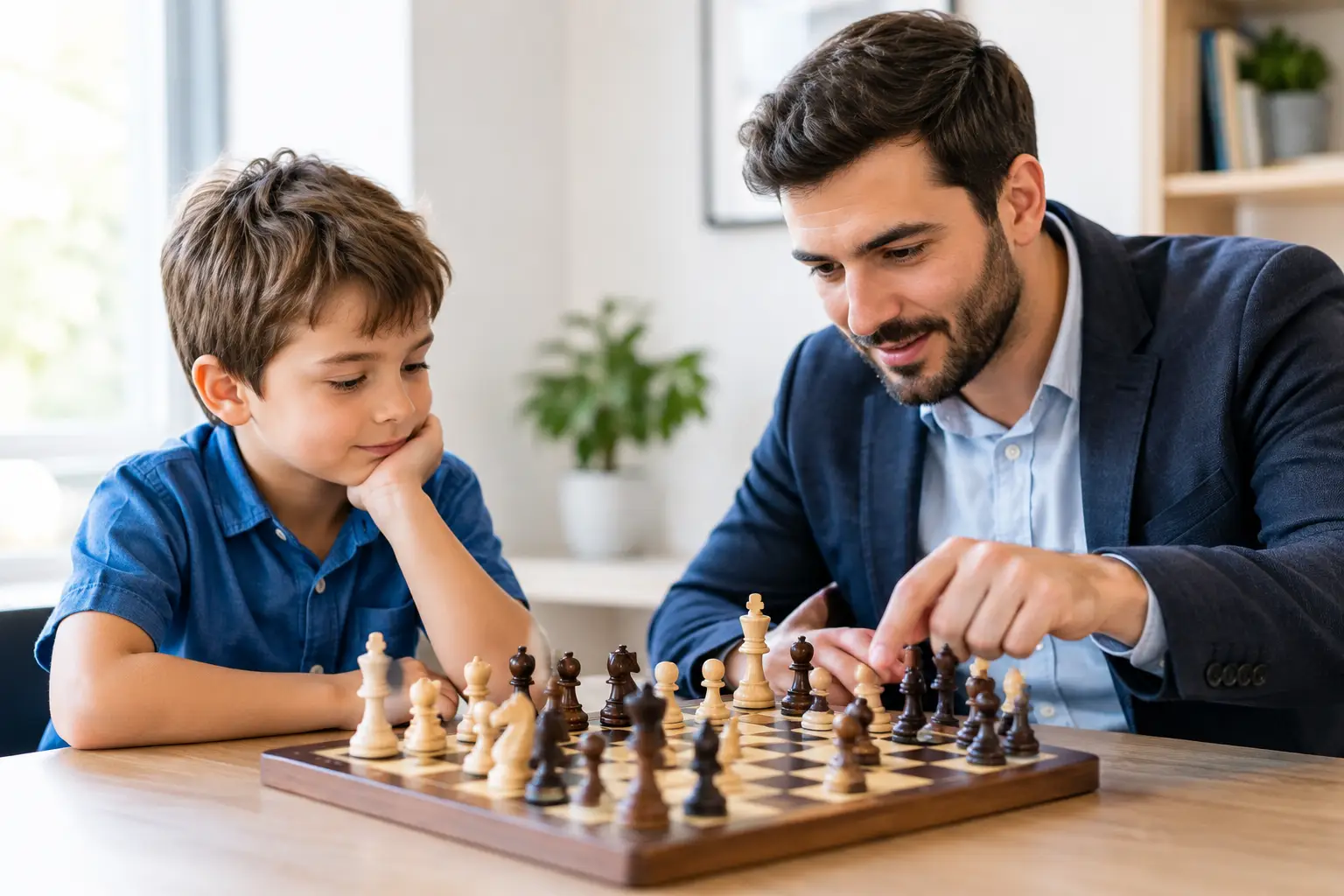
This matters at home and in lessons. A good coach gives clear instruction, then creates space for the child to calculate, choose, and explain their idea.
5. Balance fun games with purposeful practice
Confidence grows faster when chess is enjoyable. Puzzle races, mini-games, checkmate challenges, and short games can make difficult skills feel approachable. For a four- or five-year-old, a playful activity may be the best route to learning piece movement and attention. For an older child preparing for tournaments, reviewing a serious game may be more motivating because they can connect the lesson to a real goal.
It depends on the child. Some kids want competition right away. Others need a low-pressure start before they are ready to use a clock or play unfamiliar opponents. The right pace keeps the child engaged while still moving forward.
6. Treat losses as part of training
A winning record can feel good, but it does not tell the whole story. A child may play an excellent game and still lose. Another may win because an opponent missed an easy move. If the only question after chess is “Did you win?” children can start avoiding stronger competition.
Try asking what they noticed, what surprised them, or where they felt proud of their thinking. Then choose one lesson for next time. Perhaps they will watch for loose pieces. Perhaps they will practice a basic king-and-rook checkmate. One clear next step feels manageable.
Tournament play can be especially useful when introduced at the right time. It teaches children how to sit with nerves, follow rules, manage a clock, and recover between rounds. But tournament readiness is not just about chess knowledge. A child should have enough confidence to keep playing after a hard game.
7. Choose feedback that is both kind and specific
Encouragement without direction can feel empty. Direction without encouragement can make a child shut down. The best feedback includes both.
For example: “You made a strong plan by bringing your rook to the open file. Next time, check whether your back rank is safe before you trade queens.” This recognizes effort and gives a practical adjustment.
At Savushkin Chess, personalized coaching can be especially helpful because children do not all need the same correction at the same time. One child may need help slowing down before moving. Another may understand tactics but need reassurance after a loss. A structured learning plan makes feedback feel like progress, not criticism.
What Parents Can Do Between Lessons
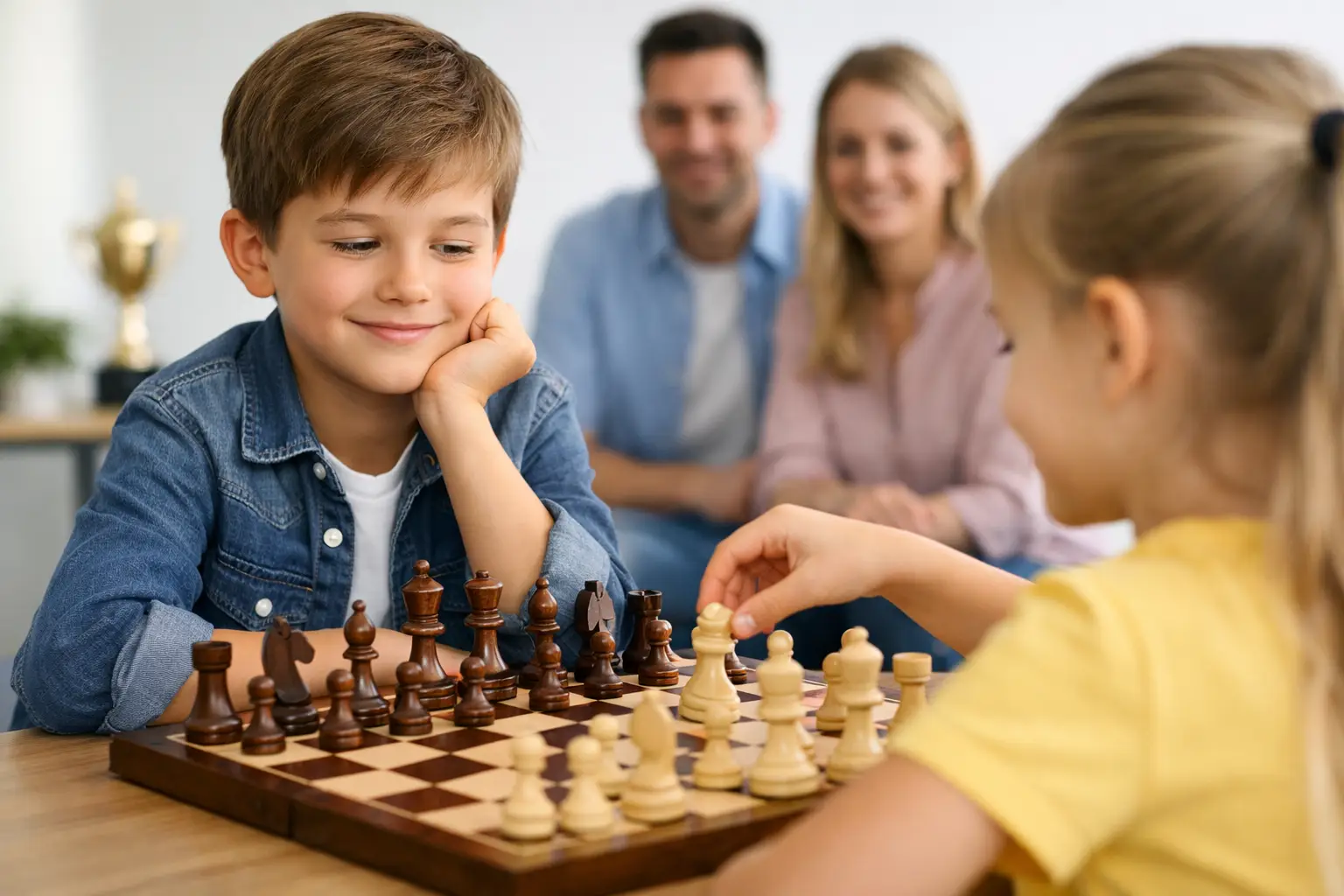
You do not need to be a strong chess player to support your child. Your role is not to become a second coach or to analyze every game. Create a calm routine, show interest in their ideas, and keep the focus on growth.
After a game, ask your child to show you one move they liked. If they cannot find one, ask them to show you a moment they would play differently next time. This builds reflection without turning family chess into a performance review.
It also helps to protect the emotional tone around practice. A short, focused session is usually better than pushing through when a child is tired or frustrated. Ten minutes of puzzles with a clear goal can be more productive than an hour of reluctant games.
Signs Confidence Is Growing
Chess confidence does not always look like more victories right away. Look for quieter changes. Your child may start setting up the board without being asked, explain why they chose a move, use a thinking routine, or return to a puzzle that was difficult yesterday.
They may also become more comfortable saying, “I made a mistake,” without tears or excuses. That is a major step. It means chess is teaching them that effort and adjustment matter more than being perfect.
The board will always offer hard positions, surprise moves, and occasional losses. Give your child patient guidance and room to think, and they will learn something better than how to win quickly: they will learn they can handle a challenge one move at a time.

Ready to see chess click for your child?
Book a free 20–30 minute trial lesson with one of our coaches — no commitment, no payment needed.