Chess Lessons vs Self Study: What Helps Kids?
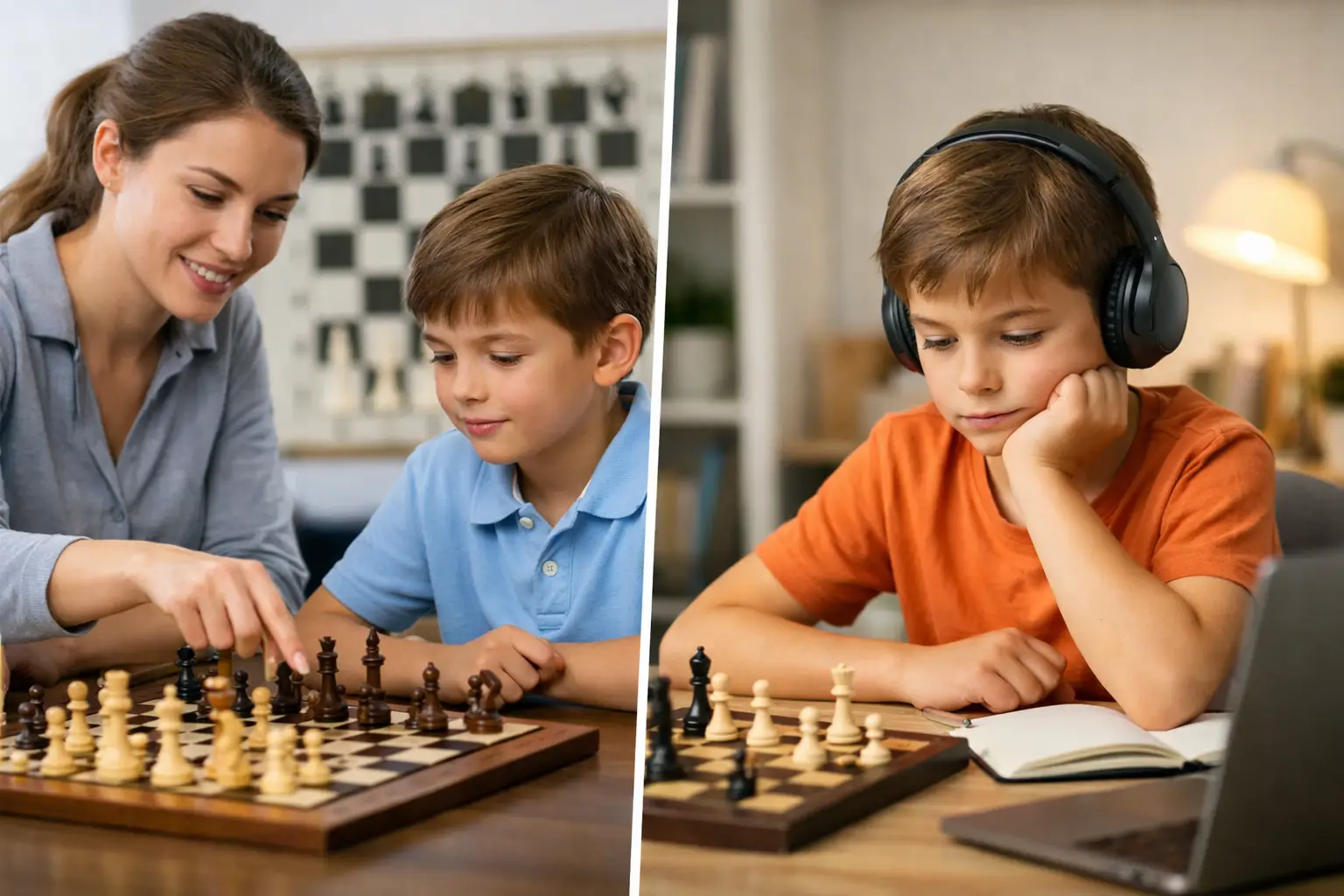
A child may learn how the pieces move in one afternoon, then spend weeks playing the same opening, hanging the same queen, and wondering why every game feels confusing. That is the real question behind chess lessons vs self study: not whether a child can learn from a video or an app, but which approach helps them enjoy chess, improve steadily, and stay confident when the game gets harder.
For many families, the best answer is not strictly one or the other. Self-study can make chess accessible and fun. Live coaching brings structure, feedback, and a plan. The right balance depends on your child’s age, goals, learning style, and how much support they need to turn information into better decisions over the board.
Chess Lessons vs Self Study for Young Players
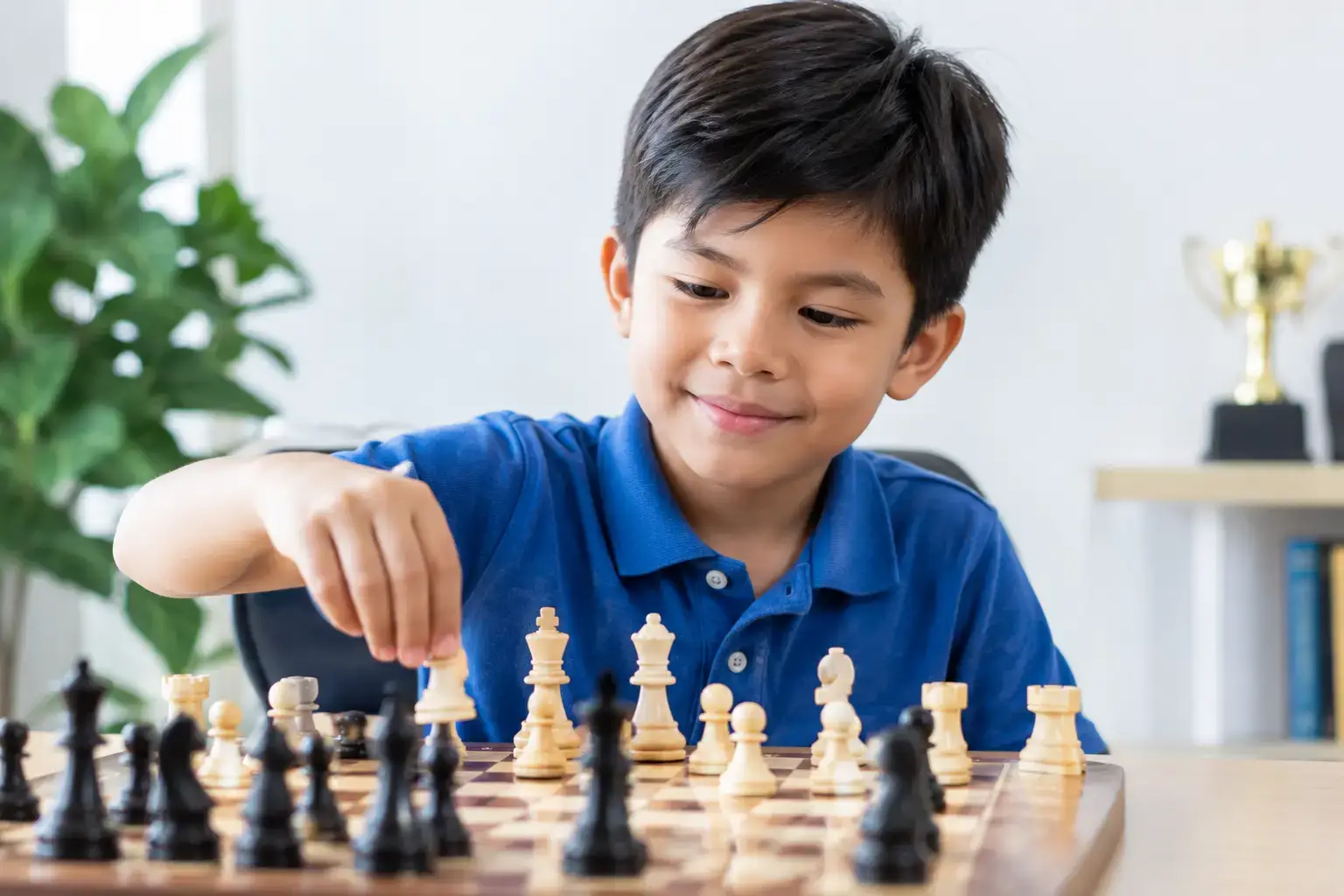
Self-study means learning independently through chess apps, puzzles, books, videos, online games, or a parent’s help. It is flexible, often inexpensive, and easy to start. A curious child can solve puzzles after school, watch a favorite chess creator, and play a few quick games whenever they have free time.
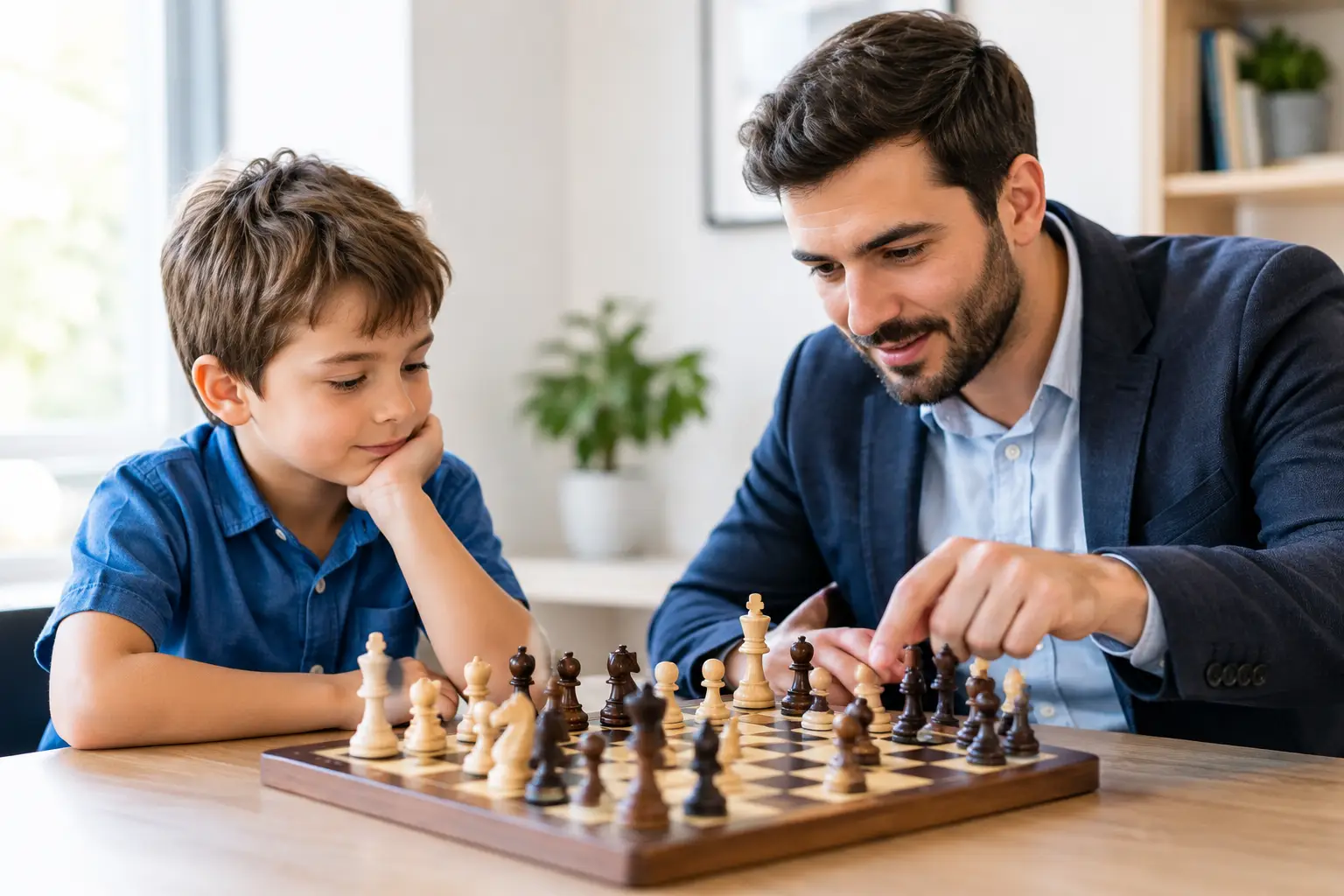
Chess lessons add a coach who can observe how a child thinks, identify the real cause of mistakes, and choose the next skill to work on. Instead of simply being told that a move was bad, a student can learn why it was risky, what they missed, and what question to ask before moving next time.
That difference matters because chess is more than collecting facts. Knowing that a knight moves in an L shape is simple. Recognizing a fork in a real game, under time pressure, while protecting your king, is a skill built through guided practice.
What self-study does well
Independent learning is excellent for building familiarity and enthusiasm. A child who enjoys chess puzzles may develop pattern recognition quickly. Playing casual games can also teach resilience: losses feel less intimidating when there is always another game available.
Self-study works especially well when a child already has a strong internal drive. Some kids love replaying games, asking questions, and trying new ideas on their own. Older beginners and motivated intermediate players may benefit from books, annotated games, and online training tools because they can focus for longer and follow instructions independently.
It is also a useful supplement to coaching. A short daily puzzle routine can reinforce tactical awareness between lessons. Playing a slower game with a sibling or parent creates chances to practice patience. Watching a video about checkmate patterns can make the next lesson feel familiar rather than brand-new.
The challenge is that children rarely know what to study next. Chess content online is almost unlimited, but it is not organized around one child’s exact gaps. A beginner might memorize a complicated opening before learning how to spot an undefended piece. Another child may solve hundreds of puzzles but rush through every tournament game without checking for checks, captures, and threats.
Where self-study can stall
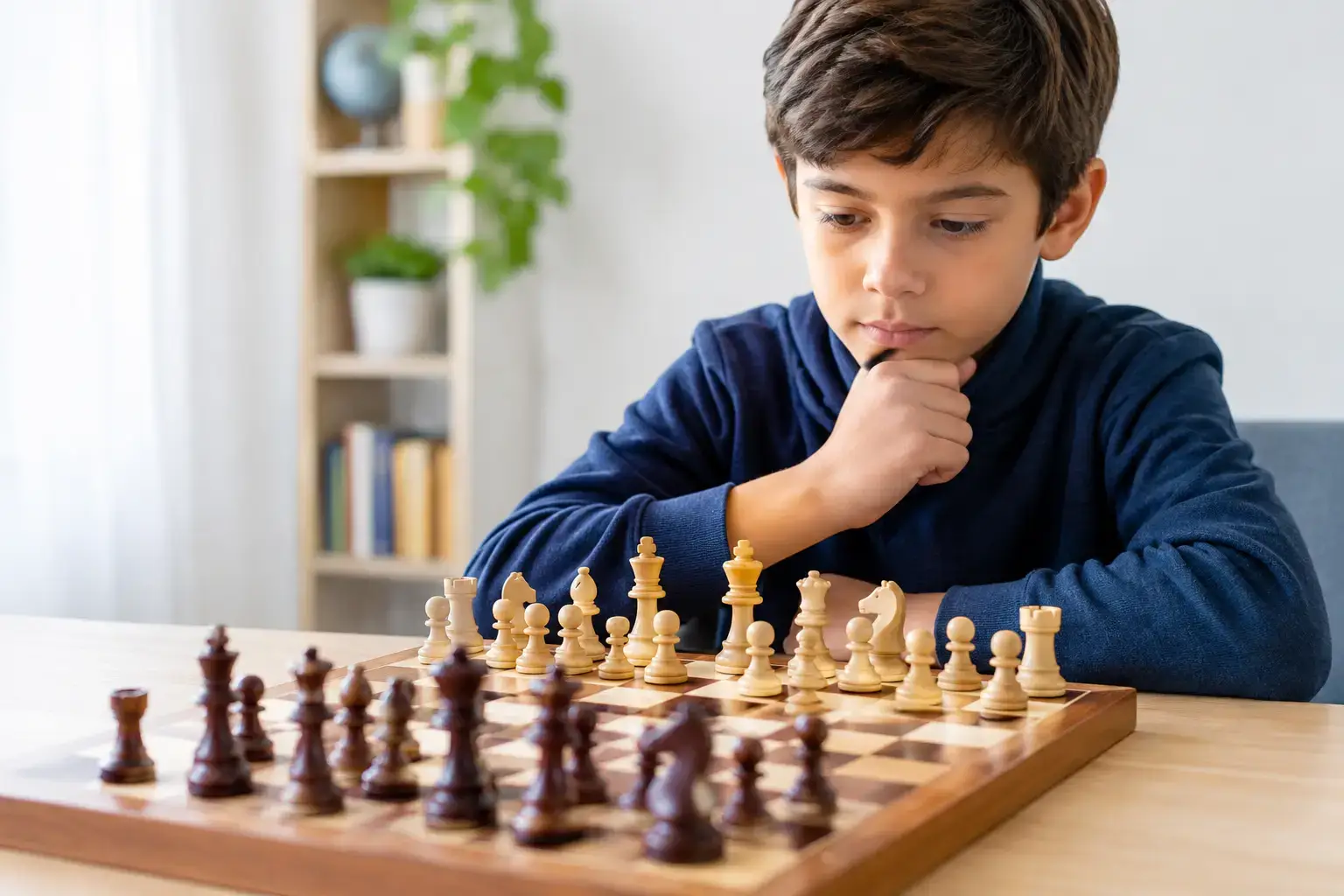
The most common issue is passive learning. Watching a coach explain a brilliant move can feel like progress, but it does not guarantee that a child can find that move themselves. The same is true of puzzle streaks. A student may guess the right tactic after several attempts without understanding the pattern that made it work.
There is also no immediate correction. When a child repeatedly makes the same mistake, such as bringing the queen out too early or missing a one-move threat, an app may label the move an error. It often cannot explain the habit in language that makes sense to that particular child.
Online games can create another problem: speed becomes the goal. Fast games are exciting, but constant blitz play can encourage impulsive moves. For a young player still building concentration, slowing down and thinking through a position is often more valuable than playing ten more games in a row.
Parents do not need to become chess experts to help. A simple question after a game can be powerful: “What was your plan before that move?” Still, many parents understandably prefer a coach to handle the technical side and keep chess time positive at home.
What Live Chess Lessons Add
A good chess lesson is not a lecture with a board on screen. It is an active conversation. The coach asks the student to calculate, explain, test ideas, and make choices. That interaction shows whether the child truly understands a concept or is simply repeating a phrase they heard online.
For beginners, lessons create a logical order. Students typically start with the board, piece movement, check, checkmate, and basic rules. From there, they learn opening principles, common tactical patterns, simple endgames, and game analysis. Each skill supports the next one.
For more experienced players, coaching becomes even more personal. One child may need better time management. Another may have strong tactics but weak endgames. A third may know plenty of openings yet lose confidence after one mistake. A coach can shape training around those patterns instead of assigning the same material to everyone.
Feedback turns mistakes into progress
The strongest advantage of lessons is feedback at the moment it can change behavior. If a child overlooks a threat, the coach can pause and ask, “What is your opponent attacking?” If they rush a move, the coach can help them build a repeatable thinking routine.
Over time, that routine becomes independent. Students learn to scan for checks, captures, and threats; consider their opponent’s idea; and choose moves with a purpose. This is how coaching supports broader skills parents care about too: focus, patience, decision-making, and the confidence to think before acting.
Live lessons also provide accountability without making chess feel like pressure. A child who knows they will review a game with a supportive coach is more likely to play carefully and bring questions. Progress becomes visible in small wins: spotting a fork, surviving a difficult position, using the clock wisely, or finishing a checkmate they once missed.
Lessons are not automatically better for every child
Coaching is most effective when the format fits the child. A four-year-old may thrive with short, highly interactive sessions and clear visual activities. A serious 14-year-old may want deeper analysis, tournament preparation, and longer games. A one-size-fits-all lesson can feel too fast for one student and too slow for another.
Families should also be realistic about commitment. A weekly lesson without any play or practice between sessions will produce slower results. The good news is that home practice does not have to be long. Even 10 to 15 minutes a few times each week can reinforce what a child learned with their coach.
The goal is not to fill every free hour with chess. It is to create a routine a child can sustain and enjoy.
How to Choose the Right Path for Your Child
Start with your child’s current relationship with chess. If they are brand-new and simply curious, self-study may be a low-pressure way to see whether they enjoy the game. Teach the basic rules, play a few friendly games, and notice what excites them. Do they love puzzles? Do they ask why a move works? Do they want to beat a friend or enter a school tournament?
If your child is frustrated, losing interest, or making the same mistakes despite lots of screen time, coaching can provide the missing direction. It is also a smart choice for children who learn best through conversation, need encouragement to stay focused, or want a clear route toward tournament play.
For families considering lessons, look for more than a strong chess rating. A coach should explain ideas in age-appropriate language, keep the student involved, and communicate progress clearly to parents. Ask how the coach evaluates a new student, how lessons are personalized, and what practice is expected between sessions.
At Savushkin Chess, the starting point is an assessment rather than a guess. That makes it easier to place a child at the right level, set realistic goals, and choose a lesson length that matches their attention span and experience.
The Best Approach Is Often Both
Think of self-study as the practice field and lessons as the coaching session. Videos, puzzles, and friendly games give children repetitions. A coach helps them make sense of those repetitions and directs their energy toward the skills that will matter most.
A balanced weekly routine might include one live lesson, a few short puzzle sessions, one slower game, and a quick review of a memorable moment from that game. The exact schedule can change with school demands, family travel, and the child’s motivation. Consistency matters more than intensity.
Parents can keep the experience healthy by praising effort, not only wins. Ask what your child noticed, what surprised them, or what they would try differently next time. When chess becomes a place where mistakes are explored rather than criticized, children are far more willing to keep learning.
The best choice is the one that gives your child enough structure to grow, enough freedom to stay curious, and enough encouragement to sit down for the next game with a smile.

Ready to see chess click for your child?
Book a free 20–30 minute trial lesson with one of our coaches — no commitment, no payment needed.