First Chess Lesson Checklist for Parents
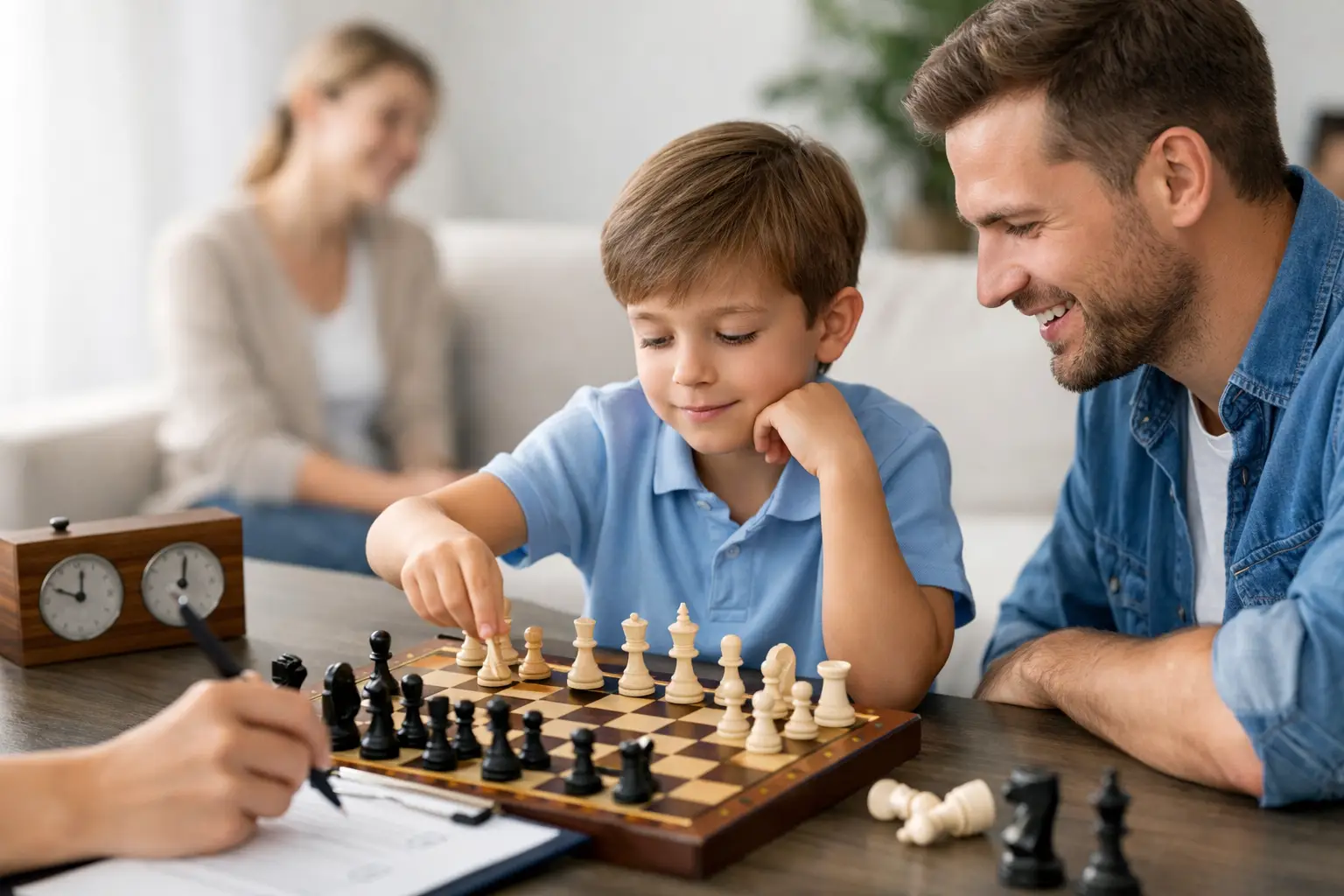
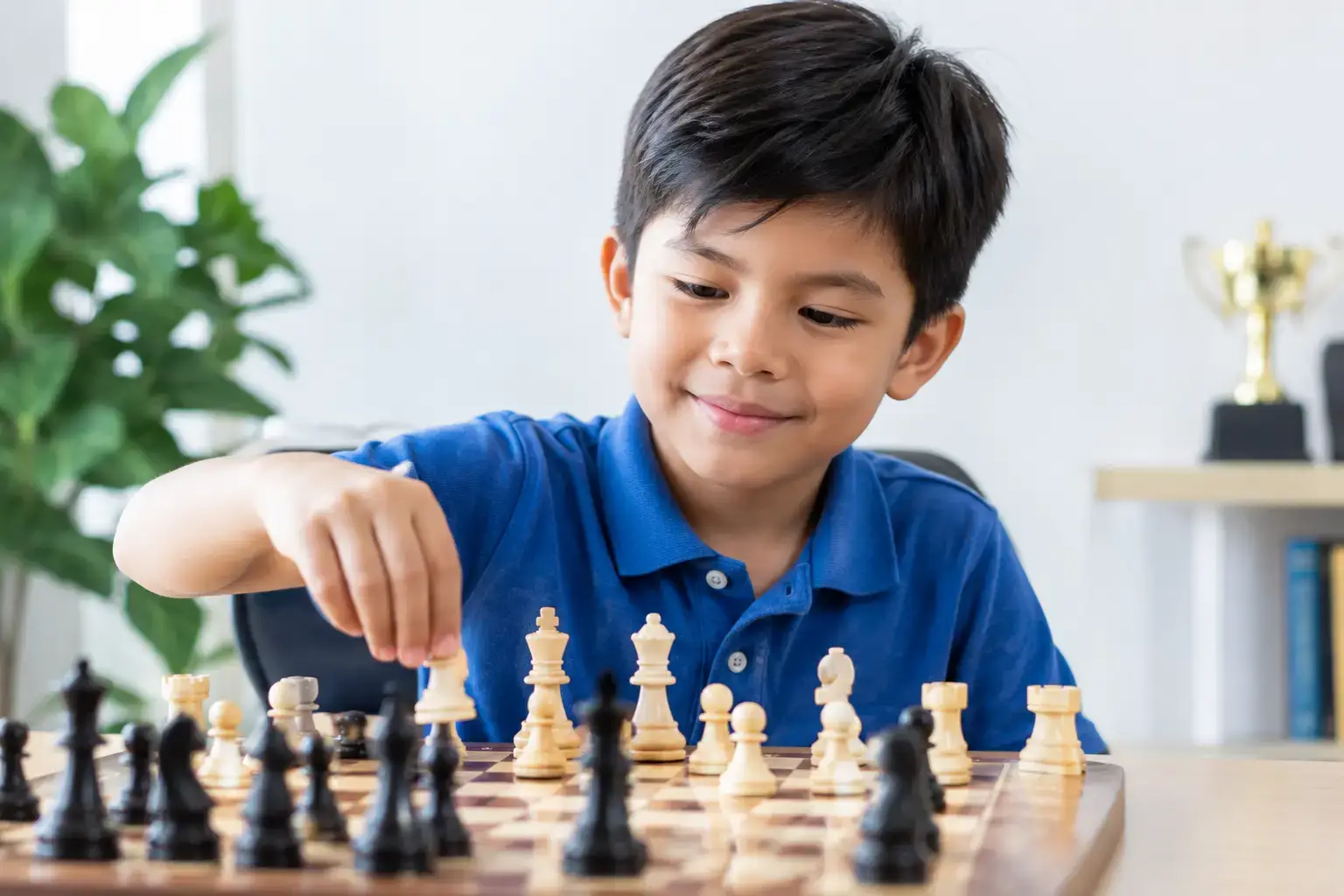
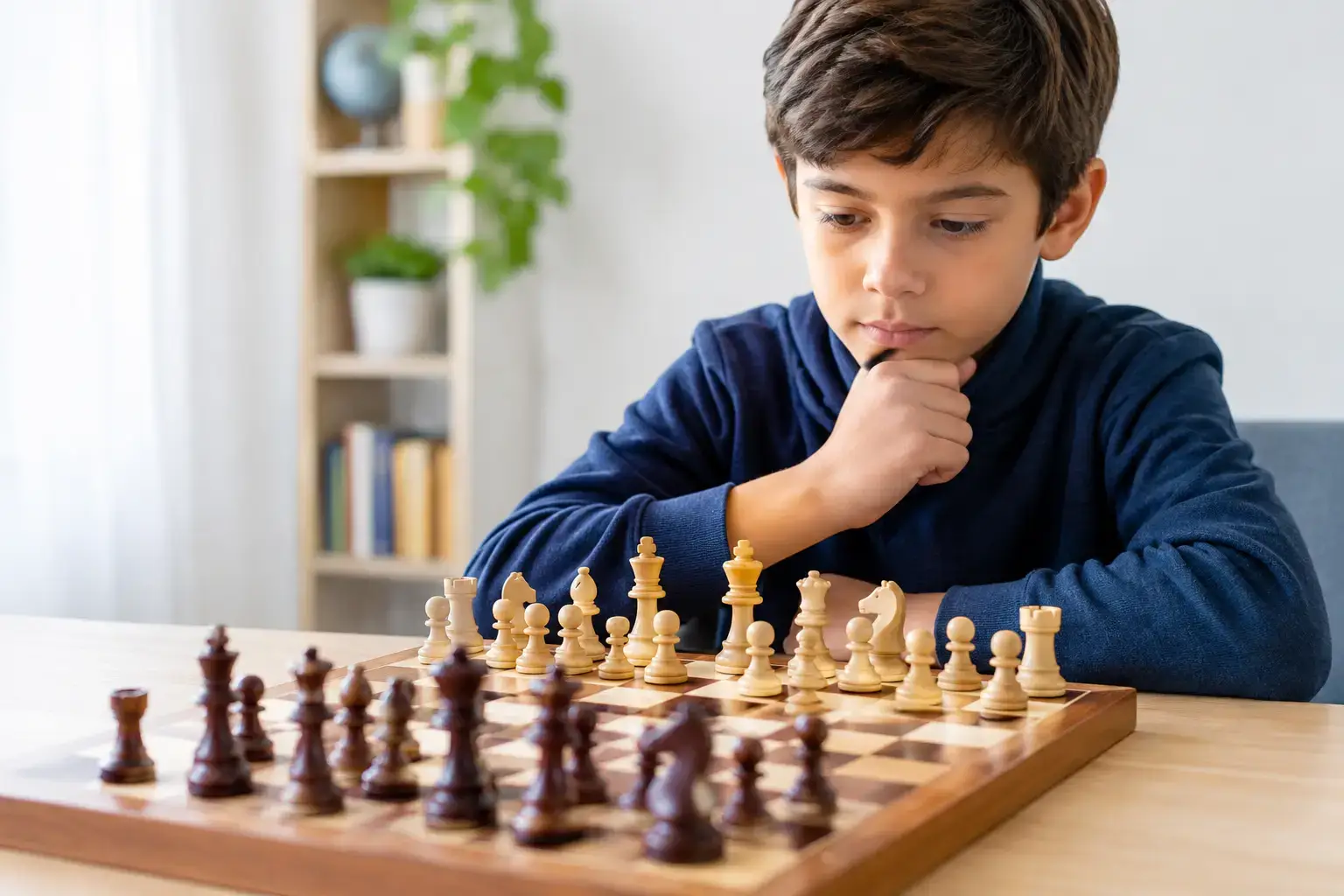
Five minutes before a child’s first chess lesson, the goal is not to make sure they have memorized every piece. The goal is to help them feel comfortable enough to be curious. A great first chess lesson checklist gives parents a simple way to prepare without turning an exciting new activity into another source of pressure.
For young beginners, chess works best when it starts as a game of discovery. They should leave the first lesson knowing a little more than when they arrived, proud of what they did, and eager to play again. That early feeling matters more than how many rules they can repeat.
Your First Chess Lesson Checklist
Before the lesson begins, check the basics: your child has a quiet place to sit, a reliable device with a working camera and microphone, and enough space to focus without siblings, toys, or a television competing for attention. For an online lesson, headphones can help, but they are not required if your child can hear the coach clearly.
A physical chess set is helpful, especially for children who learn best by touching and moving the pieces. It is not always necessary for a first online class, since a coach can use a digital board, but having one nearby can make the lesson more memorable. Make sure all 32 pieces are present if possible. If a pawn or two has vanished under the couch, do not worry. Your child can still begin learning.
It also helps to have water nearby and to schedule the lesson at a time when your child is not hungry, exhausted, or rushing from another activity. A 30-minute lesson can feel long for a tired 5-year-old and fly by for a focused 12-year-old. Good timing gives the coach a much better chance to connect.
Most importantly, tell your child what to expect in simple language: “You’ll meet a chess coach, learn how the board works, and get to try some moves.” Avoid saying, “You need to pay close attention,” or “Make sure you get everything right.” Chess rewards focus, but confidence comes first.
What Your Child Should Bring - And What They Do Not Need
A beginner does not need to know openings, notation, checkmate patterns, or tournament rules before the first lesson. They do not need a rating, a chess app account, or proof that they are “good at strategy.” Those expectations can make a child hesitant before they have even moved a pawn.
What helps is a willingness to listen, ask questions, and try again after a mistake. Chess is a game where mistakes are not embarrassing. They are information. A child might put the queen on the wrong square, forget that a knight jumps, or leave a king exposed. A patient coach uses those moments to teach, not to judge.
If your child already plays casually with a family member, let the coach know. A child who says, “I know how the knight moves,” may understand the movement but not yet recognize why that move is useful. On the other hand, a complete beginner may quickly grasp the board because they enjoy patterns. Starting level matters, but it does not predict potential.
A quick parent conversation before class
Ask one or two light questions: “What do you think chess is about?” or “Which piece looks the most interesting?” Their answer gives the coach a useful starting point and lets the child feel involved.
Do not quiz them on the piece names right before class. If they know nothing yet, that is completely fine. If they do know something, they will have a chance to show it during the lesson.
What a Strong First Chess Lesson Usually Covers
The best first lesson is structured, but it should not feel stiff. A coach will usually begin by building rapport, learning the child’s experience level, and explaining the board. For children, the board is easier to understand when it becomes visual: light and dark squares, rows and columns, and a clear place for each piece at the start.
From there, a coach may introduce a few pieces and their movements. The king, queen, rook, bishop, knight, and pawn all move differently, so trying to cover every rule at once can overwhelm younger students. It depends on the child’s age, attention span, and prior knowledge. A 4-year-old may focus on recognizing pieces and moving a rook in straight lines, while an older beginner may be ready to learn the whole setup and play a short guided game.
A good lesson also includes interaction. Children learn more when they are asked to find a square, choose a move, or explain what they notice. Watching a coach move pieces for 30 minutes is not the same as learning chess. The child should have plenty of chances to think aloud and make decisions.
By the end, the coach may introduce the goal of the game: protecting your king while trying to checkmate the opponent’s king. Beginners do not need to master checkmate immediately. They need a clear, age-appropriate idea that chess has a purpose beyond capturing the most pieces.
How Parents Can Help Without Taking Over
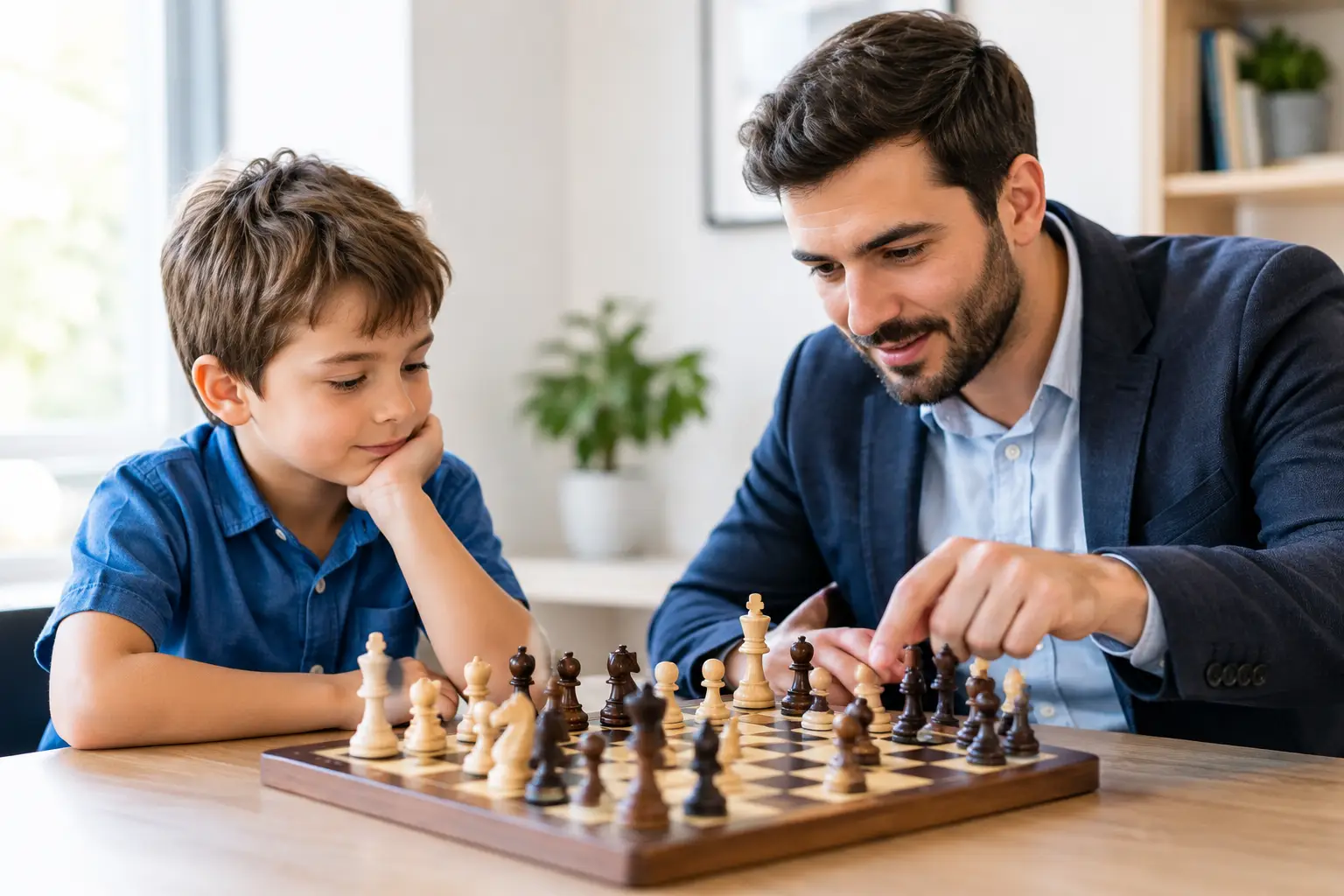
Parents are valuable partners in a child’s chess progress, but the first lesson belongs to the child and coach. If your child is shy, it is fine to stay nearby for the first few minutes. For very young students, a parent may need to help with the mouse, board setup, or a quick reminder to stay in view of the camera.
Try not to answer questions for your child, correct every move, or whisper instructions from offscreen. Even when the answer is obvious to you, a few extra seconds of thinking can be where real learning happens. The coach also needs to see what the child understands independently in order to build the right lesson plan.
After class, use encouraging questions rather than performance questions. “What was your favorite piece?” and “What do you want to try next time?” are more helpful than “Did you win?” or “Can you tell me every rule?” Early chess learning should build ownership, not anxiety.
Set a Goal That Fits Your Child
A first lesson is an assessment as much as an introduction. The coach is looking at attention, confidence, pattern recognition, willingness to try, and current chess knowledge. Those observations shape the next steps.
For some families, the goal is a fun, screen-based activity that strengthens concentration and patience. For others, it is a clear path toward school chess clubs, rated tournaments, and competitive improvement. Both goals are valid, but they call for different pacing. A child who is just learning how pieces move should not be rushed into tournament preparation. A motivated older student may benefit from more frequent lessons and practice games sooner.
At Savushkin Chess, a first lesson can help identify the right starting point, lesson length, and learning plan for each child. The most effective plan is not always the fastest one. It is the one a child can follow consistently while still enjoying the game.
Signs the first lesson was a success
Success may look like your child excitedly setting up the board after class. It may look quieter: they remember how the rook moves, ask when the next lesson is, or sit a little longer than usual because they want to solve one more puzzle.
It is also normal if your child feels uncertain at first. Chess has many pieces and rules, and some children need a lesson or two to warm up. Look for steady engagement and growing comfort, not instant perfection.
After the Lesson: Keep Practice Small and Positive
A short practice session between lessons is usually more effective than a long one. Five to 10 minutes of setting up the board, reviewing one piece, or playing a tiny challenge can reinforce what your child learned without draining their interest.
For a beginner, try one simple prompt: “Can you show me how the bishop moves?” If they cannot remember, respond with curiosity instead of correction: “Let’s look at the board and figure it out together.” That approach protects confidence and helps chess become a place where effort feels rewarding.
Your child’s first chess lesson does not need to create a future grandmaster. It can simply create a child who sees a challenge, pauses to think, and feels proud to make the next move.

Ready to see chess click for your child?
Book a free 20–30 minute trial lesson with one of our coaches — no commitment, no payment needed.