A Guide to Beginner Chess Improvement for Kids
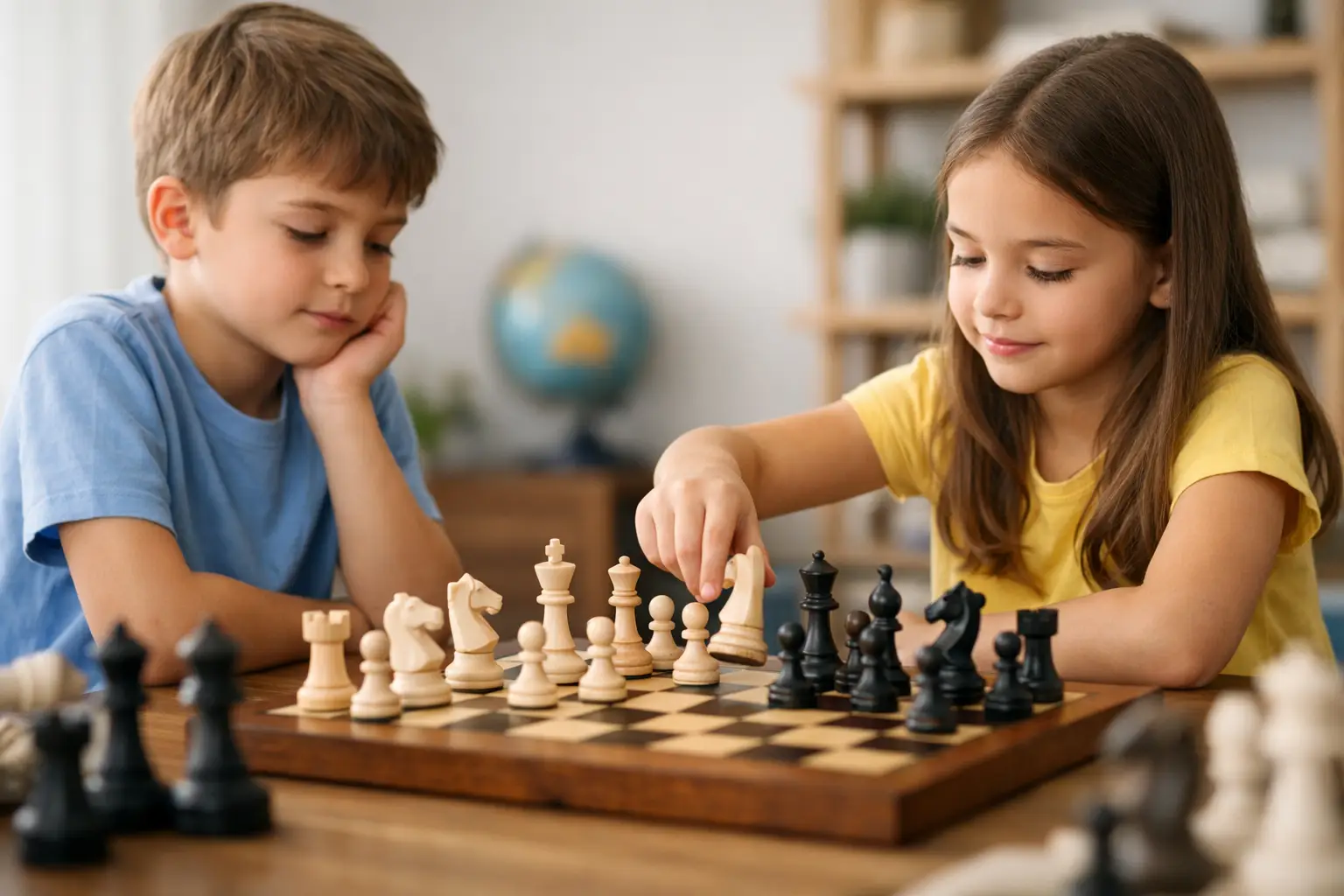
A child who has just learned how the pieces move does not need to memorize famous openings. They need to see that chess is a game they can understand, enjoy, and get better at one move at a time. This guide to beginner chess improvement helps parents support that early progress without turning a fun activity into another stressful assignment.
For most young players, improvement comes from a simple combination: clear instruction, short and consistent practice, and games that are reviewed with encouragement. The goal is not to rush toward a rating. It is to build habits that make good chess feel natural.
Start With a Strong Beginner Foundation
Before a child can plan combinations or study strategy, they need confidence with the board. That means knowing where the pieces belong, how every piece moves, what check means, and how a game ends. A child may be able to name the pieces after one lesson but still need time to use them correctly in a real game. That is completely normal.
Focus on one skill at a time. If your child is learning the knight, set up a few knight challenges: Can the knight reach this square in two moves? Can it capture the piece that is attacking the king? Small puzzles make an unusual movement pattern easier to remember than repeated explanations alone.
The same applies to checkmate. Rather than presenting it as a complicated rule, let children see basic examples on the board. A king cannot move into danger. A king in check must respond. When there is no safe response, the game is over. Visual learning is especially helpful for younger children, who may understand the idea long before they can explain it in chess vocabulary.
Guide to Beginner Chess Improvement: The First Priorities
Beginner games often feel chaotic because children see the board one piece at a time. The fastest progress comes from giving them a few reliable priorities to use on every move. These are not rigid rules. They are a simple decision-making framework.
First, look for danger. Ask, “What is my opponent attacking?” Many early mistakes happen because a player moves a piece without noticing that another piece is hanging. Next, look for opportunities. Can your child win an unprotected piece, give check, or create a threat? Then consider development: Are the knights and bishops coming into the game, and is the king becoming safer?
For a beginner, these questions are far more useful than trying to play a long sequence of memorized opening moves. A child who learns to protect their pieces will usually improve faster than a child who knows the first six moves of an opening but cannot spot a one-move capture.
It also helps to teach the value of pieces in a practical way. The queen is usually worth more than a rook, a rook more than a bishop or knight, and a pawn less than all of them. Young players do not need to calculate every trade perfectly. They do need to understand why trading a queen for a pawn is usually not a good deal.
Make Practice Short, Specific, and Consistent
Long practice sessions are not automatically better, especially for children. A focused 15-minute session three or four times a week can produce more progress than a frustrated hour once a month. The right amount depends on a child’s age, attention span, and interest level.
A simple practice routine can include a few minutes of puzzles, one short game, and a quick review of a key moment. If the child is very young, even 10 minutes of meaningful practice is enough. Older beginners who are excited about chess may enjoy 30 minutes, but they still benefit from a clear purpose for the session.
Try rotating among four activities so practice stays fresh:
- Solve simple one- or two-move checkmate puzzles.
- Play slow games where the child says their idea before moving.
- Review one mistake and one good decision from a completed game.
- Practice a basic endgame, such as checkmating with a queen and king.
The key is to avoid treating every game as a test. Children learn best when they can experiment, make mistakes, and try again without feeling judged. If a game becomes emotional, pause before analyzing it. A short break can turn disappointment into a useful learning moment.
Teach Children How to Think Before They Move
Many parents ask how to stop a child from moving too quickly. The answer is not simply telling them to “slow down.” Children need a repeatable process that gives slowing down a purpose.
A helpful beginner routine is: check, capture, threat, and safety. Before moving, a child looks for checks, captures, and threats for both sides. Then they ask whether the piece they plan to move is safe on its new square. This takes practice, but it gradually replaces impulsive moves with thoughtful ones.
At first, keep the questions friendly and concrete. “What can your opponent take?” works better than a lecture about tactical awareness. “Which piece is not protected?” helps a child notice the board. Over time, they will begin asking these questions independently.
Parents should also celebrate good thinking even when the final move is not best. If your child notices a threat but chooses the wrong defense, praise the observation first. Chess improvement is built on seeing more of the board. Better choices follow with experience.
Play Real Games, Then Review Gently
Puzzles teach patterns, but real games teach decision-making. Children need both. In a game, they must manage time, emotions, piece safety, and changing plans. That is why playing regularly matters so much.
For new players, slower games are often better than fast games. A short timer can be exciting, but it may encourage random moves before a child has developed a thinking routine. Start with enough time for them to look at the whole board. Speed can come later.
After a game, do not try to analyze every move. Choose one moment where a piece was lost, a checkmate was missed, or a good plan worked. Ask your child what they were thinking at that point. Listen before explaining. Sometimes the reason behind a move reveals exactly what skill needs attention next.
A useful review has a positive balance. Point out one thing they did well, one moment they could replay differently, and one small goal for the next game. That approach keeps the game connected to progress instead of perfection.
Build Opening and Endgame Skills at the Right Time
Opening knowledge matters, but beginners need principles before variations. Teach children to bring out their knights and bishops, avoid moving the same piece repeatedly without a reason, fight for the center, and castle to protect the king. These ideas apply in nearly every game.
There is a trade-off here. Some children enjoy learning a favorite opening and feel more confident with a familiar setup. That is fine, as long as the opening is taught as a set of ideas rather than a script. If an opponent makes an unexpected move, the child should still know how to look for danger, develop pieces, and protect the king.
Basic endgames are equally valuable. A child who knows how to use a king actively, promote a pawn, and checkmate with a queen has a clear path to finishing games successfully. Endgames also teach patience, accuracy, and planning - skills that show up in every phase of chess.
When Coaching Makes a Difference
Family games and independent practice can create a wonderful start. Personalized coaching becomes especially useful when a child is repeating the same mistakes, losing confidence, or ready for a more structured challenge. A good coach can identify whether the real issue is piece safety, calculation, opening habits, time management, or simply a need for more engaging practice.
For parents, the value is clarity. Instead of guessing what to teach next, you can see a progression plan and understand what your child is working toward. At Savushkin Chess, live lessons are built around the child’s current level, with patient coaching that keeps young players engaged while moving them toward real-game confidence and tournament readiness.
The best next step is usually a small one: set up the board, play a thoughtful game, and ask your child what they noticed. When chess becomes a place where effort is recognized and curiosity is welcome, improvement has room to grow.

Ready to see chess click for your child?
Book a free 20–30 minute trial lesson with one of our coaches — no commitment, no payment needed.