A Guide to Chess Time Management for Kids
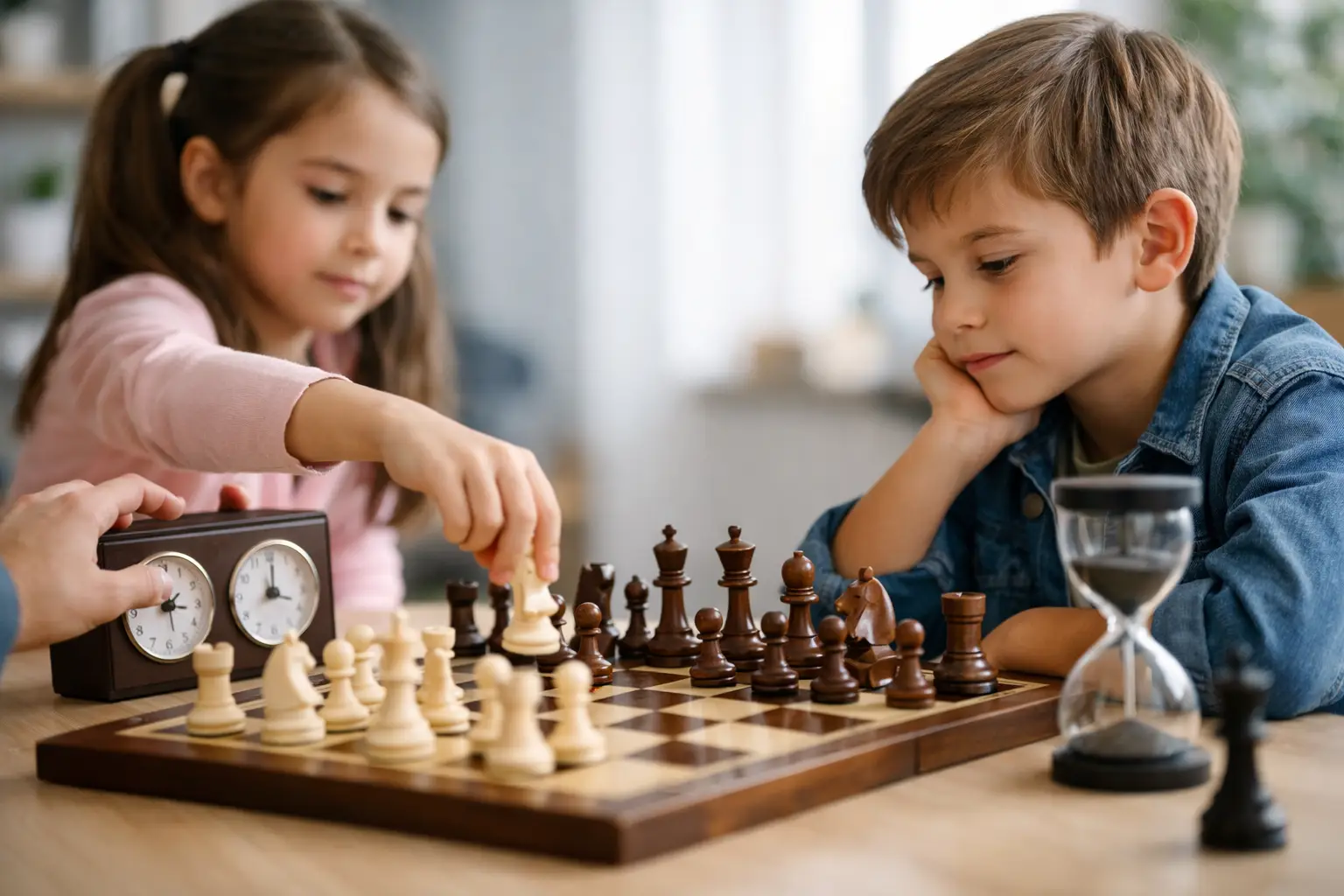
A child can spot a winning move at home and still miss it in a tournament because the clock is ticking. That is why a guide to chess time management should not be about playing fast for its own sake. It should help young players use their thinking time wisely, stay calm after a mistake, and finish the game with enough time to make good decisions.
For parents, this can be one of the most confusing parts of tournament chess. You may see your child staring at the board for several minutes in an easy position, then rushing through a complicated ending with only seconds left. The good news is that time management is a learnable skill. With the right routines, children can become more confident, focused, and prepared under tournament conditions.
Why young players struggle with the chess clock
Beginners often have two opposite reactions to a clock. Some move immediately because waiting feels uncomfortable or they want to be polite. Others try to calculate every possible move, even when the position only requires a simple developing move or recapture.
Neither habit means a child lacks chess ability. Fast movers may be excited, nervous, or afraid of making the “wrong” choice. Slow movers may be conscientious and want to prove they can find the best move. A coach’s job is to help them find the middle ground: pause long enough to check the position, then make a clear decision and move on.
The clock also changes as children improve. A new player needs time to remember how pieces move and notice attacks. An experienced tournament player needs time for calculation, planning, and endgame technique. The right pace depends on the child’s level, the time control, and the complexity of the position.
Teach a simple thinking routine first
The strongest time-management habit is not memorizing how many seconds each move should take. It is using the same short process before every move. A routine prevents impulsive blunders without turning every move into a long calculation exercise.
For many children, this four-question check works well:
- What did my opponent’s last move change?
- Is my king in danger, or is one of my pieces attacked?
- Do I have a check, capture, or threat worth considering?
- Before I move, can my opponent take the piece I am about to leave behind?
At first, this may sound like a lot. With practice, it becomes quick and natural. The child is not required to calculate ten moves ahead. They are learning to look at the board before moving their hand.
Parents can reinforce this during casual games with a gentle prompt: “What changed after that move?” Avoid calling out an answer or criticizing a missed tactic. The goal is to build the habit of checking, not to make every family game feel like an exam.
A guide to chess time management by game phase
Children do not need to spend equal time on every move. A useful rule is simple: save time in familiar or forced positions, and invest time when the decision can change the game.
Opening: Play with purpose, not speed
In the opening, young players can lose time by repeatedly moving the same piece, searching for a surprise attack, or trying to remember an opening move exactly. They can also move too fast and miss a basic threat.
A better target is to use opening principles as a shortcut for decision-making. Develop pieces, fight for the center, castle when it is safe, and avoid bringing the queen out too early. When a child understands these ideas, they do not need to reinvent the plan on every move.
This is also where a manageable opening repertoire helps. A child who knows a few reliable setups can use less clock time and arrive in the middlegame with more confidence. Memorization alone is not the answer, though. If an opponent plays an unfamiliar move, the child should return to the basics: check for threats, develop a piece, and keep the king safe.
Middlegame: Slow down at turning points
The middlegame is where clocks disappear. There are more pieces, more tactical possibilities, and more emotions after a missed opportunity or unexpected attack.
Teach children to recognize “big decision” moments. They should take extra time when considering a sacrifice, starting an attack on the king, trading queens, entering an endgame, or responding to a direct threat. These are positions where a quick move can create a problem that lasts for the rest of the game.
On the other hand, a forced recapture or an obvious move to get out of check usually does not require a five-minute think. The skill is learning the difference. In lessons at Savushkin Chess, this is often developed through guided game review: a coach can show where a player spent too long, where they rushed, and what question would have led to a stronger choice.
Endgame: Keep enough time to finish
A child who reaches a winning endgame with 20 seconds left may still be under real pressure. Endgames require accuracy, especially when pawns are close to promotion or kings must be activated carefully.
That is why basic endgame knowledge is a time-management tool. A player who recognizes a simple king-and-pawn win, knows how to use an active king, or understands how to stop a passed pawn can make decisions more quickly. They are not guessing under pressure.
In a low-time situation, encourage practical choices. If a child has a clear advantage, they may not need to find the prettiest move. A safe move that keeps the opponent’s threats under control is often the best tournament move.
Use the clock in practice, not only in tournaments
Children cannot build clock confidence by playing every game without a time limit. Untimed games are helpful for learning new ideas, but tournament readiness requires regular timed practice.
Start with a comfortable control, such as 15 minutes per player with a 10-second increment. The increment matters because it gives children a few seconds after every move and reduces the panic of an empty clock. Once they can use their time steadily, shorter games can build quick tactical awareness and longer games can develop deeper calculation.
After a timed game, do not focus only on who won. Ask a few practical questions: Did they finish with far too much time? Did they run low on time before the position became difficult? Which move took the longest, and why? Did they rush after making a mistake?
A simple game log can reveal patterns. Parents might write down the time control, the result, and one observation such as “moved too quickly after losing a bishop” or “used four minutes deciding how to recapture.” Over several games, those notes turn vague frustration into a clear training goal.
Help children recover after a mistake
One of the biggest clock problems is emotional, not technical. A child blunders a piece, becomes upset, and then plays the next five moves instantly. The first error hurts, but the rushed reaction often causes the real collapse.
Teach a reset routine: sit back, take one slow breath, look for the opponent’s threat, and find the best practical move. The child does not have to pretend the mistake did not happen. They only need to keep playing the position that is still on the board.
Parents can make this easier by changing the post-game conversation. Instead of asking, “Why did you lose that piece?” try, “What did you do next?” This helps children see resilience as part of chess skill. A player who stays composed can create chances even from a worse position.
Tournament habits that make a difference
Before an event, make sure your child knows the exact time control and how the clock works. Digital clocks can feel intimidating until a player has practiced pressing the button, reading the display, and understanding increment or delay.
During the game, children should keep their attention on the board rather than constantly checking the clock. Looking at the time after every move can create unnecessary anxiety. A better habit is to glance at it after a natural decision point, then adjust their pace if needed.
It also helps to protect the basics. Eat beforehand, bring water if the event permits it, arrive early, and take a short mental break between rounds. A tired, hungry, or rushed child will usually spend time less effectively, no matter how much chess they know.
The goal is not to create a child who plays at lightning speed. It is to raise a player who can pause, think, decide, and trust their process when the clock is running. Each calm move under pressure is a small win that carries beyond the chessboard.

Ready to see chess click for your child?
Book a free 20–30 minute trial lesson with one of our coaches — no commitment, no payment needed.