
A Parent’s Guide to Kids Chess Progression
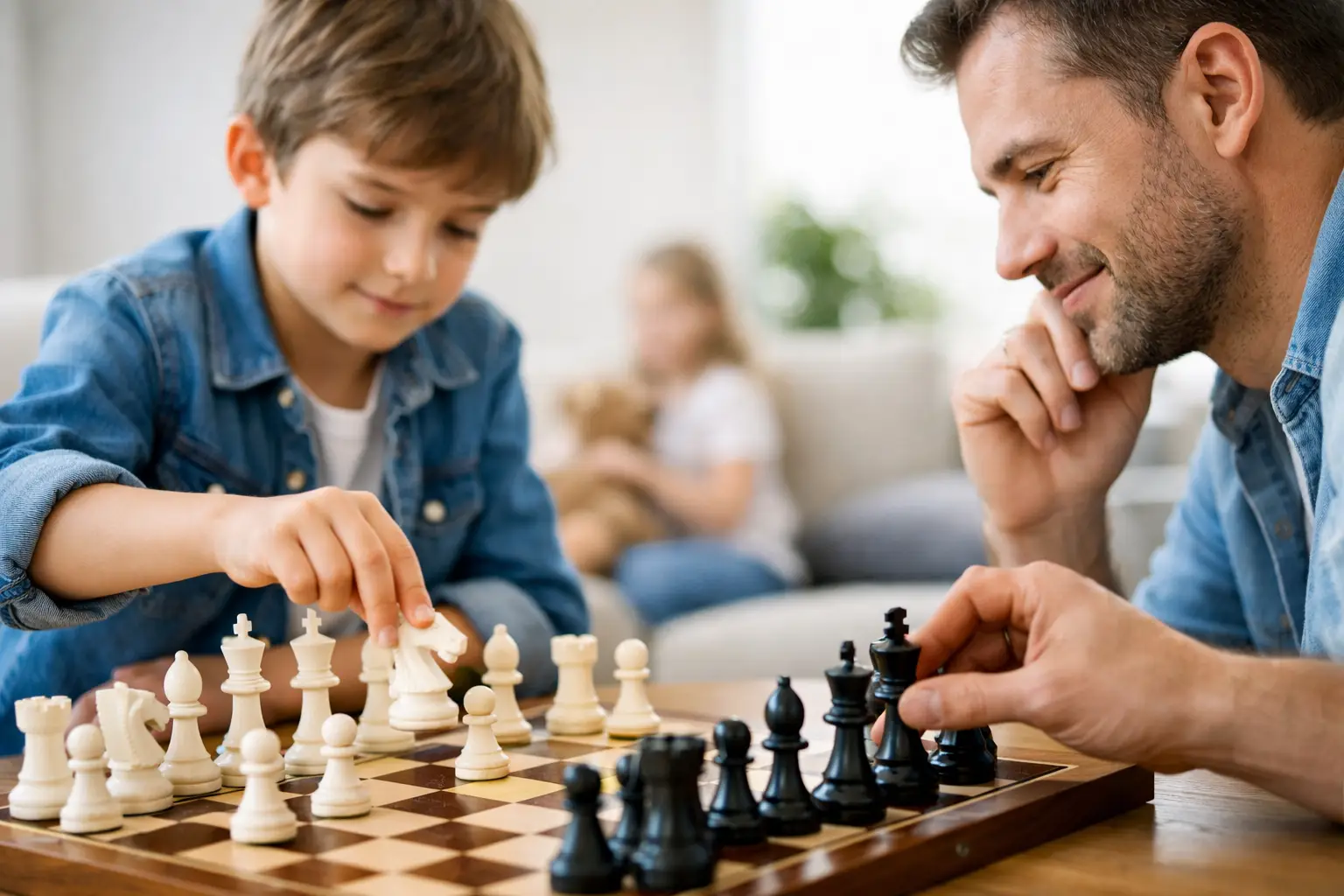
One child learns how the knight moves and wants to play five games in a row. Another knows every piece already but freezes when it is time to make a plan. That is why a real guide to kids chess progression matters. Children do not improve in a straight line, and parents usually do better with a roadmap than with a rating chart.
The good news is that chess progress is easier to understand when you stop looking for one magic milestone. Most kids move through recognizable stages. At each stage, they need something slightly different - not just harder puzzles or more games, but the right mix of fun, structure, and challenge.
What kids chess progression really looks like
For most children, chess growth happens in layers. First they learn the rules. Then they start spotting threats. Then they begin connecting moves into ideas. Later, they develop calculation, planning, and emotional control during real games. A child can be strong in one layer and still need help in another.
That is why parents sometimes get mixed signals. A child may beat beginners easily but still hang pieces against stronger opponents. Another may solve tactics well but struggle with time management in tournaments. Progress is real in both cases, but it is uneven. That is normal.
A useful guide to kids chess progression should focus less on age and more on readiness. A motivated 6-year-old may move faster than an uninterested 10-year-old. At the same time, a teen who starts late can make excellent progress because attention span and self-correction are stronger. The pace depends on maturity, lesson quality, consistency, and how much the child actually enjoys the game.
Stage 1: Learning the board and basic rules
At the beginning, success is simple. Can your child name the pieces, set up the board, and move each piece correctly? Do they understand check, checkmate, and stalemate well enough to finish a very basic game? If yes, the foundation is forming.
This stage is more important than it looks. Kids who rush past the basics often build confusion into everything that follows. Castling, pawn promotion, and capturing rules need to feel natural, not memorized under pressure. For younger children especially, repetition matters.
Parents sometimes worry when this stage feels slow. But speed is not the goal yet. Confidence is. A child who feels comfortable with the board is much more likely to stay engaged when the game becomes harder.
Stage 2: From random moves to simple ideas
This is the first big jump. Instead of moving pieces because they can, kids begin moving them for a reason. They start noticing loose pieces, basic forks, direct mates, and the value of bringing pieces into the game.
You will usually see a few common breakthroughs here. A child starts protecting attacked pieces. They understand why the queen should not fly out too early. They begin to connect opening principles with actual play - control the center, develop pieces, and castle.
This stage often looks messy from the outside. Games are full of mistakes, but they are better mistakes. That matters. A child is no longer guessing blindly. They are testing ideas.
Stage 3: Building tactical awareness
For many young players, this is where improvement becomes visible. Tactical patterns such as forks, pins, skewers, discovered attacks, and basic mating nets start showing up again and again. Once children learn to recognize these patterns, their games sharpen quickly.
This does not mean they suddenly become consistent. In fact, many kids go through a phase where they only look for tricks. They attack too early, sacrifice without enough reason, and ignore defense. That is part of learning. Tactics are exciting, and children naturally lean into what feels powerful.
The key is balance. Strong instruction helps kids see both sides of the board. It is great to spot a fork. It is even better to ask, what is my opponent threatening too?
Stage 4: Playing with a plan
Once a child can spot basic tactics, the next step is learning how to build a position. This is where chess starts to feel deeper. Instead of asking only, what can I win right now, they start asking, where should my pieces go and why?
Planning is difficult for children because it requires patience. They must understand piece activity, king safety, pawn structure, open files, weak squares, and when to trade. These ideas do not become automatic overnight.
This is also the stage where many parents think progress has slowed. It has not. It has simply become less obvious. Early progress is easy to see because wins come faster. Positional growth is quieter. A child may still lose games, but now they are learning how to think beyond the next move.
Stage 5: Competitive play and tournament readiness
A child is not tournament-ready just because they know openings or solve puzzles well. Real competition adds pressure, time controls, emotional swings, and the need to recover after mistakes. Some kids love this right away. Others need support.
Tournament readiness usually includes three things. First, the child can complete games with legal, thoughtful moves. Second, they can manage a clock without panicking. Third, they can handle winning and losing in a healthy way. That last one matters more than many parents expect.
A young player who melts down after one loss may have the chess skill to compete but not the experience yet. That does not mean they should avoid tournaments. It means expectations should be realistic. Early events are for learning as much as for results.
How long does chess progression take?
This is the question every parent asks, and the honest answer is: it depends. A child taking one lesson a week and playing casually at home will progress differently from a child who also solves puzzles, reviews games, and competes regularly.
In many cases, beginners can learn the rules and basic checkmates within weeks. Noticeable tactical growth may take a few months of steady practice. Stronger game understanding and tournament confidence usually take much longer. Chess rewards consistency more than cramming.
There are trade-offs here. Pushing too fast can make the game feel like homework. Going too slowly can lead to boredom, especially for bright kids who enjoy challenge. The right pace keeps chess enjoyable while still giving the child a clear sense of progress.
What parents should watch for at each stage
The best signs of progress are not always ratings or trophies. Sometimes it is a child explaining their move instead of shrugging. Sometimes it is fewer one-move blunders. Sometimes it is sitting through a full lesson with focus they did not have a month ago.
Look for patterns, not perfect games. Is your child more aware of danger? Are they thinking before moving? Can they recover after a mistake instead of giving up? Those are strong indicators that real development is happening.
It also helps to separate interest from ability. A child may have talent but need more encouragement. Another may be highly motivated but still early in the learning process. Good coaching meets both situations differently.
The role of lessons, practice, and coaching
Children improve fastest when learning is structured. Casual play has value, but without guidance, many kids repeat the same errors for months. A clear progression path helps them learn what to focus on now instead of trying to absorb everything at once.
That is where coach-led instruction can make a real difference. Personalized teaching keeps lessons at the right level, catches bad habits early, and turns vague effort into measurable improvement. At Savushkin Chess, this step-by-step approach is a major reason families see better results without making chess feel overwhelming.
Still, there is no single formula. Some children thrive with one-on-one attention. Others benefit from a mix of lessons and independent practice. Younger beginners often need shorter, more interactive sessions, while older students can handle deeper game analysis. The format should fit the child, not the other way around.
A practical guide to kids chess progression at home
Parents do not need to be chess experts to support improvement. What helps most is consistency. A regular lesson schedule, a manageable amount of practice, and positive conversation after games go a long way.
Try to keep the focus on effort and thinking, not just outcomes. Ask, what did you notice in that position, or what was your plan there? Those questions build reflection. Saying only did you win can make progress feel smaller than it is.
It also helps to protect the fun. Kids stay with chess when they feel challenged and encouraged at the same time. If frustration is rising, the answer is not always more volume. Sometimes it is better instruction, a better fit, or a short reset before the next push.
A strong guide to kids chess progression should leave parents feeling calmer, not more pressured. Your child does not need to rush to be successful. They need a clear path, patient support, and enough good teaching to turn curiosity into confidence. When that happens, the results tend to follow.

Ready to see chess click for your child?
Book a free 20–30 minute trial lesson with one of our coaches — no commitment, no payment needed.


