
Parent Guide to Scholastic Chess Tournaments
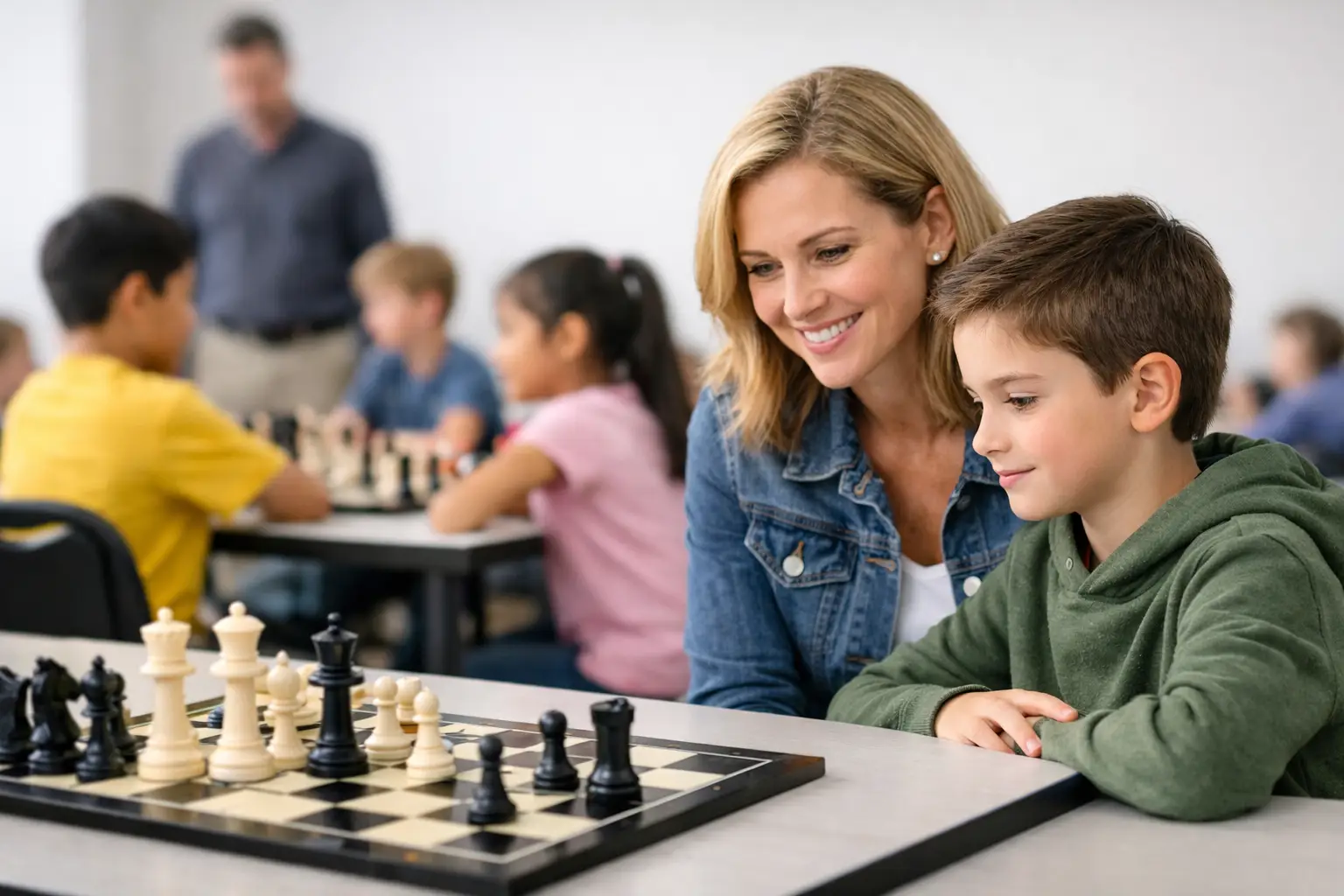
The first scholastic tournament often feels bigger to a parent than it does to the child. There is an unfamiliar registration form, a room full of quiet concentration, a clock ticking beside the board, and the very real possibility of a tough loss before lunch. This guide to scholastic chess tournaments helps you replace uncertainty with a clear plan, so your child can focus on what matters: playing, learning, and enjoying the game.
A tournament is not a final exam on your child’s chess ability. It is practice under real conditions. For beginners, simply sitting down, using a clock, recording moves when required, and finishing every game are meaningful wins. For more experienced players, tournaments reveal which skills hold up when the position gets complicated and the nerves arrive.
What Is a Scholastic Chess Tournament?
A scholastic chess tournament is a competition designed for students, usually organized by age, grade, rating, or school section. Many are held on weekends at schools, community centers, libraries, or chess clubs. Some events are local and relaxed; others are larger rated events that can attract serious young competitors.
Most US events use a Swiss-system format. This means children are not eliminated after a loss. Instead, every player competes in each round and is paired with someone who has a similar score whenever possible. A child who loses the first round can still have a great day, make new friends, and win later games.
Tournament listings may mention whether an event is rated. A rated event reports results to a chess rating organization, which gives players a number that changes over time based on results. Ratings can be useful for placing children in appropriate sections, but they are not a measure of a child’s potential or effort. A young player’s first rating is simply a starting point.
Choosing the Right First Event
The best first tournament is usually not the biggest or most prestigious one. Look for a local, beginner-friendly event with a clear schedule, reasonable travel time, and sections based on age, grade, or experience. An event that finishes in one day is often easier for a first-time family than a long weekend competition.
Read the event details carefully before registering. Check the number of rounds, time control, start time, expected finish time, entry fee, membership requirements, and whether players need to bring a chess set and clock. Many organizers provide equipment, but never assume. If the listing is unclear, contact the organizer before the event rather than arriving stressed.
Section choice matters. A child who is brand new may benefit from an unrated beginner section, where the pace is welcoming and the goal is experience. A child who already knows basic tactics, checkmate patterns, and tournament rules may be ready for a rated section. It depends on confidence as much as chess knowledge. A slightly challenging section can inspire growth; a section that feels overwhelming can make a child dread the next event.
Register Early and Prepare the Basics
Registration is often simple, but popular events can fill up. Use your child’s legal name, correct birth date or grade, and any requested membership information. Save the confirmation email and review it again the night before. Tournament organizers appreciate families who arrive prepared, especially when they are managing dozens or hundreds of players.
Pack the practical essentials the evening before:
- A refillable water bottle and easy, non-messy snacks
- A light sweater or jacket, since tournament rooms can be cool
- Any required chess set, clock, pencils, scorebook, and membership card
- A quiet activity for breaks, plus a phone charger for the parent
Avoid sending a child into a tournament hungry or overtired. A solid breakfast, comfortable clothes, and a little extra time in the morning do more for performance than one last frantic opening lesson in the car.
How Tournament Day Usually Works
Arrive early enough to find parking, locate the playing room, check in, and use the restroom without rushing. When pairings are posted or announced, your child will find their board number, opponent, and color. White makes the first move. If the board is already set up, the white square should be at each player’s lower-right corner.
Before the first round, remind your child of three simple habits: shake hands or greet the opponent politely, press the clock after making each move, and raise a hand if there is a problem. Children do not need to solve a rules dispute by themselves. A tournament director is there to help.
Parents are usually not allowed in the playing area once games begin. That can feel strange at first, particularly for younger children. It is also an important part of the experience. Your child learns to make decisions independently, manage emotions, and ask the right adult for help. Stay nearby, respect the quiet, and be ready with encouragement when the game ends.
Tournament Etiquette Every Child Should Know
Chess is competitive, but the best young players learn that respect is part of the game. Teach your child to keep voices low, avoid distracting opponents, and touch a piece only when they intend to move it. If they touch one of their own pieces in a rated game, they may be required to move it if the move is legal.
A child should never offer advice during a game, ask a parent what to play, or react loudly to another board. They should not accuse an opponent of cheating or argue about rules. If something seems wrong, the right response is calm and simple: stop the clock if necessary, raise a hand, and wait for the director.
After the game, a brief “good game” is enough, whether they won or lost. Some opponents will be friendly and talkative; others will want quiet space. Both are normal. The goal is respectful behavior, not forced conversation.
Preparing Without Creating Pressure
The week before a tournament is the time to reinforce familiar skills, not overhaul everything. A beginner should review how pieces move, check and checkmate, basic opening principles, and a few common tactical ideas such as forks, pins, and hanging pieces. A more experienced player may benefit from timed practice games and reviewing the positions where they tend to rush.
At Savushkin Chess, tournament preparation is most effective when it matches the child, not a generic checklist. One player may need help slowing down and checking for threats. Another may know plenty of tactics but need a simple opening plan they can trust. Personalized coaching gives children a repeatable thinking process, which is far more valuable than memorizing a long line they may never see.
Keep the message at home steady: “Play carefully, use your time, and learn from every game.” Avoid setting a required score. Even a talented child cannot control the pairing, the opponent’s strength, or every result. They can control their effort, sportsmanship, and willingness to review mistakes afterward.
Helping Your Child Handle Wins and Losses
A win can bring excitement. A loss can bring tears, silence, frustration, or a quick claim that the opponent was lucky. All of those reactions are understandable, especially for children who care deeply. Your job is not to talk them out of their feelings immediately. Give them a snack, water, and a few quiet minutes before asking about the game.
Try questions that encourage reflection without turning the car ride home into an interrogation: “What part of that game felt good?” “Was there a moment you would replay differently?” “Did you notice anything new?” If your child does not want to discuss it yet, let it rest. A coach can later turn the game into a useful lesson.
Be especially careful after a strong result. Praise specific behaviors, not only trophies or points. “You stayed calm when you were behind on time” helps a child build resilience. “You are a genius” can make the next loss feel like a threat to their identity.
What Progress Really Looks Like
A child may leave a tournament with three wins, no wins, or a score that does not reflect how much they improved. Look beyond the final standing. Did they remember to use the clock? Did they spot a tactic they had missed before? Did they recover after a loss and return to the board? Did they enjoy the challenge enough to want another chance?
Tournament readiness grows one event at a time. With patient preparation, a supportive routine, and guidance that fits your child’s level, the playing hall becomes less intimidating. Soon, the clock is not something to fear. It is simply part of a game your child is learning to play with more confidence, focus, and courage each time.

Ready to see chess click for your child?
Book a free 20–30 minute trial lesson with one of our coaches — no commitment, no payment needed.


