How Much Do Chess Lessons Cost for Kids?
If you are wondering how much do chess lessons cost, the short answer is that most families will see prices anywhere from about $15 to $100+ per lesson, depending on the format, the coach, and how personalized the instruction is. That is a wide range, which can make shopping for lessons feel confusing fast. The good news is that once you know what actually affects pricing, it becomes much easier to spot real value.
For parents, cost is only part of the decision. A lower price does not always mean a better fit, and a premium rate does not automatically mean better teaching. Especially for kids, the right lesson is one that matches your child’s age, attention span, experience level, and goals.
How much do chess lessons cost on average?
Most chess lesson pricing falls into a few common categories. Group classes are usually the most affordable option, often landing somewhere around $15 to $40 per class. One-on-one lessons typically cost more, with many coaches charging between $30 and $80 per session. Highly experienced coaches, titled players, or specialists in tournament preparation may charge $100 or more.
Session length matters too. A 30-minute lesson for a young beginner will often cost less than a 60-minute lesson for a tournament player. For many children, especially ages 4 to 8, shorter sessions are not just cheaper - they are also more effective. Paying for an hour your child cannot fully focus through is not a smart use of your budget.
Online lessons also tend to be more flexible in price than in-person coaching. Because there is no travel time or location overhead, online programs can sometimes offer better value while still giving children live, structured instruction.
What changes the price of chess lessons?
When parents compare prices, they are often comparing very different services. That is why two coaches can both advertise chess lessons, but one charges $25 and the other charges $75.
Group vs. private lessons
Group classes usually cost less because one coach teaches several students at once. These can work well for children who are social, motivated, and comfortable learning in a shared setting. They are also a solid starting point for beginners who want exposure to the game without a major financial commitment.
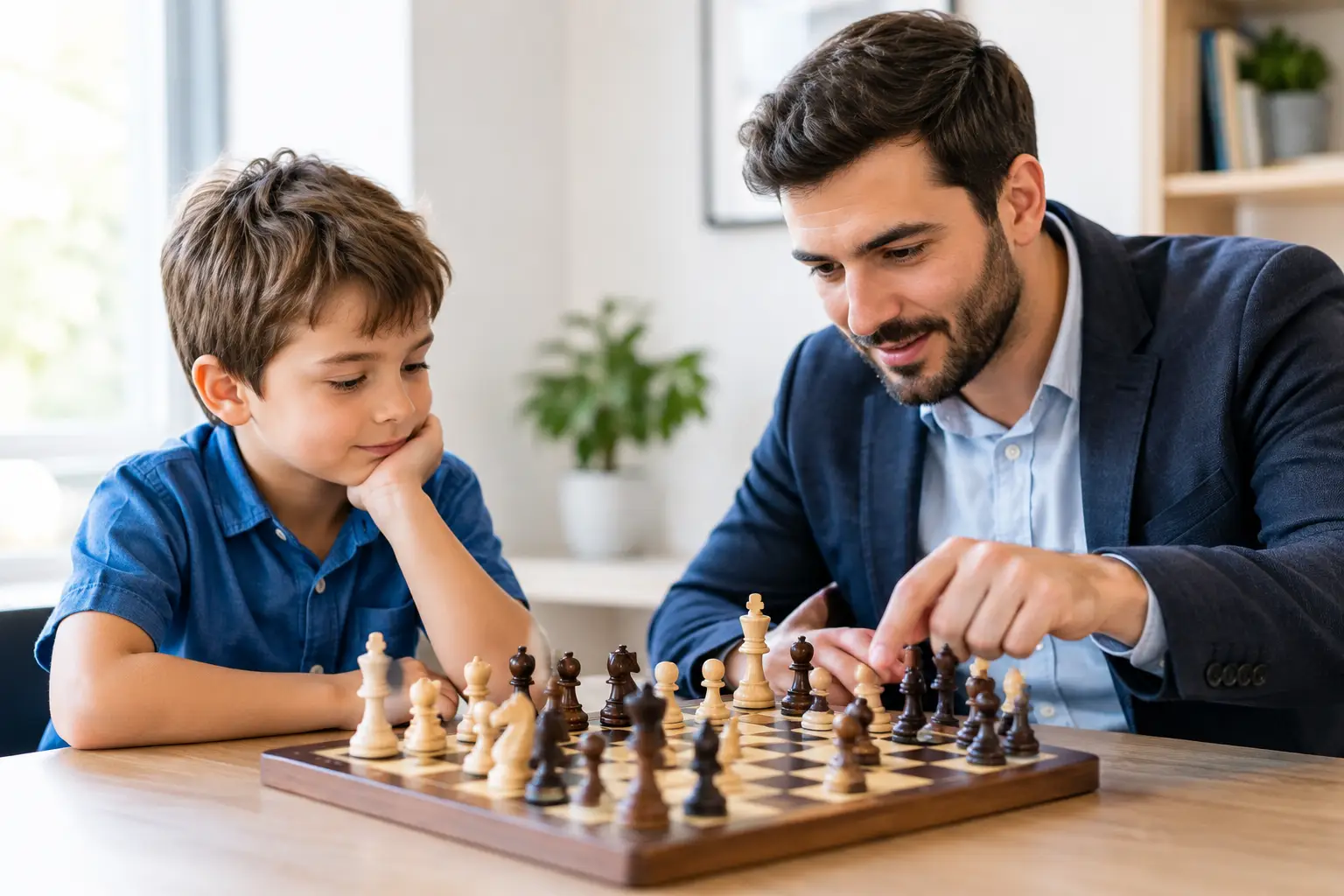
Private lessons cost more because the instruction is fully personalized. The coach can move at your child’s pace, correct habits in real time, and build lessons around specific weaknesses and strengths. For a child who is serious about improving, gets distracted easily, or needs an individualized approach, private coaching often produces faster progress.
Coach experience and credentials
A coach’s background plays a big role in pricing. A casual local player who teaches beginners on the side may charge much less than a professional coach with years of teaching experience, competitive results, and a track record with children.
That said, the strongest player is not always the best teacher for kids. Parents should look for a balance of chess knowledge, patience, communication skills, and age-appropriate teaching. A coach who can keep a 6-year-old engaged and progressing is offering something very specific, and that often deserves a higher rate.
Lesson length and frequency
A single weekly lesson will cost less overall than a full training plan with multiple sessions each week. But frequency matters when it comes to results. One lesson a week can be a great fit for many families, especially when the child also gets practice assignments or guided play between lessons.
Packages can change the math too. Some programs offer a lower per-lesson cost when you book a bundle of sessions in advance. That can be helpful for families who want consistency and a predictable monthly budget.
Beginner instruction vs. tournament coaching
A beginner program usually focuses on rules, piece movement, checkmate patterns, board vision, and basic strategy. Tournament coaching goes deeper into calculation, openings, endgames, positional planning, time management, and game analysis. The more advanced and specialized the training, the higher the price tends to be.
This is one reason parents should not overbuy too early. If your child is just learning how the pieces move, you probably do not need elite competitive coaching yet. A structured beginner program is often the smartest place to start.
Are online chess lessons cheaper?
Often, yes - but cheaper is not the whole story. Online chess lessons can offer excellent value because they remove the need for commuting, make scheduling easier, and give families access to coaches outside their local area.
For many kids, online learning works especially well when the lessons are live, interactive, and built around a clear progression. The coach can share the board, review games, assign puzzles, and keep the session moving in a focused way. Parents also get more flexibility, which matters when you are fitting activities around school, homework, and family life.
The trade-off is that not every online lesson is equally engaging. A child-friendly online program needs more than chess knowledge. It needs structure, energy, and a coach who knows how to teach through a screen without losing the student’s attention.
What are you really paying for?
When families ask how much do chess lessons cost, they are usually also asking a bigger question: what makes one program worth it and another one forgettable?
You are not just paying for minutes on a calendar. You are paying for teaching quality, lesson structure, accountability, and progress. A coach who simply plays a few games with your child is offering something very different from a coach who follows a plan, tracks development, and explains what comes next.
For younger students, value also includes engagement. If your child enjoys the lesson, feels encouraged, and wants to come back next week, that matters. Progress tends to follow consistency, and consistency is much easier when the experience feels positive.
Parents should also look at communication. Does the coach explain how your child is doing? Is there a clear sense of level, goals, and next steps? Strong parent communication is often one of the biggest differences between a random lesson and a professional program.
How to tell if the price is fair
A fair price makes sense when you line it up with what your child is actually getting. Instead of asking only whether a lesson is expensive or cheap, ask what is included.
If a coach charges a moderate rate but provides a tailored lesson plan, age-appropriate instruction, regular feedback, and a clear path from beginner skills to real games, that is usually a better investment than a bargain lesson with no structure. On the other hand, a premium fee only makes sense if the coach can deliver a premium experience.
Trial lessons can help here. They give parents a chance to see whether the coach connects with the child, whether the lesson feels organized, and whether the teaching style fits. A free or low-pressure trial is often the best way to avoid paying for the wrong program.
At Savushkin Chess, this is exactly why a trial assessment matters. Parents can see how their child responds before making a bigger commitment, and that clarity makes pricing easier to evaluate.
How parents can choose the right cost level
The best budget is not always the lowest one. It is the one that your family can sustain consistently while still giving your child a real chance to improve.
If your child is brand new to chess, start with a format that emphasizes strong fundamentals and patient teaching. If your child already plays regularly and wants to compete, it may be worth investing more in personalized coaching. The key is matching the level of instruction to the stage your child is in right now.
It also helps to think in terms of outcomes. Are you looking for a fun introduction, better focus, stronger game results, or tournament readiness? Different goals justify different price points.
And keep the long view in mind. The best chess lessons do more than teach openings and tactics. They help kids build focus, resilience, decision-making, and confidence. Those benefits are hard to put into a neat price box, but they are often part of what families value most.
If you are comparing options, look past the hourly rate and pay attention to fit. A lesson that keeps your child engaged, challenged, and steadily improving is usually the one that ends up being worth every dollar.

Ready to see chess click for your child?
Book a free 20–30 minute trial lesson with one of our coaches — no commitment, no payment needed.