
How to Practice Chess Tactics: A Kid's Smart Plan
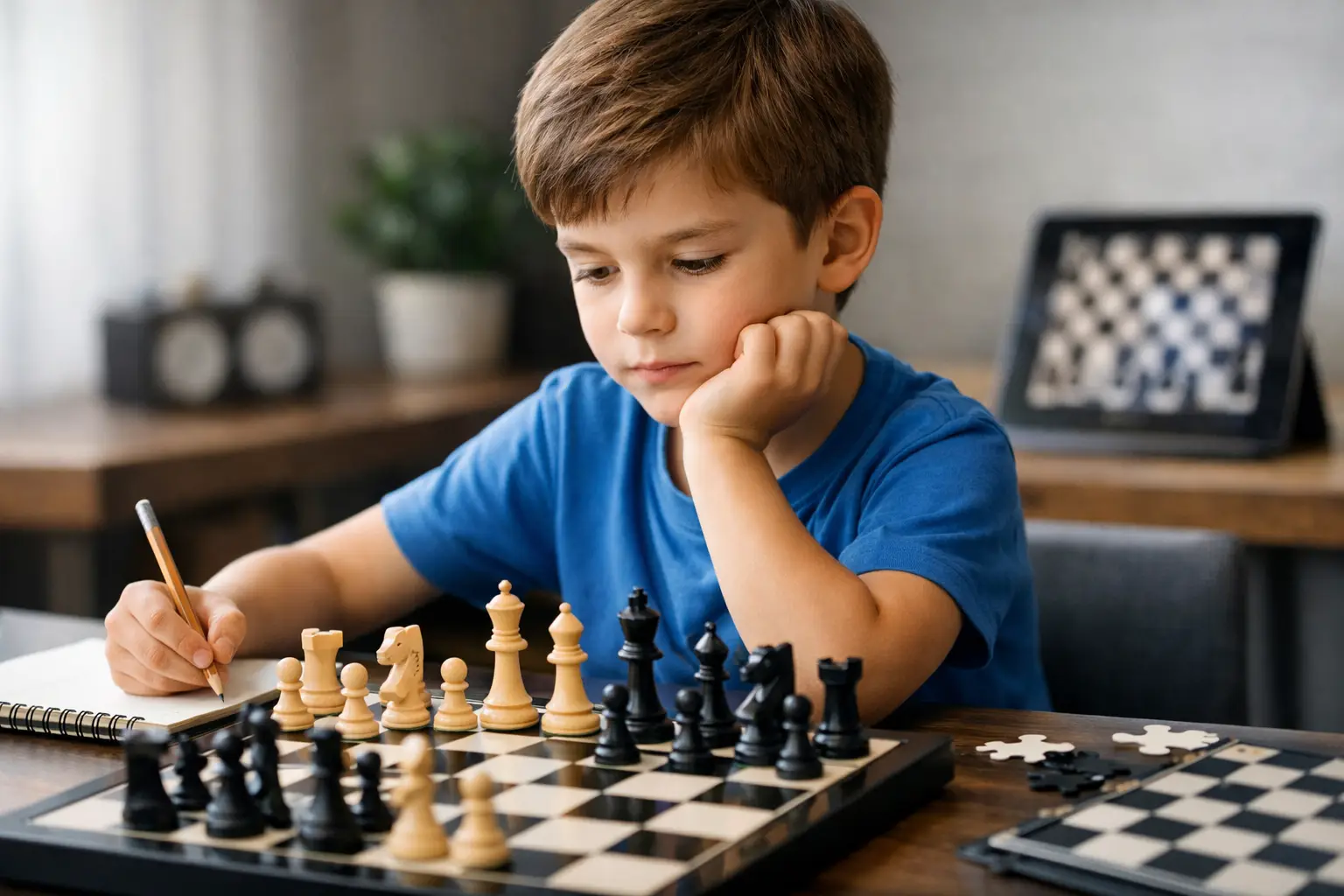
A child finds a brilliant fork in a puzzle, smiles, and then misses the same idea in a real game two days later. That is normal. Learning how to practice chess tactics is not just about solving more puzzles. It is about building the habit of noticing threats, checking possibilities, and choosing moves with confidence when the clock is running.
For young players, tactical training works best when it is short, structured, and connected to real games. A few thoughtful minutes each day can be more valuable than an hour of random puzzles solved in a rush. Parents do not need to know advanced chess to support the process. They simply need a routine that makes progress visible and keeps chess enjoyable.
What Chess Tactics Practice Actually Builds
Chess tactics are short sequences in which one side can win material, give checkmate, or gain a major advantage through a concrete idea. A fork, pin, skewer, discovered attack, and back-rank mate are all common tactical patterns.
But tactics are not only about memorizing names. They teach a child to pause before moving, look for forcing options, and calculate what happens next. Those habits carry directly into tournament games. A player who regularly asks, “What checks, captures, and threats do I have?” will make fewer impulsive moves and spot more opportunities.
There is a trade-off, though. Puzzle ratings and long solving streaks can be motivating, but they are not the goal. If a child guesses quickly until the right move appears, they may earn points without improving their board vision. Quality thinking matters more than puzzle volume.
How to Practice Chess Tactics With a Simple Routine
A practical daily session for most children takes 10 to 20 minutes. Beginners and younger children may do best with 5 to 10 focused minutes, while experienced tournament players can spend longer on calculation and review.
Start with a small number of puzzles, usually three to five. Before touching a piece or choosing an answer, encourage your child to use the same thinking process every time: look for checks, then captures, then threats. This simple order helps children notice forcing moves first, because the opponent has fewer possible replies.
After they find a candidate move, ask them to say the full idea out loud: “If I move my knight here, it checks the king, and then I win the queen.” Speaking the sequence slows down guessing and reveals whether they have calculated the opponent’s best response. For children who are still learning notation, pointing to the squares is perfectly fine.
Once the puzzle is complete, take a moment to name the pattern. Was it a fork? Did a pinned piece fail to defend another piece? Did the king have no safe squares? Naming the idea creates a useful mental folder. The next time that pattern appears, the child is more likely to recognize it quickly.
Use the Right Difficulty Level
The best puzzle is not always the hardest one. If your child solves nearly every puzzle instantly, the level may be too easy to build calculation. If they miss almost everything and become frustrated, it is too difficult to be useful.
A good target is a level where your child can solve many puzzles with thought but still misses some. Mistakes are not a problem. They show the coach, parent, or player what needs attention. A child who misses a simple fork may need to improve piece awareness. A child who sees the first move but misses the reply may need more calculation practice.
For beginners, one-move tactics are valuable. They build the ability to see loose pieces, basic checkmates, and direct attacks. As a child progresses, introduce two- and three-move combinations, where they must consider the opponent’s reply before committing to a move.
Do Not Rush the Answer
Fast puzzles have a place, especially for reinforcing patterns a child already knows. Still, speed should come after understanding. A useful rule is this: before making the move, the player must be able to explain why it works.
If they get a puzzle wrong, avoid immediately showing the solution. First ask, “What was your opponent threatening?” or “What could they do after your move?” These questions help children discover the missed detail themselves. Then replay the position and let them find the correct idea. That small effort makes the lesson stick.
Connect Puzzles to Real Chess Games
The biggest gap in tactical training is often transfer. A child may solve puzzles well but fail to look for tactics during a game because they are focused only on their own plan. The fix is to make a tactical scan part of every move.
Before moving in a casual or tournament game, teach your child to ask three questions:
- Is my king safe?
- What is my opponent attacking or threatening?
- Do I have a check, capture, or threat?
This takes practice. At first, the child may forget the questions after only a few moves. That is expected. A gentle reminder during practice games is enough. Over time, the scan becomes automatic and helps prevent the most common young-player mistake: leaving a piece undefended.
After each game, review only one or two key moments. Do not turn every game into a long lecture. Find a position where a tactic was available, missed, or allowed. Set up the board again and ask the child what they see now. This is where puzzles become practical chess skill.
A simple notebook can help, especially for children who enjoy tracking progress. They can write down the pattern, draw the position, or record one sentence such as, “I missed that my rook was pinned.” Reviewing these notes once a week reinforces learning without making chess feel like homework.
Build a Weekly Tactics Plan That Kids Can Follow
Variety keeps training fresh, but too much randomness makes it harder to see progress. A weekly focus gives young players a clear target. One week might center on forks, followed by pins, mating patterns, and discovered attacks.
A helpful weekly rhythm could look like this:
- On three or four days, solve a few puzzles featuring the week’s pattern.
- On one day, review missed puzzles without a timer.
- On one day, play a practice game and look specifically for that pattern.
- At the end of the week, revisit a few older puzzles to check retention.
Children do not need to master every tactical theme before moving on. Chess learning is a spiral. They will meet forks, pins, and mating nets again and again at deeper levels. The goal is steady recognition, not perfection on the first pass.
For families with a busy schedule, consistency matters more than a detailed calendar. Ten focused minutes after school three times a week is a strong start. It is far better than saving everything for one tired, frustrating weekend session.
Make Tactics Challenging Without Making Chess Feel Heavy
Parents can support practice without becoming the puzzle judge. Praise the process: careful thinking, good questions, and the willingness to review a mistake. “You checked the opponent’s reply before moving” is more helpful than “You are so smart.” Process-based encouragement teaches children that improvement comes from effort and method.
Competition can motivate some players, while others do better with personal goals. A child who loves a challenge may enjoy trying to solve five puzzles accurately. Another may respond better to seeing how many pins they can recognize this week compared with last week. It depends on the child’s personality and current confidence.
If frustration rises, shorten the session. End with an easier puzzle or a quick checkmate pattern so the child leaves the board feeling capable. A positive finish makes it much easier to return tomorrow.
A coach can add real value when a child’s puzzle work and game results do not match. In a live lesson, a coach can see whether the issue is board vision, calculation, time management, or simply a missed rule. At Savushkin Chess, that kind of individualized feedback helps children turn isolated tactical wins into reliable game habits.
The next time your child sits down with a chess puzzle, encourage one calm question before they move: “What is the idea?” That pause is small, but repeated often, it becomes the beginning of stronger, more confident chess.

Ready to see chess click for your child?
Book a free 20–30 minute trial lesson with one of our coaches — no commitment, no payment needed.


