How to Start Chess Young With Confidence
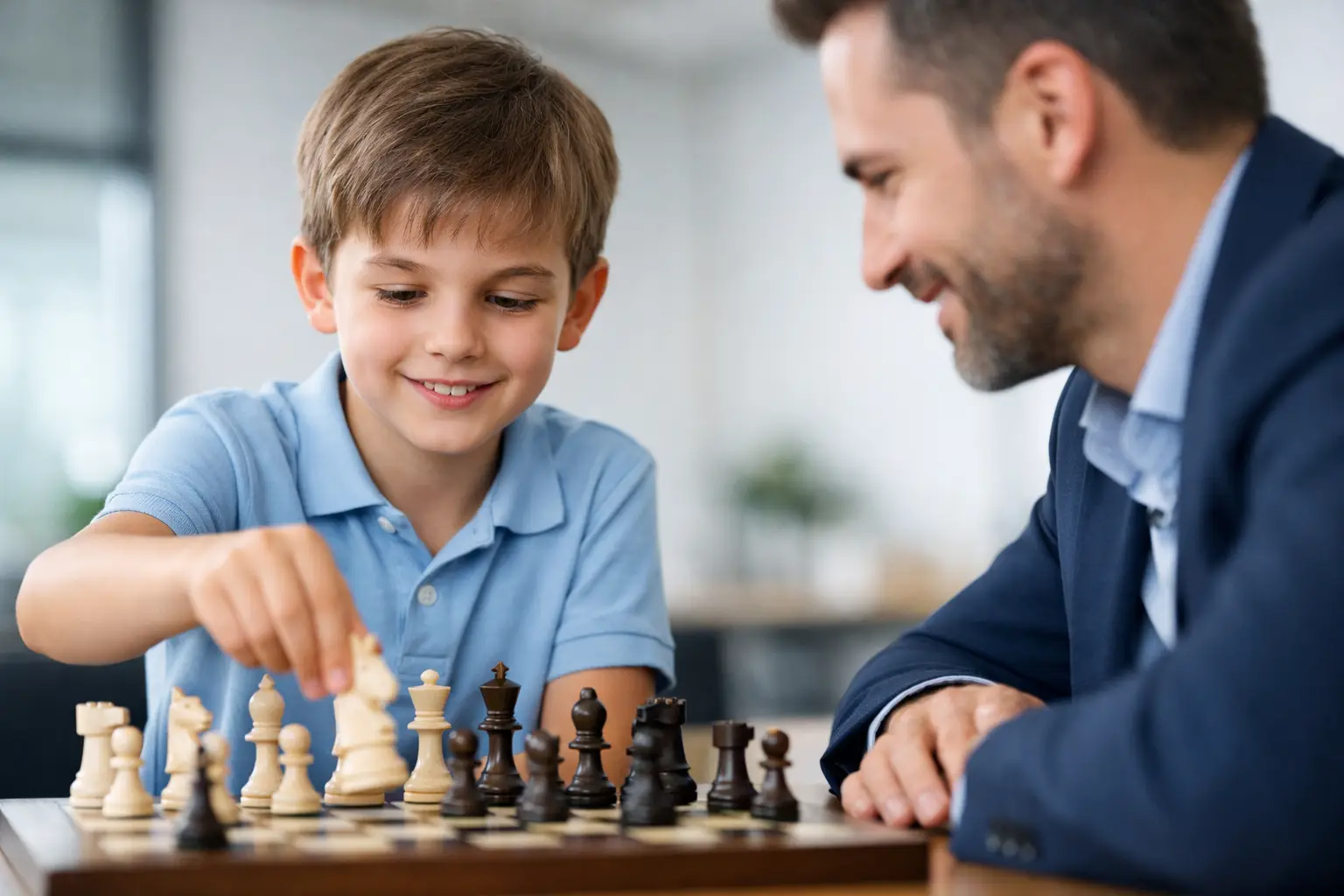
A 5-year-old who proudly announces checkmate after moving a knight the wrong way is not failing at chess. They are doing exactly what beginners should do: experimenting, taking risks, and discovering that the board has a story. For parents wondering how to start chess young, the goal is not to create a little grandmaster overnight. It is to give a child a fun, structured first experience that grows attention, confidence, and real problem-solving skills.
Chess can be a wonderful early activity because children see progress quickly. They learn a new piece, spot a simple tactic, or finish their first full game. Those small wins matter. The key is matching the instruction to the child in front of you, rather than expecting them to learn the game the way an adult would.
How to Start Chess Young Without Overwhelming Your Child
There is no single perfect age to begin. Many children can start recognizing pieces and playing simple mini-games around age 4 or 5. Others are more ready at 7 or 8, when they can sit longer, follow multi-step instructions, and handle a lost game with a little more perspective. Readiness matters more than a birthday.
A young child does not need to memorize openings or understand every rule before enjoying chess. Start with the board, the names of the pieces, and the idea that each piece moves in its own special way. Pawns go forward, rooks move in straight lines, bishops move diagonally, knights jump, and the king needs protection. That is plenty for an early lesson.
Keep the first sessions short. Ten to 15 focused minutes can be more productive than an hour at the table. Stop while your child is still interested. A child who asks to play again tomorrow is building the habit that leads to lasting improvement.
Start With Play, Then Add Structure
The fastest way to make chess feel like homework is to present every lesson as a test. Children learn best when each new idea has a clear purpose in a game. Before asking them to remember how a bishop moves, let them race a bishop across an empty board. Before introducing checkmate, show them how a king escapes from danger.
Mini-games make the early stages more exciting and less intimidating. Try a pawn race, where each player has a few pawns and tries to reach the other side first. Set up a knight on a square and challenge your child to find all its possible landing spots. Play king-and-rook versus king only after they understand the basic movement of those pieces. These activities teach real skills without requiring a full 32-piece game.
Once your child knows the pieces, introduce the basic rhythm of a game: develop pieces, look for threats, protect the king, and check what your opponent is attacking. Use plain language at first. “What is your opponent trying to take?” is more useful to a beginner than a long explanation about strategic imbalance.
Structure still matters. A child benefits from knowing what comes next: first the pieces, then check and checkmate, then simple tactics, then complete games and careful review. Clear progression makes chess feel achievable. It also lets parents see that learning is moving forward, even when a child has a rough game.
Build a Routine That Fits Family Life
Consistency beats intensity. Two or three short chess sessions each week will usually help a young beginner more than one long, exhausting session on Sunday. A reliable routine gives children time to remember what they learned and return with fresh energy.
For many families, a simple weekly pattern works well. One session can focus on a new idea, another can be a short game, and a third can be a puzzle or a replay of a favorite position. The balance matters. If every session is a lesson, motivation can fade. If every session is free play, gaps in understanding can linger.
Parents do not need to become chess experts to help. Ask your child to explain a move they liked. Celebrate when they pause before moving instead of playing the first move they see. If they lose, avoid immediately pointing out every mistake. Start with a question: “What would you try differently next time?” That turns disappointment into reflection.
A visible chessboard in a common area can also help. Children are more likely to return to an activity when it is easy to start. Digital chess is useful too, especially for puzzles and online coaching, but younger beginners often benefit from touching the pieces and seeing the board in front of them.
Teach Confidence Alongside Chess Skills
Chess brings emotional lessons with every game. Children will blunder a queen, miss a checkmate, and sometimes lose to a sibling who seems much more experienced. Those moments are part of the value of the game, but they need a supportive response.
Make it normal to say, “Good game,” whether your child wins or loses. Praise effort that is specific and genuine: noticing a threat, taking time to think, or staying calm after a mistake. General praise like “You are so smart” can make a child fear getting things wrong. Praise for process teaches them that improvement comes from practice.
It also helps to choose appropriate opponents. A child who loses every game may decide chess is not for them. A child who wins every game may not learn resilience. Play at a level where they can occasionally succeed while still needing to think. If you are much stronger, use a small handicap, play a reduced-piece game, or give your child extra thinking time.
Know When Coaching Can Help
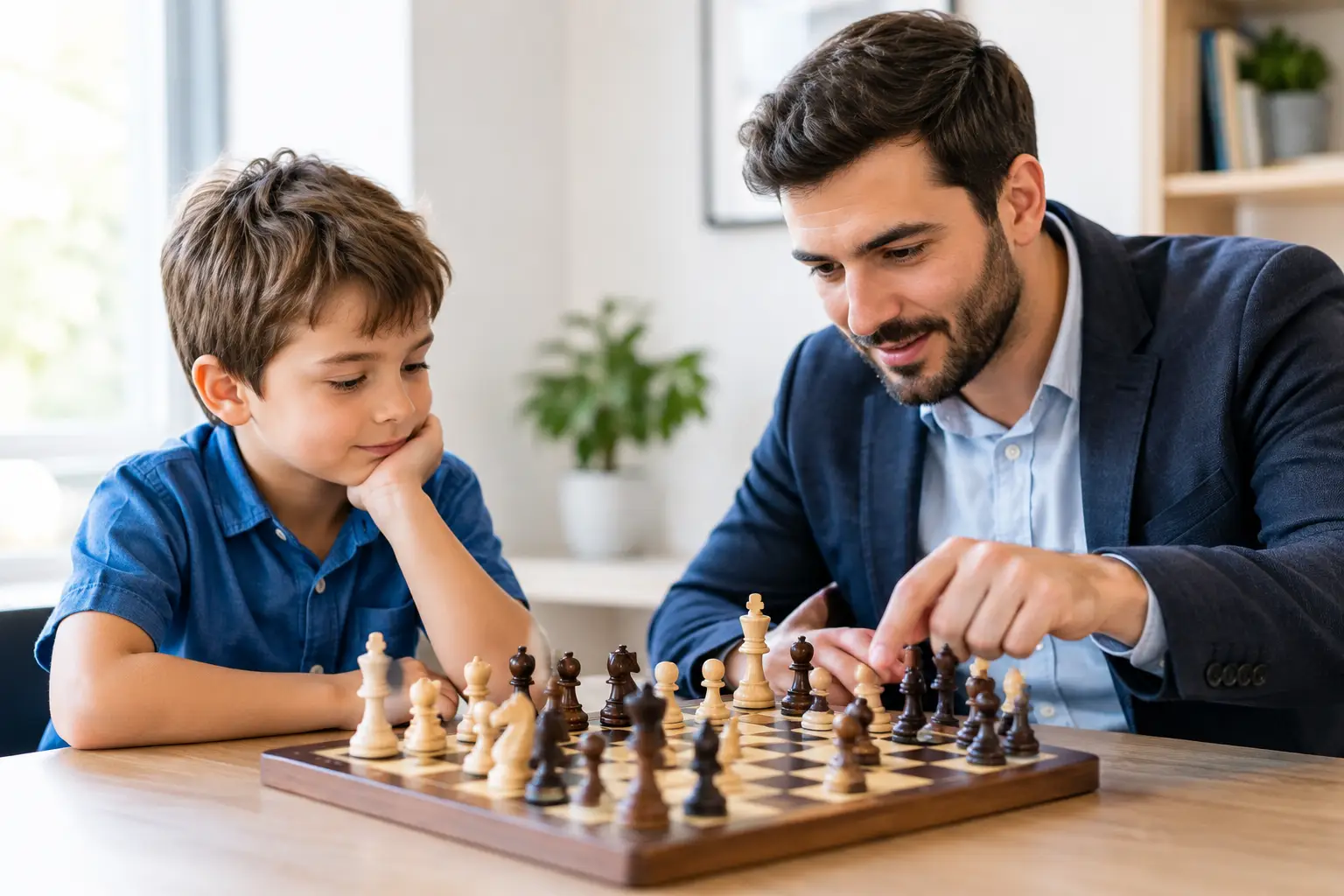
A parent can create a great start, but a skilled coach can make the learning path clearer and more engaging. This is especially true when a child is eager to improve, repeatedly asks deeper questions, or has reached the point where family games no longer offer much challenge.
For young children, coaching should not feel formal or intimidating. The best lessons are interactive, age-appropriate, and built around frequent small wins. A coach should adjust the pace, explain ideas in simple language, and keep parents informed about what the child is learning and where they are improving.
One-on-one instruction can be particularly helpful because children develop differently. One beginner may be ready for tactics after a few lessons, while another needs more time with legal moves and board awareness. Personalized teaching respects that difference instead of rushing every student through the same script.
At Savushkin Chess, live online lessons are designed around this kind of individual progress, from a beginner's first moves to game play and tournament preparation. A trial assessment can help parents get clear answers about the right starting point, with no pressure to commit before seeing how their child responds.
Avoid the Early Mistakes That Make Chess Less Fun
The most common mistake is moving too fast. A child may be able to repeat the rules of castling or en passant, but that does not mean they need those rules in week one. Add complexity when it solves a problem they are actually encountering in games.
Another mistake is treating every game as a measure of talent. Young players are still learning how to sit with uncertainty, make decisions, and recover from errors. Their results will be uneven. That is normal. Look for signs of growth such as fewer illegal moves, better attention, a willingness to play again, and more thoughtful questions.
Be careful with screens and competitive play, too. Online games can be motivating, but fast time controls often encourage guessing rather than thinking. For beginners, slower games and guided puzzles are usually a better foundation. Tournaments can be exciting when a child is ready, but they should be introduced as a learning experience, not a test of whether chess is “working.”
Finally, let your child have some ownership. They may love knights, enjoy solving puzzles more than playing games, or want to create a funny opening name. Those preferences are not distractions. They are clues to what will keep them engaged long enough to build real skill.
The best first move is simple: set up the board, sit beside your child, and make the next lesson feel possible. A patient start gives young players something far more valuable than an early rating: the confidence to think, try, and come back to the board tomorrow.

Ready to see chess click for your child?
Book a free 20–30 minute trial lesson with one of our coaches — no commitment, no payment needed.