
7 Ways to Improve Chess Concentration for Kids
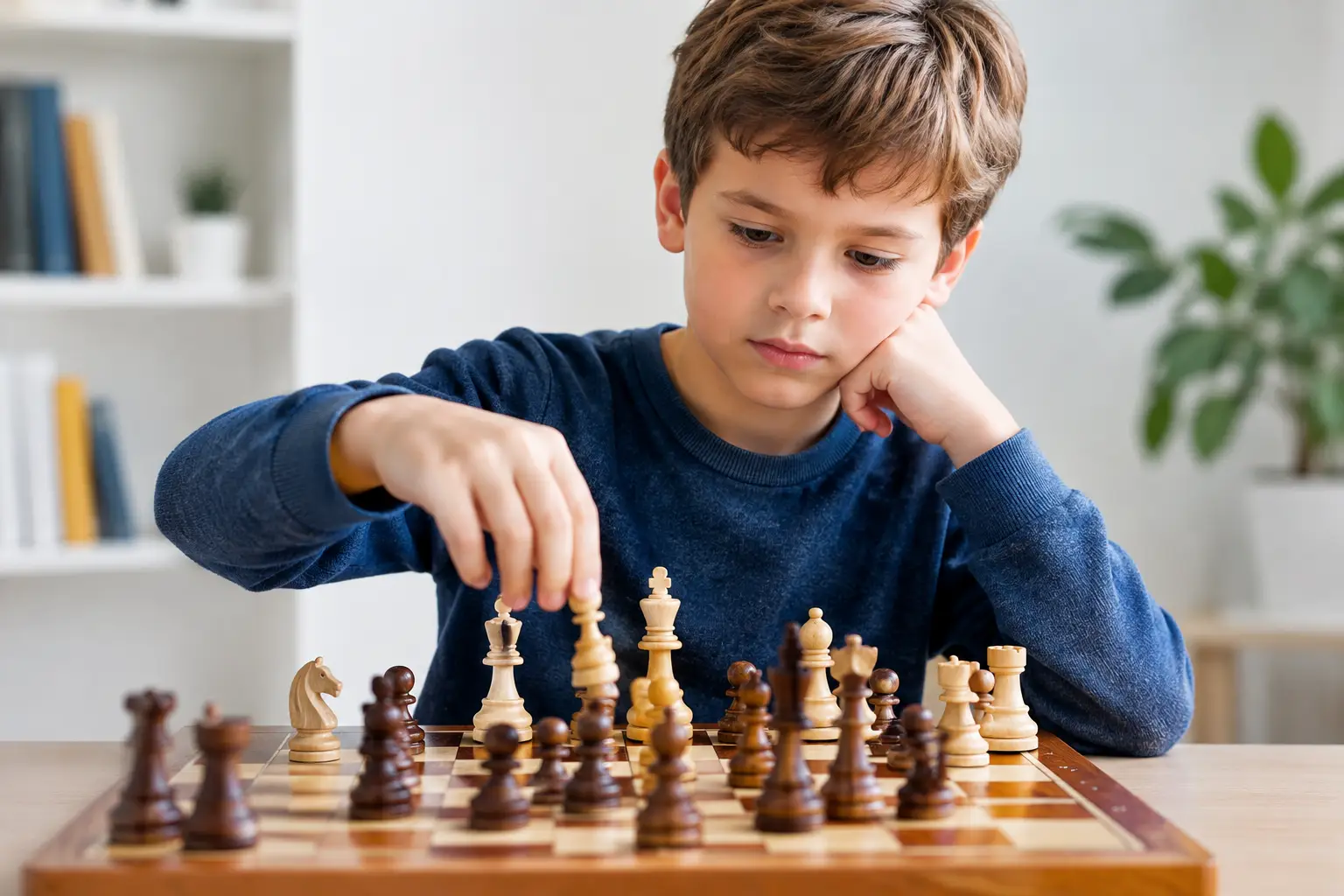
A child can spot a beautiful checkmate puzzle at home, then miss a knight sitting under attack in a real game. That does not mean they lack chess talent. Usually, it means they need a better system to improve chess concentration when the clock is running, the opponent is waiting, and one mistake feels like a big deal.
Concentration in chess is not about forcing a child to sit perfectly still for an hour. It is the ability to return attention to the board, notice what changed after every move, and make one careful decision at a time. Like opening principles or endgame technique, it can be taught, practiced, and strengthened.
What Chess Concentration Looks Like at Different Ages
For a 5-year-old beginner, good concentration may mean staying with a short game, taking turns without rushing, and checking whether a piece is safe. For a 10-year-old, it may mean using a simple thought process before moving. For a tournament-bound teenager, it includes recovering after a mistake and staying focused during a long, complicated position.
Parents often expect focus to look the same at every age. It does not. A younger child may need frequent resets and shorter lessons, while an older child benefits from gradually building stamina. The goal is steady progress, not asking a child to perform like an adult player overnight.
Some common signs that focus needs support include moving instantly, touching a piece before thinking, repeatedly overlooking one-move threats, talking about unrelated things during a game, or becoming upset after a blunder and mentally leaving the board. These habits are normal starting points. The right routines turn them into opportunities to learn.
7 Ways to Improve Chess Concentration
1. Create a pre-move routine
The most useful concentration habit is simple: before every move, pause and ask a few consistent questions. A child might use: “What did my opponent’s move do? Is anything attacked? What are my checks, captures, and threats?”
At first, this will feel slow. That is okay. Speed without awareness produces avoidable mistakes. Over time, the questions become automatic, and the child begins to notice hanging pieces before moving.
For younger players, keep the routine even shorter: “What changed?” and “Is my piece safe?” One clear question used every turn is far better than five questions they cannot remember.
2. Match game length to your child’s current stamina
A child who loses focus after 15 minutes is not helped by being pushed into a 60-minute game every day. Start with a length that allows them to finish feeling successful, then extend it gradually.
For example, a beginner may play a focused 10-minute game with a few pauses to discuss key moments. An experienced child can work toward longer time controls as their tournament goals grow. Longer games do build endurance, but only when the player has enough basic habits to use that time well.
Quality matters more than the number of games played. One focused game followed by a calm review can teach more than five rushed games played while distracted.
3. Practice without the usual distractions
Before chess practice, put away the extra tabs, toys, snacks, and notifications that compete for attention. This is especially important for online learning, where the computer can quickly become a source of distraction instead of a chessboard.
Create a small, predictable chess space when possible. A clear desk, a drink nearby, and a comfortable chair send a useful message: it is time to think. Parents do not need to make the room silent or overly serious. The aim is to remove distractions that pull attention away every few seconds.
If siblings are active nearby, headphones or a quieter corner may help. If a child is hungry or tired, a short break before the game is often more productive than repeatedly reminding them to focus.
4. Use short, active training blocks
Long lectures rarely hold a child’s attention, even when the topic is chess. Strong practice alternates between learning and doing: a brief explanation, a puzzle, a position to analyze, then a game or mini-game that uses the idea.
Try a 20- to 30-minute home session with one clear purpose. Perhaps the focus is spotting loose pieces, defending against forks, or checking every forcing move. Finish with two or three positions that let your child apply the skill immediately.
This approach also makes improvement visible. Instead of saying, “Pay more attention,” you can say, “Today you found three attacks before they happened.” Specific progress is motivating.
5. Teach children how to reset after mistakes
Every chess player blunders. The players who improve are not those who never make mistakes, but those who can respond without panic.
Give your child a short reset phrase for the moment after a missed move: “Stop. Breathe. Find the best move now.” Then encourage them to look at the current position rather than replaying the mistake in their head. One deep breath and a return to the pre-move routine can prevent one error from becoming three.
Avoid analyzing the blunder while the game is still being played. A child needs space to recover. After the game, review the moment with curiosity: What was missed? Which pre-move question would have helped? This builds responsibility without shame.
6. Make puzzle practice purposeful, not endless
Puzzles are excellent for building attention because they reward careful looking. But solving dozens at top speed can train guessing rather than calculation. Ask your child to explain why their answer works before making the move.
A small number of well-solved puzzles is enough. Three puzzles where they identify the threat, calculate the response, and explain the idea may be more valuable than 20 quick attempts. For beginners, use simple one- or two-move puzzles. Advanced players can spend longer on positions that require several candidate moves.
When a puzzle is missed, resist giving the answer right away. Ask, “What is the opponent threatening?” That question brings attention back to the board and reinforces a habit that transfers directly into games.
7. Protect the basics outside the chessboard
Concentration is affected by sleep, food, movement, and emotions. A child who has rushed from school, skipped a snack, and gone straight into a lesson may have less mental energy available for calculation.
A simple transition helps: take five minutes to get water, use the restroom, and settle in before chess begins. For tournament days, pack familiar snacks, allow time between rounds, and avoid turning every game into a high-pressure family event.
Chess should be challenging, but it should still feel enjoyable. Children are more willing to concentrate when they associate effort with growth, not with fear of disappointing an adult.
Help Your Child Focus During Real Games
During a game, parents can support concentration without becoming a second coach at the board. Avoid calling out moves, reacting strongly to mistakes, or repeatedly asking, “Are you paying attention?” Those responses can make a child more anxious.
Instead, agree on one reminder before the game begins, such as using the pre-move routine or taking time after the opponent moves. Afterward, ask open questions: “When did you feel most focused?” or “Was there a move you wish you had checked longer?” These questions help children recognize their own thinking patterns.
A coach can be especially helpful when a child is stuck between knowing what to do and doing it consistently. Personalized instruction makes it possible to identify whether the issue is attention, rushed calculation, unclear fundamentals, or a game length that is too demanding right now. At Savushkin Chess, that kind of structure is built into age-appropriate, coach-led lessons so children can develop focus alongside real chess skills.
When Concentration Problems Need a Different Approach
Sometimes a child’s chess focus drops because the material is too easy and they are bored. Other times, it drops because the position is too difficult and they feel overwhelmed. The solution depends on the cause.
If your child is restless with simple drills, add more challenging puzzles or a clear competitive goal. If they freeze in complex games, simplify the task. Work on one skill at a time, use shorter games, and celebrate careful decisions even when the result is not a win.
Avoid comparing their attention span to a sibling, friend, or stronger tournament player. Chess development is not a race, and confidence is part of concentration. Children think more clearly when they believe mistakes are something they can learn from.
The next time your child rushes a move, do not treat it as proof that they “cannot focus.” Treat it as a chance to practice one small habit. A pause, a breath, and one good question before moving can change far more than a single game.

Ready to see chess click for your child?
Book a free 20–30 minute trial lesson with one of our coaches — no commitment, no payment needed.


