
Kids Chess Checkmate Made Clear, Simple and Fun
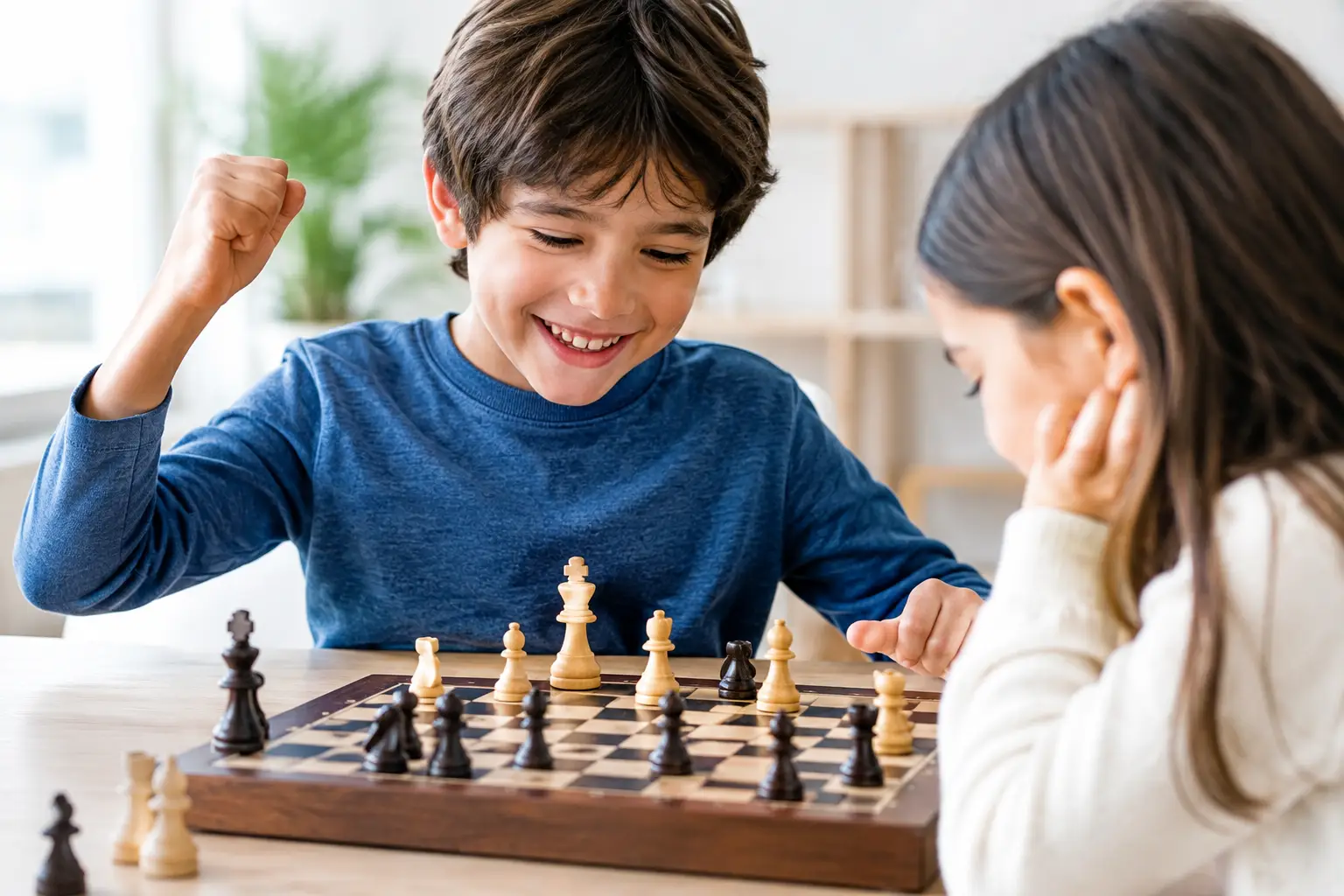
A child can know how every piece moves and still freeze when the opposing king is exposed. That is where kids chess checkmate becomes more than a rule to memorize. It becomes a way to help young players see the board with purpose, make confident decisions, and finish the good positions they work hard to create.
For parents, the goal is not to turn every game into a lesson. It is to give children a few clear patterns they can recognize under real-game pressure. When checkmate is taught in small, encouraging steps, beginners stop guessing and start asking the right question: “Where can the king go?”
Start With What Checkmate Actually Means
Checkmate happens when a king is in check and has no legal escape. That simple definition has three parts, and children need to test all three before announcing a win.
First, the king must be under attack. Second, it cannot move to a safe square. Third, no other piece can capture the checking piece or block the attack. Young players often see a check and immediately celebrate, only to discover that the king can capture their queen or step away. That is not a mistake to criticize. It is a useful teaching moment.
Try using the phrase “check, escape, help.” After a child gives check, ask: Can the king escape? Can another piece help? Repeating these questions builds a habit that carries into every tactical position.
It also helps to explain what checkmate is not. A king that is not in check but has no legal move is in stalemate, which is a draw. This distinction matters because children who are excited to trap the king sometimes remove every square too early. A calm reminder works best: the king must be attacked for it to be checkmate.
Kids Chess Checkmate Begins With Board Vision
Before teaching complicated combinations, help your child see the “box” around the enemy king. Every checkmate pattern is really about controlling escape squares while delivering a protected check.
Set up a lone black king near the edge of the board. Ask your child to point to every square the king could move to. Then place a white queen or rook so it controls some of those squares. Do not rush to the answer. Let them physically trace the lines of the pieces and say which squares are safe or unsafe.
This simple exercise develops board vision far better than showing a finished puzzle and asking for a magical move. The child learns why the move works, not just what move a coach or app expects.
The king is part of the attacking team
One of the biggest beginner breakthroughs is realizing that the friendly king can help deliver checkmate. Children often keep their king far away because they have heard it is valuable and must be protected. That is true in the opening and middle game, but in a king-and-queen or king-and-rook ending, the king becomes an essential attacking piece.
Explain it in child-friendly terms: the queen or rook builds the fence, and the king walks up to close the gate. The opposing king cannot stand next to your king, so your king takes away key escape squares without even giving check.
This is why a queen alone cannot force checkmate against a king that still has room to run. The attacking king has to join the job.
Teach the Two Essential Beginner Checkmates
A child does not need to learn dozens of mating patterns at once. Start with two practical endings: king and queen versus king, then king and rook versus king. They teach control, patience, and accuracy.
King and queen versus king
The queen checkmate is the best first pattern because the queen controls so much of the board. The method is straightforward: use the queen to push the enemy king toward an edge, bring your own king closer, then give a protected checkmate.
At first, children often give repeated checks from far away. That can work, but it is usually slow and can lead to accidental stalemate. Teach them to use the queen like a wall instead. Place it one knight’s move away from the enemy king when possible, reducing the king’s space without checking it.
Once the enemy king is restricted, bring the friendly king closer. When the king reaches the right area, the queen can give check along the final rank or file while being protected by its king.
A helpful coaching question is: “Did your queen make the box smaller?” If the answer is yes, the child is usually on the right track. If the queen gave check but allowed the king to run toward the center, pause and look for a calmer move.
King and rook versus king
Rook checkmate is harder, which makes it excellent for children who are ready for a challenge. The rook can create a wall, but it cannot control diagonal squares like the queen. The child must use their king carefully to drive the opposing king to the edge.
This ending rewards patience. A young player may be tempted to check over and over, but random rook checks can let the king escape. Instead, the rook cuts off a rank or file, the king approaches, and the rook moves its wall closer only when the enemy king is contained.
There is one rule worth repeating: keep the rook protected and do not place it next to the opposing king. If the king can capture the rook, the game is immediately drawn. Let children make this discovery on a practice board once or twice. It sticks much better than a warning alone.
Move From Patterns to Real Games
Checkmate puzzles are useful, but a child also needs chances to recognize the same ideas in a real position. Start with short “mate in one” puzzles. These build confidence because the child can focus on checking every escape square without calculating a long sequence.
Then move to mate in two. Encourage your child to name the opponent’s best defense before choosing the first move. This is a powerful shift. Instead of hunting for their own exciting move, they begin considering what the other player can do.
During casual games, do not point out every missed checkmate. Too much correction can make children afraid to move. If a chance passes, wait until the game ends and revisit the position with a simple question: “What did the black king have available here?” Often, the child can spot the idea quickly when the clock and emotions are gone.
For tournament-minded students, it also helps to practice checkmating with a clock. Give the child a basic winning ending and a reasonable amount of time, such as two minutes. The objective is not speed for its own sake. It is learning to stay organized when time is limited: check the king, find escape squares, keep pieces safe, and avoid stalemate.
Common Checkmate Mistakes and How to Respond
Most checkmate errors come from excitement, not a lack of ability. Children may announce checkmate before checking whether a piece can capture their attacker. They may sacrifice a queen unnecessarily when a quiet move wins. Or they may trap a king without checking it and create stalemate.
The best response is specific and positive. Rather than saying, “That is wrong,” try, “Great idea to limit the king. Let’s see if it still has one safe square.” This protects the child’s confidence while training accuracy.
It is also worth matching the lesson to the child. A five-year-old may learn best with a physical board, short challenges, and a story about building a fence around the king. An older beginner may enjoy solving increasingly difficult puzzles and explaining the defense themselves. A competitive player needs both pattern recognition and disciplined calculation. The principle stays the same, but the pace should change.
Make Checkmate Practice Enjoyable at Home
Ten focused minutes can be more effective than a long session after a busy school day. Set up one position, ask one clear question, and celebrate the process as much as the final move. If your child finds the answer, ask them to explain why it works. If they miss it, make the position a little easier and let them try again.
A strong coach can accelerate this process by choosing positions at the right level and giving immediate, child-friendly feedback. At Savushkin Chess, lessons can turn checkmate from a confusing end-of-game rule into a skill children recognize, practice, and use with confidence.
The next time your child gives check, resist the urge to supply the answer. Give them a moment, then ask: “Where can the king go?” That one question can turn a lucky check into the beginning of real chess thinking.

Ready to see chess click for your child?
Book a free 20–30 minute trial lesson with one of our coaches — no commitment, no payment needed.


