
Live Chess Coaching Versus Classes for Kids
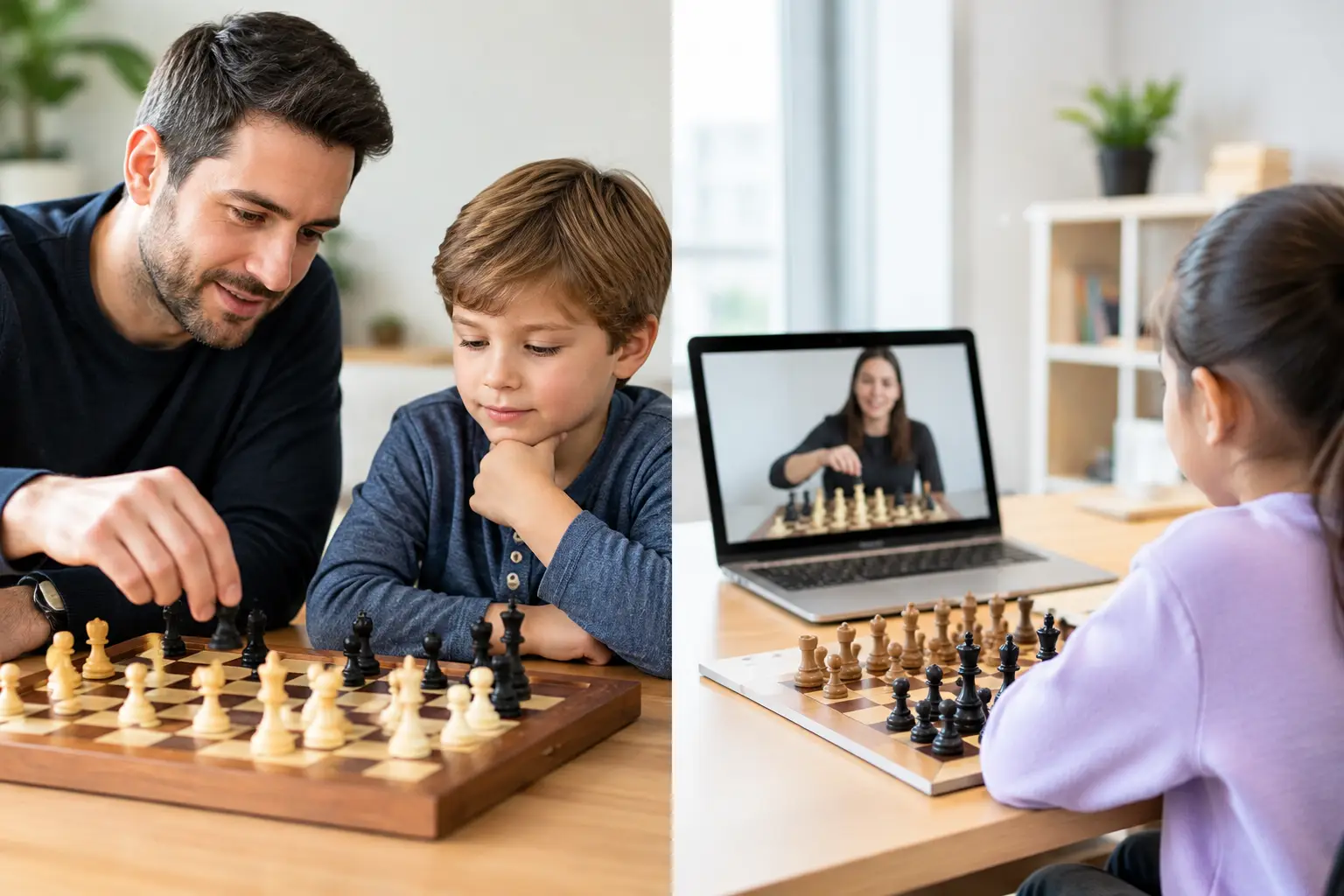
A child can solve a chess puzzle in seconds, then freeze when an opponent makes an unexpected move. That gap is where the choice between live chess coaching versus classes becomes clear. Both can introduce children to a wonderful game, but they do not give every child the same kind of attention, feedback, or path forward.
For parents, the best option depends on more than a child’s current rating or experience. Consider how your child learns, what motivates them, and whether the goal is simple enrichment, steady improvement, or tournament readiness. A good chess program should make kids feel excited to return while giving them a clear sense that they are getting better.
Live Chess Coaching Versus Classes: The Real Difference
A chess class usually teaches one lesson to several students at once. The coach may explain an opening idea, demonstrate a tactic, assign puzzles, and lead games or group discussion. This format can be social, affordable, and a great first step for children who are curious about chess.
Live coaching is more personal. The coach watches one child play, asks questions in real time, notices recurring mistakes, and adjusts the lesson immediately. Instead of moving through a group curriculum at one speed, the child works on the exact skills that will make the biggest difference next.
Neither format is automatically better in every situation. A confident beginner who mainly wants a fun weekly activity may enjoy a group class. A child who gets distracted in groups, learns quickly, feels shy about asking questions, or wants to compete will often make faster progress with individual instruction.
What children experience in a group chess class
Classes offer an environment that feels a lot like an after-school club. Children see that other kids are learning the same rules, making the same mistakes, and celebrating the same small wins. For a social child, that shared energy can be motivating.
The challenge is that group lessons must follow a schedule. If the class is studying checkmates and your child still needs help seeing when a piece is attacked, the coach may not have enough time to pause. On the other hand, if your child already understands the day’s topic, they may spend part of the lesson waiting for the group to catch up.
Classes can work especially well when the group is small, students are at similar levels, and the teacher has a clear plan. Parents should ask how students are grouped, how much individual feedback children receive, and what happens when a child needs extra help.
What changes with one-on-one live coaching
In a live lesson, there is nowhere for confusion to hide. A coach can ask, “What were you planning after that move?” and learn whether the child missed a threat, rushed, or simply did not know the pattern yet. That distinction matters. The right correction is not always another worksheet or another game.
Personalized coaching also makes progress more visible. One week, a young player may work on keeping pieces protected. The next, they may practice simple tactical ideas such as forks and pins. Once those habits become more reliable, the coach can introduce opening principles, calculation, endgames, and tournament decision-making at the right pace.
For younger children, especially ages 4 to 8, live interaction can be the difference between watching chess happen and genuinely participating. A patient coach can keep the lesson moving, use age-appropriate challenges, and shift gears before attention fades. Shorter sessions can be very effective when they are focused and engaging.
Feedback Is Where Skill Growth Happens
Chess is full of mistakes that look similar from a distance. A child may lose a queen because they did not scan the board, because they moved too quickly, or because they focused only on their own plan. A class coach might be able to point out the blunder. A personal coach can identify the habit behind it and build a practice routine around it.
That feedback loop is one reason live coaching often accelerates improvement. Children do not just hear the answer. They are guided to find it. Over time, a coach can help them build useful questions into their thinking: What is my opponent attacking? Is my king safe? Which piece is least active? What changes after I make this move?
Those questions support more than chess. Parents often appreciate seeing children become more patient, more willing to slow down before acting, and more comfortable learning from setbacks. Chess will still include losses, of course. The value is in teaching a child how to respond to them productively.
The Right Choice Depends on Your Child’s Goal
If your child is new to chess and wants a friendly introduction, a beginner class may be all they need at first. Look for a coach who makes the fundamentals fun: how the pieces move, basic checkmates, simple tactics, and respectful game habits. The goal should be confidence, not pressure.
If your child already knows the rules but keeps making the same errors, individual coaching can be a stronger fit. Repeated mistakes usually need targeted practice, not just more exposure to games. A coach can review those games, explain the turning points, and assign work that matches the child’s actual level.
For children who want to play tournaments, personal coaching becomes even more valuable. Tournament play requires more than knowing tactics. Young players need help managing time, recording moves when required, recovering after a loss, preparing openings sensibly, and staying calm against unfamiliar opponents. A coach can create a realistic plan without overwhelming them with advanced theory too soon.
Flexibility Matters for Busy Families
Many families choose online chess because it removes travel time and makes scheduling easier. But not all online formats feel equally flexible. A fixed group class may be difficult to attend if a child has sports, music, homework, or family commitments that change week to week.
With live one-on-one lessons, families can often choose a session length that matches the child’s age and attention span. A 30-minute lesson may be ideal for a young beginner, while a focused 45- or 60-minute session may suit an older child preparing for competition. Consistency matters more than choosing the longest lesson possible.
A structured coach-led program should also give parents clarity. You should know what your child is working on, why it matters, and what the next stage looks like. A child does not need to become a tournament player for progress to count, but the plan should never feel random.
How to Evaluate a Chess Program Before Committing
The best question is not, “Will this make my child a grandmaster?” It is, “Will this coach understand my child and help them make meaningful progress?” Before choosing, ask whether the program assesses a child’s current level, creates an individualized learning plan, and shares feedback with parents.
Also pay attention to how the coach talks about mistakes. Children improve fastest when corrections are clear but encouraging. A strong coach can be serious about standards without making a child feel embarrassed for missing a move.
At Savushkin Chess, the starting point is a live assessment rather than a guess based on age or a few online puzzles. That helps place each child at an appropriate level and gives families a clearer picture of what focused instruction could look like.
When Classes and Coaching Can Work Together
This does not have to be an either-or decision. Some children thrive with individual coaching as their main learning path and a chess club or group class as extra playing practice. Coaching builds the tools; group play gives children more chances to test them against different opponents.
The key is not to overload a child. If chess starts to feel like another demanding assignment, motivation can disappear. Keep the schedule manageable, celebrate effort as well as results, and give children time to enjoy playing for fun.
A good next step is to let your child try a live lesson with a coach who can meet them where they are. Watch how they respond when a difficult position becomes understandable, and when one good idea leads to the next. That growing confidence is often the most valuable result on the board.

Ready to see chess click for your child?
Book a free 20–30 minute trial lesson with one of our coaches — no commitment, no payment needed.


