Live Online Chess Tutor for Children: Worth It?
One child loses interest after two lessons because the class moves too fast. Another gets bored because it moves too slowly. That is usually the moment parents start looking for a live online chess tutor for children instead of another one-size-fits-all activity.
Chess can be an excellent fit for kids, but only when the teaching matches the child. Age matters. Attention span matters. Confidence matters. So does the coach’s ability to keep lessons structured without draining the fun out of them. For families trying to decide whether live online lessons are actually worth it, the short answer is yes - when the format, teacher, and goals are right.
Why a live online chess tutor for children works so well
Recorded lessons and chess apps can help with repetition, but they cannot adjust in real time. A live coach can. That difference is bigger than it sounds, especially for children.
When a child hesitates before a move, rushes through a puzzle, or misses the same tactical idea three times in a row, a skilled tutor sees it immediately. Good coaching is not just about explaining openings or rules. It is about noticing how a child learns, where frustration starts, and when to push a little harder or slow down.
That is one reason live online chess has become such a strong option for families. Kids get personal attention without the extra travel, and parents get more flexibility in the weekly schedule. For many households, that alone makes consistent learning more realistic.
There is also a comfort factor. Children often focus better from home than they do in a noisy group setting. They are in a familiar environment, using a device they already know, and working one-on-one with a coach whose full attention is on them. For shy beginners, that can make a real difference.
What children actually gain from chess lessons
Parents rarely sign up for chess just because they want their child to memorize piece movement. They want an activity that develops skills beyond the board.
A strong chess program can help children practice focus, patience, and decision-making. It teaches them to slow down, look for patterns, and think one step further before acting. That does not mean every child suddenly becomes more disciplined in every part of life. Growth is usually gradual. But over time, many parents notice stronger concentration, better resilience after mistakes, and more confidence in problem-solving.
The social side matters too. Chess gives children a structured way to compete, improve, and measure progress. For some kids, that leads to casual games with friends. For others, it leads to tournaments and a genuine sense of achievement. Either path can be valuable.
Still, it depends on how lessons are taught. If coaching is too rigid, younger children may tune out. If it is too loose, progress stalls. The best instruction balances encouragement with clear goals.
What to look for in a live online chess tutor for children
Not every coach who plays strong chess is a strong teacher for kids. Parents should look beyond ratings and ask a more practical question: can this coach teach children in a way that keeps them engaged and moving forward?
A good tutor explains ideas simply. They break down concepts into manageable steps and avoid overwhelming beginners with too much theory too early. They know how to turn mistakes into learning moments instead of making a child feel behind.
Structure matters just as much as personality. Children usually do best when lessons follow a clear path. That might start with board basics and checkmates for one student, while another child works on tactical patterns, notation, endgames, or tournament preparation. The point is not to force every student through the same material. The point is to have a plan.
Parents should also pay attention to communication. A reliable program keeps families informed about what the child is learning, where progress is showing up, and what comes next. That transparency builds trust because parents can see that lessons are not just happening - they are leading somewhere.
One-on-one lessons vs. group classes
This is where family goals really matter. Group classes can be a nice introduction to chess. They are often more affordable, and some children enjoy learning alongside peers. If a child already likes chess and mainly wants more exposure, a group format may be enough for a while.
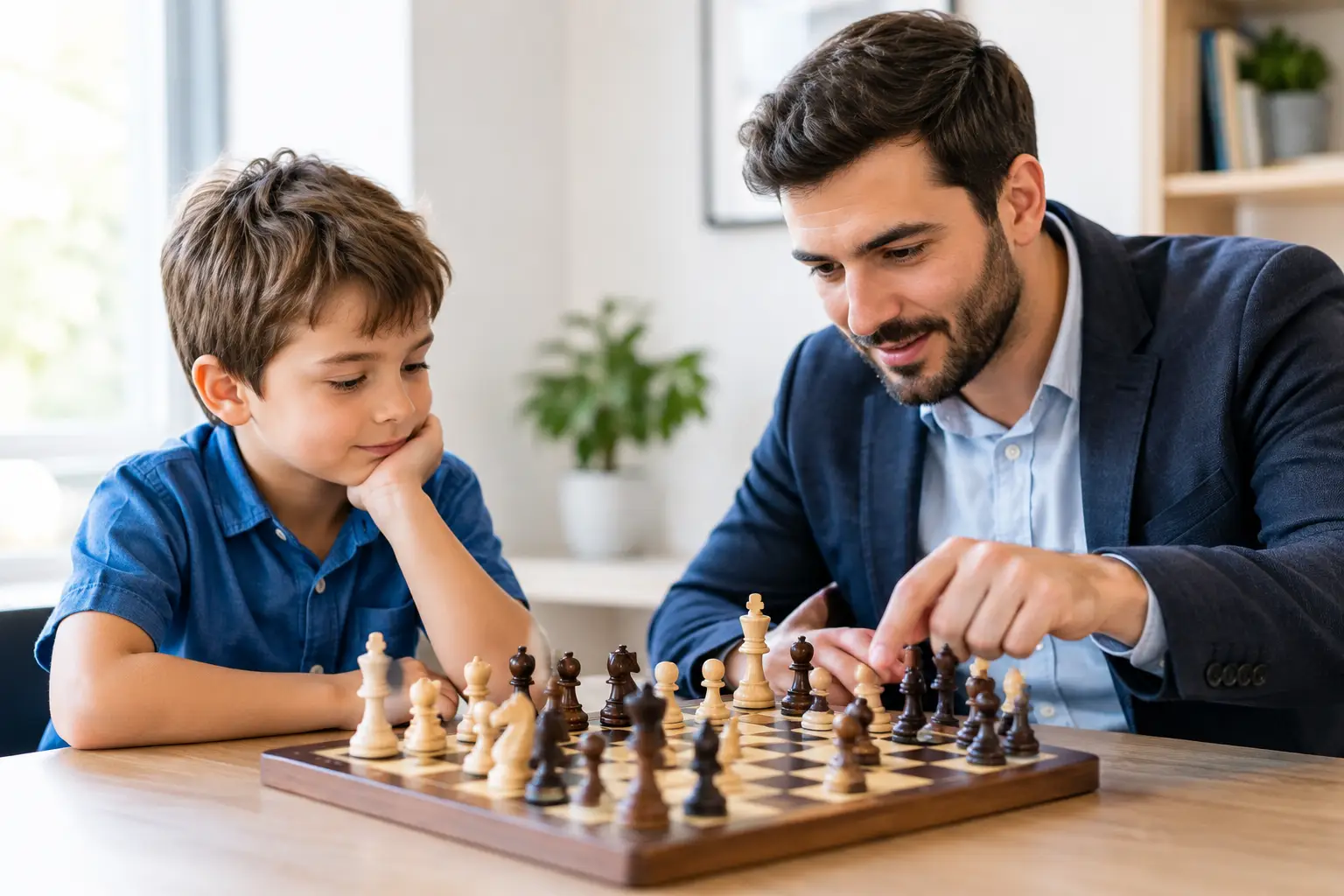
But one-on-one tutoring usually produces faster progress. The coach can adjust every lesson to the child’s level, pace, and personality. There is no waiting for other students to catch up. There is no pressure to keep up if the child needs more time. That makes private instruction especially helpful for true beginners, easily distracted learners, and competitive players who need targeted improvement.
For younger children, individual lessons often work better simply because attention is easier to manage. A patient coach can shift the rhythm, ask direct questions, and keep the child actively involved. That is much harder to do in a larger class.
How online chess lessons stay engaging
Some parents worry that online means passive screen time. That concern is reasonable, but well-run live lessons feel very different from a child zoning out in front of a video.
A quality lesson is interactive from start to finish. The coach asks questions, has the child solve positions, reviews games together, and keeps the student thinking out loud. Children are not just watching chess. They are playing it, analyzing it, and learning how to make better decisions move by move.
Lesson length also matters. A 30-minute session can be perfect for a younger beginner. An older child with stronger focus may benefit from 45 or 60 minutes, especially if they are studying strategy or preparing for competition. Longer is not always better. The best lesson length is the one that keeps energy high and learning productive.
That is why personalized pacing is so important. A child who leaves a lesson feeling successful is much more likely to stay motivated.
Signs the tutoring is working
Progress in chess is not always linear. One week a child seems to improve quickly, and the next week they blunder a queen. That is normal. What parents should look for is a broader pattern.
A child may start recognizing tactical ideas faster, making fewer rushed moves, or showing more confidence during games. They may begin talking about plans instead of guessing. Some children become excited to play outside of lesson time. Others begin asking about tournaments. These are all meaningful signs.
Results can show up in different ways depending on the child’s goals. For a beginner, progress may mean understanding the rules and finishing games confidently. For an intermediate player, it may mean better calculation, stronger openings, and more competitive results.
The strongest programs make that progress visible. They use clear milestones, thoughtful feedback, and lessons that build on each other instead of repeating random topics.
When it is worth the investment
A live tutor is worth it when a child wants real support, not just more exposure. If your child enjoys chess but feels stuck, private lessons can provide the structure needed to improve. If your child is brand new and needs a patient, encouraging start, tutoring can prevent early frustration. If your child is preparing for tournaments, targeted coaching becomes even more valuable.
It may be less worthwhile if the child has no interest at all and is being pushed into it. Even the best coach cannot manufacture enthusiasm from nothing. In that case, a trial lesson is useful because it gives parents a low-pressure way to see whether the connection is there.
That trial experience matters. Families should be able to ask straight questions about teaching approach, scheduling, lesson length, and what happens after the first session. Trust grows when the process is clear and there is no fine print.
For many parents, the best choice is a program that combines strong coaches, individualized lesson plans, and regular communication. That is where online tutoring becomes more than a convenient activity. It becomes a steady path for growth.
At Savushkin Chess, that child-centered approach is exactly what families are looking for when they want lessons that are structured, encouraging, and built around real progress.
The right chess teacher does more than explain moves. They help a child think better, recover from mistakes, and enjoy getting stronger week after week. That is what makes the experience stick long after the lesson ends.

Ready to see chess click for your child?
Book a free 20–30 minute trial lesson with one of our coaches — no commitment, no payment needed.