Online Chess Classes for Beginners: What Works
A child who loves puzzles is not always ready for chess. A child who says, "I want to learn chess," is not always ready for a random video app either. The best online chess classes for beginners meet kids where they are - curious, distractible, excited, and often brand new to rules, routines, and strategy.
For parents, that matters more than flashy promises. Beginner chess is not just about teaching how pieces move. It is about building attention, confidence, pattern recognition, and the ability to think one step ahead without making the experience feel heavy. When online lessons are done well, kids do not just learn chess. They learn how to stay with a challenge long enough to improve.
Why online chess classes for beginners can work so well
Many parents still wonder whether chess really works online, especially for younger kids. It can, and in many cases it works better than people expect. The biggest reason is convenience. When lessons happen at home, families avoid commuting, rushed evenings, and the stress of fitting one more activity into the week.
But convenience is only part of the story. A strong online format gives beginners a very focused learning environment. On-screen boards, coach guidance, visual highlights, and interactive exercises can make early concepts easier to grasp than in a noisy group setting. For many children, especially those who are shy or easily overstimulated, learning from home creates a calmer starting point.
That said, not every child learns the same way. Some kids thrive in one-on-one lessons because they need steady redirection and lots of encouragement. Others enjoy small group energy and like seeing peers answer questions. The right setup depends on age, attention span, personality, and goals.
What beginners actually need in a chess class
This is where many programs miss the mark. Beginner lessons are not successful just because they cover the basics. A good coach knows that new players need instruction in the right order, at the right pace, with enough repetition to make ideas stick.
First, children need clear structure. They should learn the board, the pieces, legal moves, check, checkmate, and simple opening habits before they are expected to calculate long variations. If a class jumps too quickly into advanced tactics, beginners often memorize without understanding.
Second, they need engagement. Younger students especially do better when lessons are interactive and coach-led rather than passive. Watching chess content is not the same as learning chess. Beginners need to answer questions, solve simple positions, make moves, and get immediate feedback.
Third, they need a sense of progress. Parents should be able to see what their child is working on and what comes next. That might mean moving from piece movement to checkmates, then to tactical patterns, then to full games with post-game review. Without that progression, lessons can feel scattered.
How to tell if a program is truly beginner-friendly
The phrase beginner-friendly gets used a lot, but it can mean very different things. Some classes are really designed for kids who already know how to play and just need practice. Others are built from the ground up for true first-timers.
A genuinely beginner-friendly program explains concepts in simple language, keeps lessons age-appropriate, and expects mistakes. That last part is important. New players blunder. They forget how knights move. They miss easy checkmates. A good beginner coach treats those moments as part of the process, not as a problem.
Parents should also look for signs of personalization. Even at the beginner level, one child may need extra work on focus and board awareness while another races ahead into tactics. A one-size-fits-all curriculum can work for some children, but personalized instruction usually produces faster and more confident progress.
If you are choosing between options, pay attention to whether the program offers an initial assessment or trial lesson. That gives you a chance to see how the coach interacts with your child, how the lesson is paced, and whether your child leaves feeling encouraged rather than overwhelmed.
One-on-one vs. group online chess classes for beginners
There is no single correct answer here. It depends on what your child needs most right now.
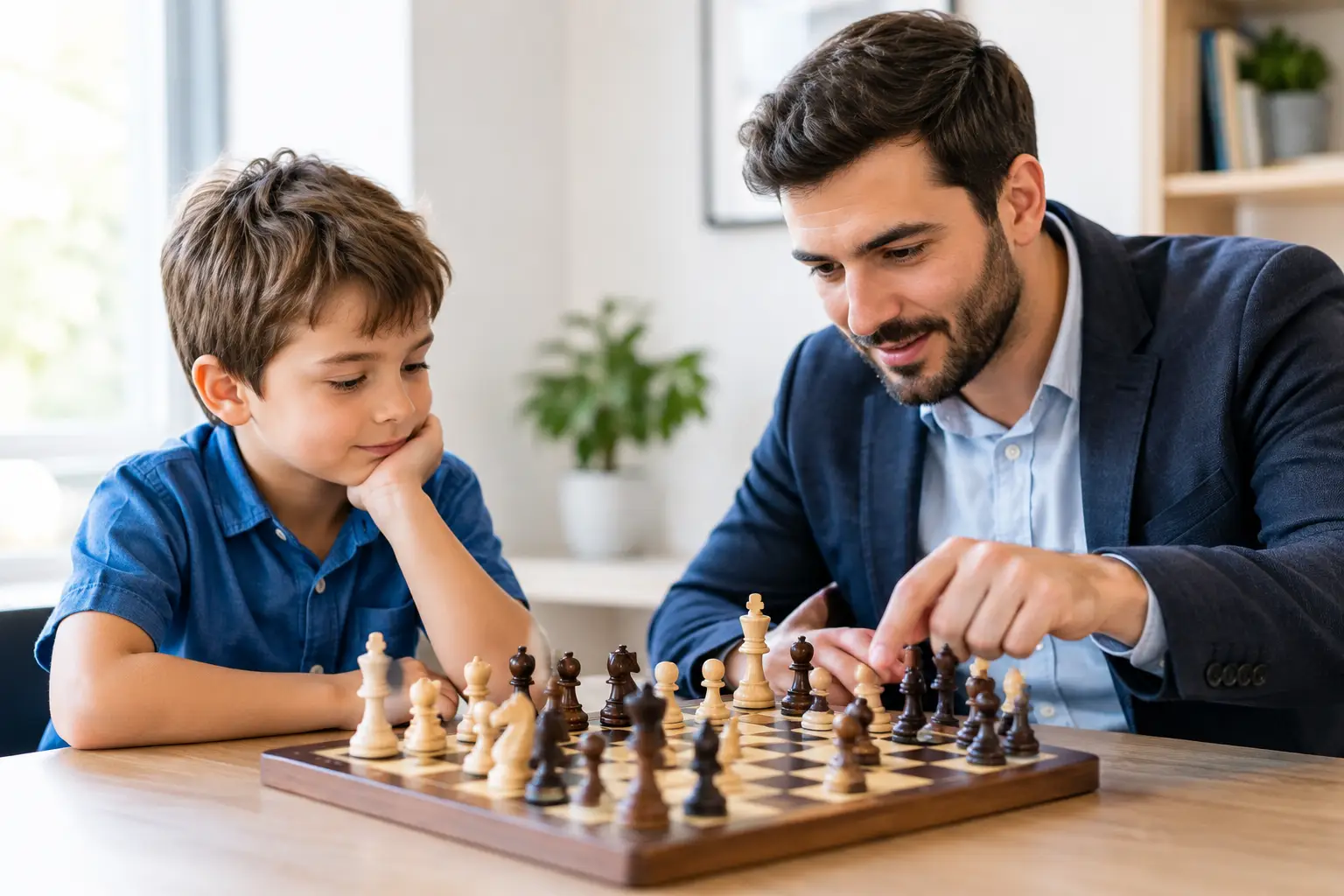
One-on-one lessons are often the best fit for complete beginners, younger children, or kids who need individualized pacing. The coach can adjust the lesson in real time, revisit confusing ideas, and build trust quickly. This format also helps children who are easily distracted or hesitant to speak up in a group.
Group classes can be a great option for social learners. They can make chess feel lively and fun, and some children enjoy the motivation of learning alongside peers. Group settings can also help with confidence when children see that others are making the same beginner mistakes.
The trade-off is attention. In a group, each child gets less individual correction. That is not always a deal-breaker, but parents should be realistic about it. If your child needs lots of support or is starting from zero, one-on-one instruction usually gives a stronger foundation.
What parents should watch for during the first few lessons
The first few lessons tell you a lot. Your child does not need to play perfect chess. What you want to see is engagement, growing familiarity, and a coach who knows how to guide without rushing.
A good sign is when your child starts using chess language naturally - names of pieces, checks, captures, simple plans. Another good sign is when they want to show you something they learned. That usually means the lesson felt accessible and rewarding.
It is also worth noticing how the coach handles attention. Beginner lessons, especially for younger kids, should have a clear rhythm. There should be enough variety to keep the child involved without turning the session into entertainment for its own sake. Fun matters, but so does discipline. The best lessons balance both.
If your child seems frustrated at first, that does not automatically mean the class is a bad fit. Chess has a learning curve. What matters is whether frustration turns into resilience with the right support.
Real progress looks different than most parents expect
Many parents start online chess classes for beginners hoping their child will quickly start winning games. That can happen, but the early wins that matter most are often quieter.
A beginner who starts checking for threats before making a move is progressing. A child who can sit and think for a full game is progressing. A student who used to give up after one mistake but now wants to keep playing is progressing. These habits are the real foundation for stronger chess later.
Winning becomes more consistent when those habits are built first. If a program focuses only on tricks to get quick victories, children may win a few games early but struggle badly once opponents improve. Strong beginner instruction builds skills that last.
This is one reason structured coaching matters. At Savushkin Chess, for example, lessons are designed to move children from absolute beginner concepts into real gameplay with a clear progression, not just random puzzles or one-off tips. Parents tend to appreciate that because they can actually see the path forward.
The best online format is the one your child will stick with
There is a practical side to all of this. The best chess program on paper is not the best one for your family if scheduling is a constant battle or your child dreads every session. Consistency matters more than perfection.
Look for a format that fits your weekly routine, a lesson length that matches your child’s attention span, and a coach your child responds to. A 30-minute focused lesson can be more effective than a longer session that leaves a beginner mentally checked out. Younger children often do better with shorter, high-quality sessions, while older beginners may be ready for more depth.
It also helps when parents know what to expect from the program. Clear communication, transparent next steps, and honest recommendations go a long way. Families do not need fine print or pressure. They need straight answers about fit, pacing, and what progress should realistically look like.
Online chess can be an excellent first serious activity for kids because it grows with them. It starts with learning the pieces, but it does not stay there. Over time, children build focus, patience, strategic thinking, and the confidence that comes from mastering something challenging. The right beginner class makes that journey feel exciting from day one, and that is usually where the real progress begins.

Ready to see chess click for your child?
Book a free 20–30 minute trial lesson with one of our coaches — no commitment, no payment needed.