
Online Chess Coaching vs Apps for Young Players
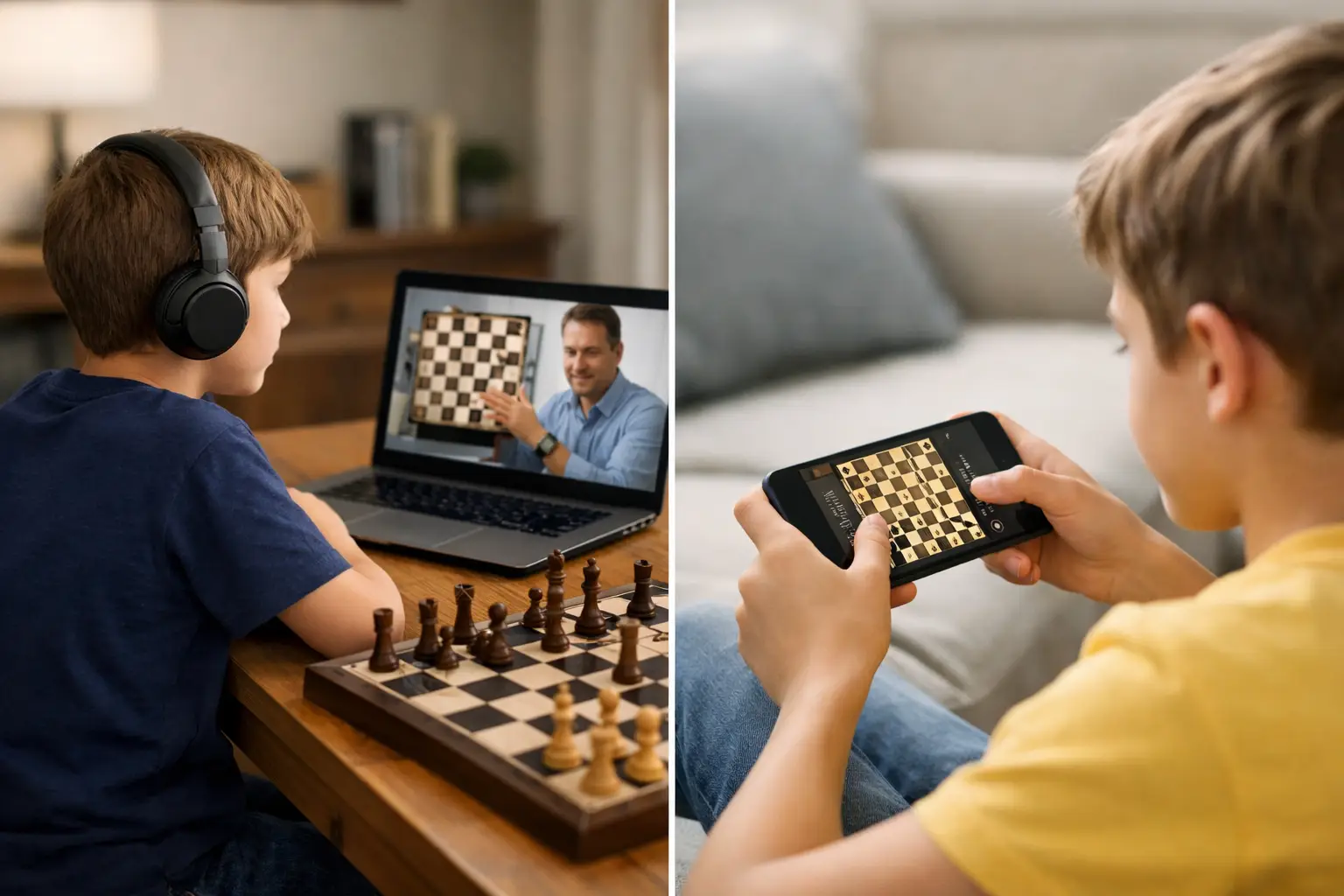
Your child may finish a row of chess puzzles in an app, earn a badge, and still freeze when an opponent makes an unexpected move. That gap is at the heart of online chess coaching vs apps. Both can introduce children to the game, but they teach very differently - and the better choice depends on what your child needs next.
For many families, apps are a fun first step. They are easy to open after school, full of colorful challenges, and often inexpensive. But when the goal is steady improvement, confidence in real games, and eventual tournament readiness, a live coach brings something an app cannot: a patient expert who sees how your child thinks.
Online Chess Coaching vs Apps: What Is the Real Difference?
Chess apps usually teach through repetition. A child watches a short lesson, solves a puzzle, plays against a computer, and moves on to the next level. This can be useful, especially for learning how pieces move or practicing a simple checkmate pattern.
Online coaching is interactive. A coach can ask, “What was your plan before you moved that knight?” Then, instead of simply marking the move wrong, the coach can help the child notice a missed threat, consider another option, and explain the idea in words they understand.
That distinction matters because chess is not only about finding a correct move. It is about building habits: checking for threats, slowing down before trading pieces, making a plan, and recovering calmly after a mistake. Those habits are harder to develop when a screen only says “incorrect.”
For parents, the question is less about whether apps are good or bad. It is whether an app alone gives your child enough guidance to keep moving forward.
What Chess Apps Do Well
Apps have real advantages, and a good coach will often encourage appropriate app practice between lessons. They make chess available whenever a child has ten free minutes. A beginner can practice piece movement, basic tactics, board vision, and simple endgames without waiting for a scheduled class.
They can also make repetition feel like a game. Children who enjoy collecting points, reaching levels, or maintaining a practice streak may happily solve far more puzzles than they would from a workbook. For a child who already understands a concept, quick puzzle practice can reinforce it.
Apps are especially helpful in three situations: a child is brand-new and wants to see whether chess feels exciting, a family needs a low-cost way to add practice, or a student is working alongside coaching and needs short daily exercises.
The limitation is that most apps respond to moves, not to the child behind the moves. They do not always know whether a student guessed correctly, understood the pattern, or accidentally developed a bad habit.
Where Apps Can Stall a Child’s Progress
A child can complete hundreds of puzzles and still struggle in a full game. Puzzle training often begins with the promise that there is one winning move. Real chess does not work that way. A game requires children to assess the position, choose a plan, manage their time, and adapt when the opponent does something strange.
Apps can also encourage fast clicking. Many young players learn to hunt for flashy checks and captures because that is what earns immediate rewards. They may overlook quieter but stronger moves, such as improving a piece, protecting a pawn, or preventing an opponent’s idea.
Then there is the motivation problem. When a lesson becomes difficult, an app cannot read a child’s frustration. Some students quit a level, bounce between games, or avoid the exact skill they need to practice. Others keep playing computer games without understanding why the same mistakes return.
This does not mean children lack effort. It means chess feedback needs context. A child who repeatedly loses their queen may need a clear visual routine before every move. A child who rushes may need short thinking exercises and encouragement that careful play is a strength, not a delay.
What a Live Online Coach Changes
A strong coach turns mistakes into useful information. During a live lesson, the coach can identify whether a child is missing attacks, struggling to calculate, forgetting opening principles, or simply losing focus late in the game. The next lesson can be adjusted around that need.
Feedback That Matches the Child
Children do not all learn chess in the same way. One student may understand best by talking through a position. Another needs arrows, examples, and several chances to try again. A younger beginner may need a playful story to remember how a piece moves, while an ambitious teen may be ready to analyze tournament games in detail.
That personal adjustment is a major benefit of one-on-one instruction. The lesson can move at a pace that challenges the child without making chess feel discouraging. A good coach celebrates genuine progress while being clear about the next skill to build.
Structure Beyond Random Puzzles
Coaching also provides a path. Instead of wondering what lesson or puzzle set comes next, parents can see a progression: piece movement and checkmates, opening principles, tactical patterns, planning, endgames, game analysis, and competitive preparation.
Structure is particularly valuable for children who enjoy chess but have not yet learned how to practice. They may play many games without reviewing them, repeat the same opening mistake, or focus only on their favorite tactics. A coach creates balance between fun games, skill drills, and reflection.
At Savushkin Chess, for example, lessons can be tailored to a child’s level and goals, from a first introduction to tournament-focused development. That gives parents a clearer picture of what their child is learning and why it matters.
Accountability and Confidence in Real Games
A scheduled lesson creates a gentle reason to keep going. Children know someone will look at their games, notice their effort, and help them make sense of the hard parts. For many students, that relationship makes a bigger difference than another digital badge.
Coaches can also prepare children for the emotional side of competition. Losing a game can feel personal to a young player. A supportive coach helps them review the game without shame, identify one or two lessons, and return to the board ready to try again. That resilience carries beyond chess.
Which Option Fits Your Child?
If your child is casually curious, an app may be a perfectly reasonable place to start. Look for short, age-appropriate lessons, and sit nearby for the first few sessions. You will quickly see whether your child enjoys the board or simply enjoys the game-like rewards.
If your child already loves chess but seems stuck, live coaching is often the better next move. Signs include repeated blunders, frustration after losses, confusing opening choices, or a desire to compete. These are not failures. They are signals that the student may be ready for individualized feedback.
For a child preparing for tournaments, coaching becomes even more valuable. Tournament play involves more than knowing tactics. Students need opening habits, time management, notation practice when appropriate, post-game analysis, and the ability to stay composed across several rounds. Apps can support that work, but they do not replace it.
Budget and schedule matter, too. Apps cost less and offer instant access. Coaching requires a scheduled commitment and a larger investment. The best value is not always the cheapest option, though. A child who practices randomly for months may progress less than a child who receives focused guidance and follows a simple practice plan.
The Best Answer Is Often Both
Parents do not have to choose one forever. Think of apps as practice equipment and a coach as the guide who shows a child how to use that equipment well. A few focused puzzles between lessons can strengthen patterns introduced by the coach. A reviewed game can turn an app loss into a valuable lesson.
The key is to avoid letting screen time become the whole chess education. Ask your child questions after they play: What was your plan? When did the position change? What would you try differently next time? Their answers will tell you far more than a rating number alone.
If you are unsure where your child stands, start by watching one full game together. Notice whether they pause to think, protect their pieces, and recover after mistakes. The goal is not a perfect game. It is finding the kind of support that helps them enjoy the next one even more.

Ready to see chess click for your child?
Book a free 20–30 minute trial lesson with one of our coaches — no commitment, no payment needed.


