Online Chess vs In Person: What Kids Need
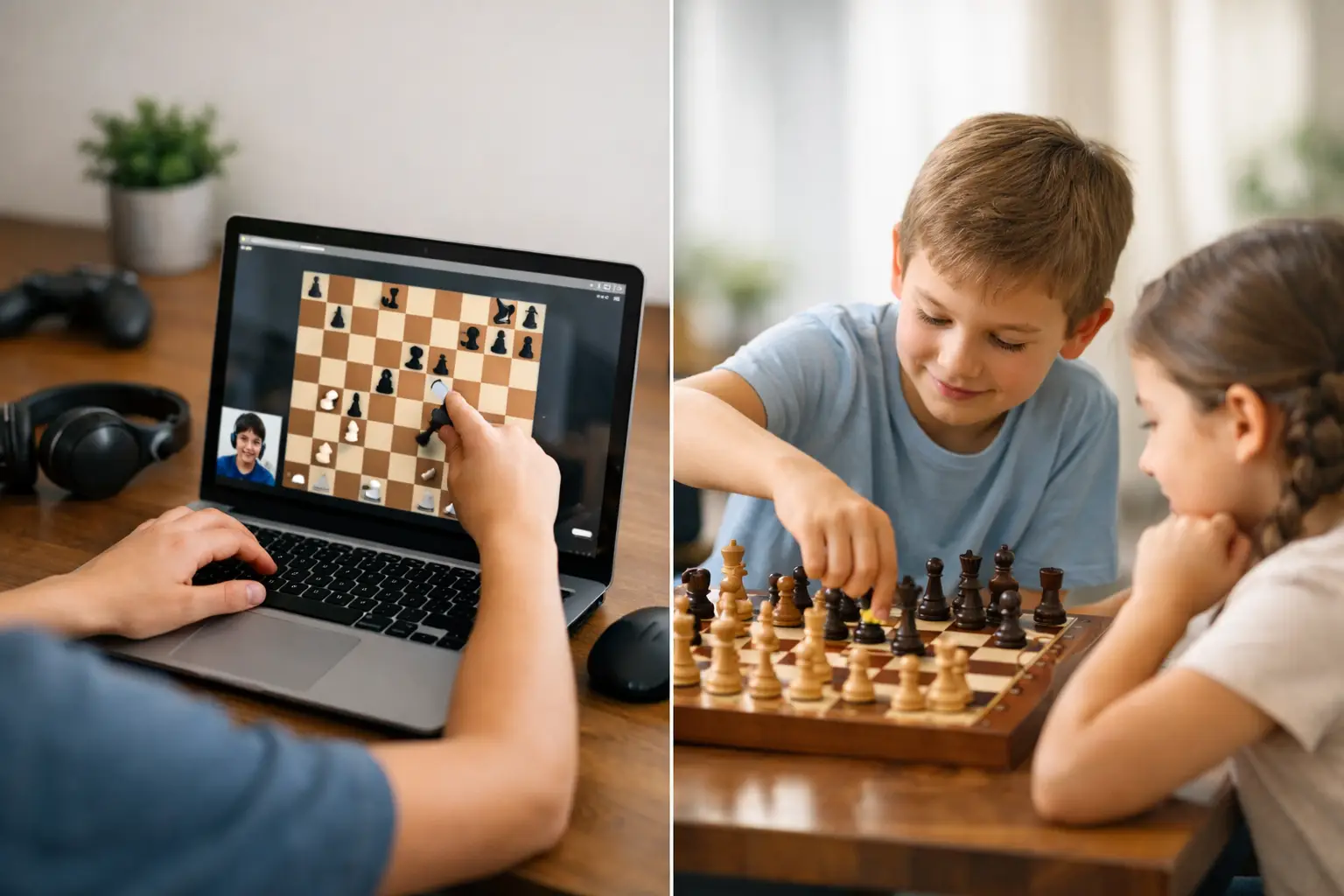
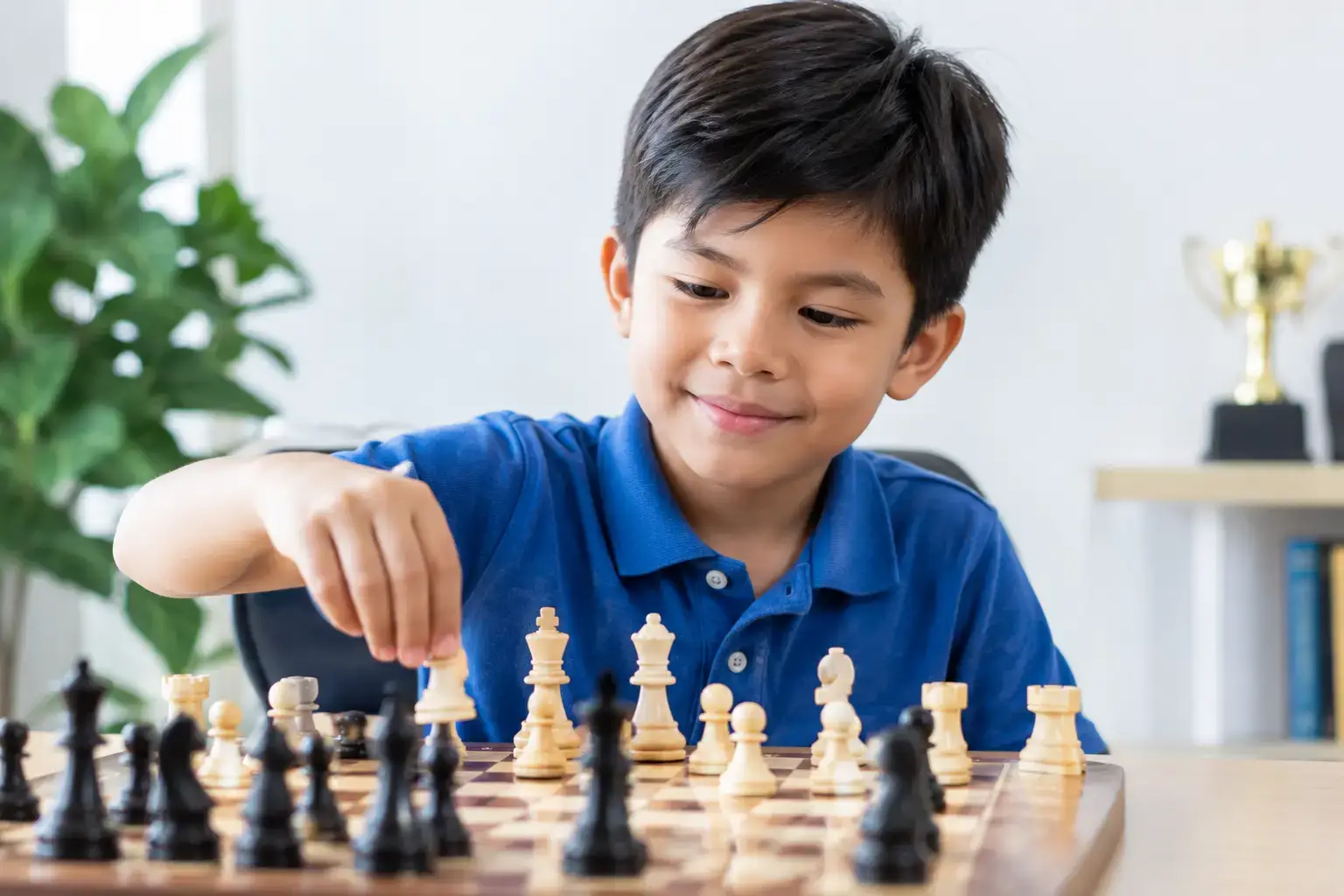
A child has just spotted a winning move. They lean toward the screen, explain their idea, and wait for their coach's question: “What happens after your opponent captures?” That small pause is where chess learning happens. For parents weighing online chess vs in person lessons, the real question is not which format looks more traditional. It is which setting helps your child stay engaged, understand ideas, practice consistently, and grow with confidence.
Both formats can work very well. The better fit depends on your child's age, attention span, goals, schedule, and the quality of the instruction. A great coach with a clear plan can make online lessons feel focused and personal. An in-person club can give some children the social energy and board familiarity they need. The key is choosing based on learning outcomes, not assumptions.
Online Chess vs In Person: The Real Differences
The biggest difference is not the chess itself. A fork is still a fork, and checkmate still requires careful calculation. What changes is the learning environment.
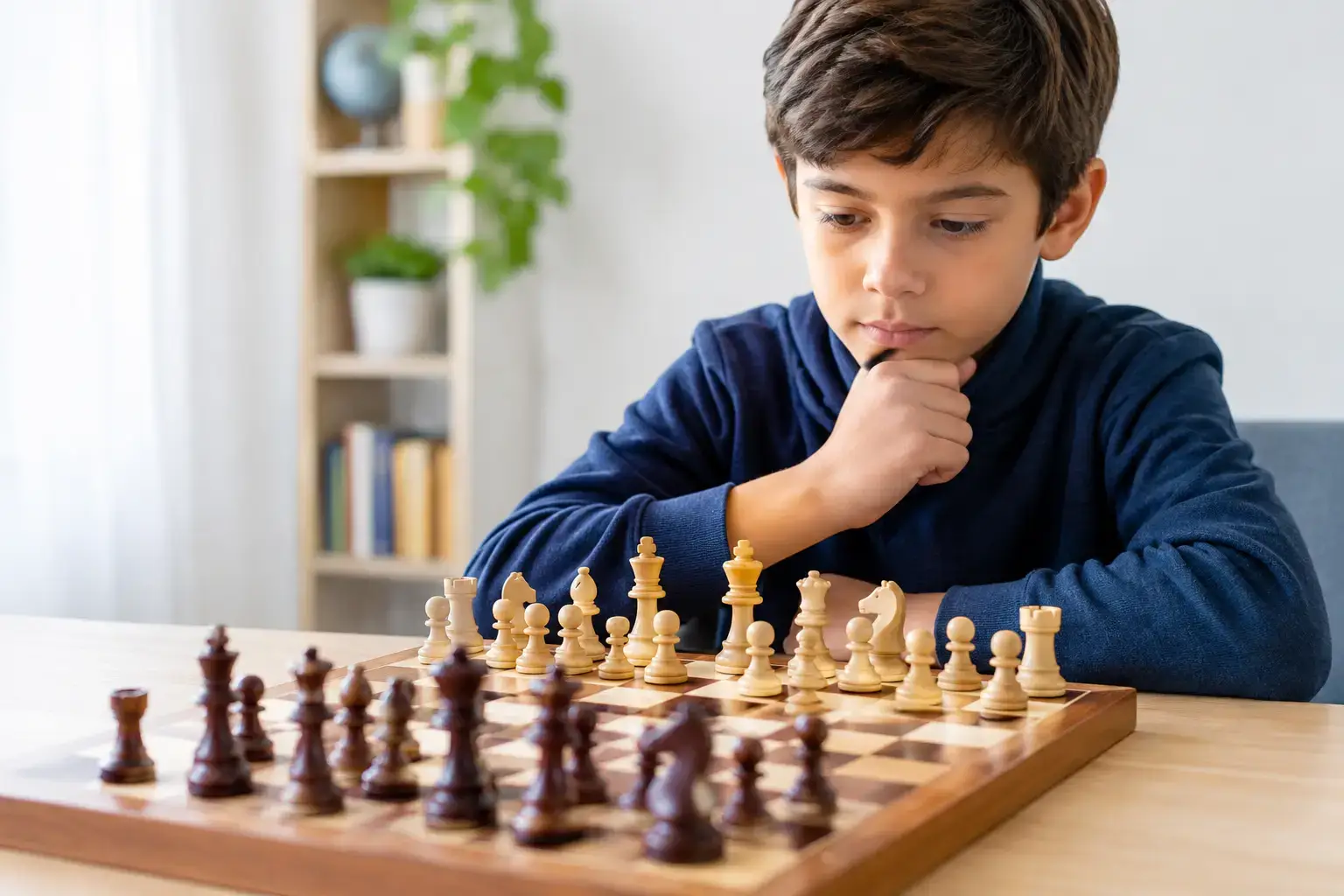
In-person chess offers physical pieces, face-to-face interaction, and a room where children can see other players thinking, reacting, and competing. For a child who loves group activities or needs help separating playtime from lesson time, that atmosphere can be motivating. Tournament-style over-the-board practice is also valuable because many scholastic events use physical boards, clocks, and handwritten score sheets.
Online chess offers a different kind of advantage: a focused, one-on-one learning space that fits into family life. A coach can highlight squares, draw arrows, pull up a position from the child's own game, and switch quickly between explanation and practice. There is no commute, no waiting for a group class to catch up, and no need to work around a crowded club schedule.
Neither option automatically creates progress. A child can attend an in-person class and spend much of the hour waiting for attention. A child can take online lessons but lose focus if the session is poorly structured. The quality of coaching, the lesson plan, and the child's participation matter more than the location.
When Online Chess Lessons Work Best
Online instruction is especially strong when a child needs personalized attention. Beginners often have very different starting points. One child may know how the pieces move but miss simple threats. Another may understand checkmate patterns but rush every move. In a private online lesson, the coach can adjust the pace immediately instead of teaching to the middle of a group.
This format also works well for busy families. A 30-, 45-, or 60-minute lesson from home can fit before dinner, after school, or between other activities. That convenience is not just a scheduling benefit. Consistency is one of the strongest predictors of chess improvement. When lessons are easier to attend, children get more chances to build on what they learned last week.
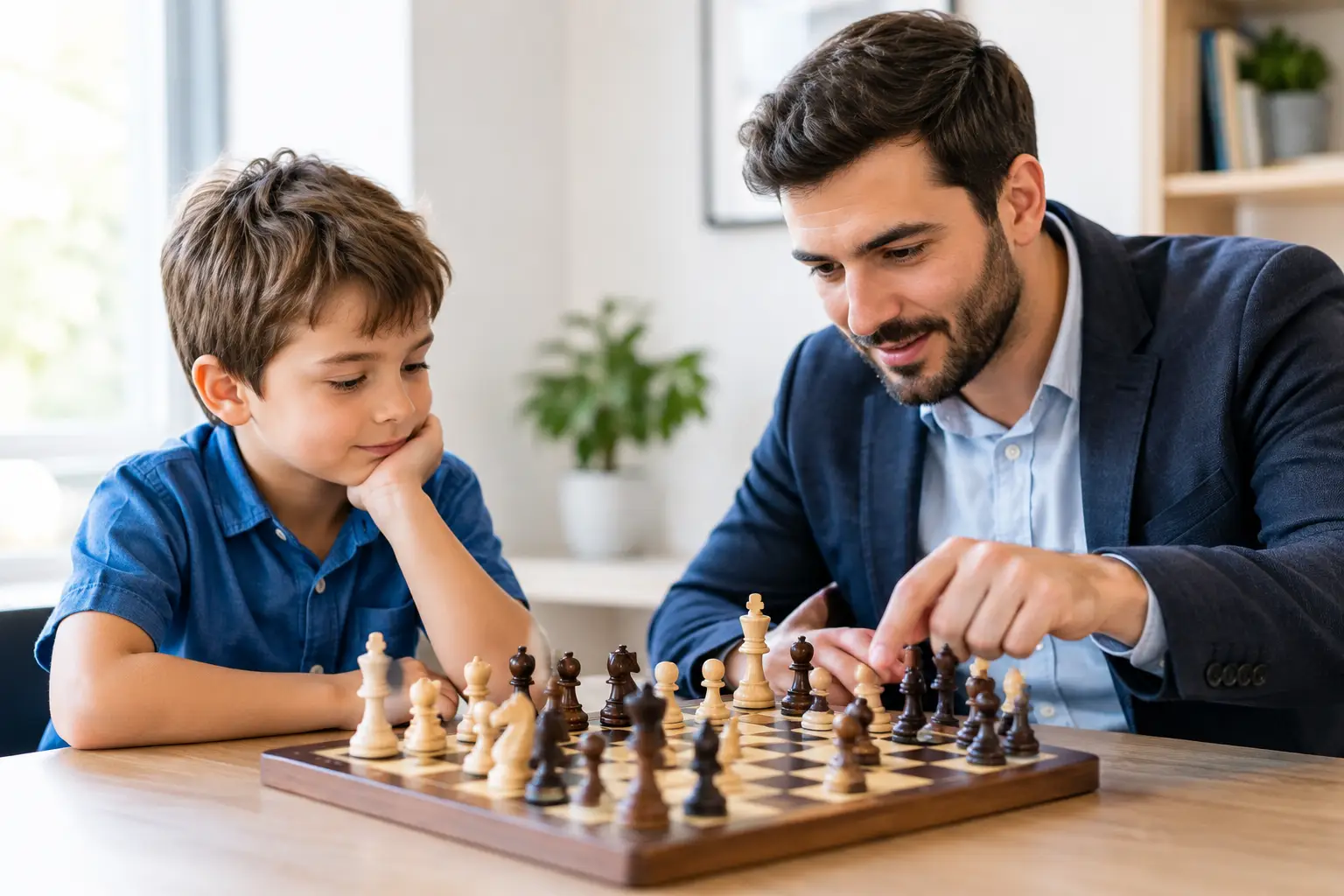
For many children, the screen can actually make instruction clearer. Digital boards allow coaches to reset positions in seconds, circle key squares, and show exactly why a move works or fails. A good coach does not simply tell a student the best move. They ask questions, let the child calculate, and guide them toward the answer. That keeps the lesson active rather than passive.
Online lessons can be particularly helpful for children who are quiet in larger groups. Some kids are happy to raise a hand in a club. Others need a calmer space before they will say, “I don't understand.” One-on-one coaching gives those students room to ask questions without feeling behind.
What Parents Should Look For Online
Online chess is not meant to be a child sitting alone with an app. The most effective programs include a live coach, a clear progression, and regular feedback for parents. Your child should know what they are working on and why: piece safety, opening principles, tactical patterns, endgames, time management, or tournament preparation.
Look for lessons that include conversation and practice. If a coach spends the whole session demonstrating moves, your child may be entertained but not challenged. A stronger lesson asks the student to explain their thinking, solve positions, play training games, and review mistakes constructively.
It also helps when the coach can set realistic next steps. A new player may need to master basic checkmates and stop hanging pieces before worrying about advanced openings. An experienced tournament player may need deeper calculation training or help managing the clock. Clear goals make progress visible.
When In-Person Chess Can Be the Better Choice
In-person chess can be a great match for children who learn best through physical activity and social interaction. Moving real pieces gives younger students a concrete connection to the game. For a 4- or 5-year-old, holding a knight and placing it on the right square may be easier to understand than controlling a mouse.
A local chess club can also provide community. Children meet opponents, learn how to win and lose gracefully, and see that other kids are working through the same challenges. For a social child, that shared excitement can make chess feel like a team sport, even though each game is individual.
Over-the-board practice matters most when tournament readiness is the goal. Children should eventually feel comfortable setting up a board, using a chess clock, touching pieces carefully, and following event rules. Still, this does not mean every lesson must be in person. A child can learn strategy online and add occasional in-person games, club events, or tournaments to build practical experience.
The trade-off is that group settings can be less personalized. Coaches may need to divide attention among students with different levels. A child who is ready to move ahead may get bored, while a true beginner may feel rushed. Before enrolling, ask how groups are organized, how much individual feedback students receive, and whether the coach has a plan for different skill levels.
A Better Question Than “Which Is Best?”
Instead of asking whether online or in-person chess is better for all children, ask what will help your child practice and improve right now.
If your child is a complete beginner, consider whether they need hands-on help with the board or whether they would thrive with a patient coach who can keep the lesson simple and interactive. If your child already plays online games, a structured online lesson may be a natural next step because it turns casual play into real learning.
If your child has a busy schedule, online lessons may make consistent coaching possible when an in-person program would be difficult to attend. If your child is preparing for local tournaments, combine strategic coaching with some practice on a physical board. Often, the best answer is not one format forever. It is a thoughtful mix that changes as the child grows.
Parents should also consider the child's temperament. Does your child focus better in a quiet room, or do they come alive around other children? Do they need direct encouragement after a mistake, or do they become distracted when there is too much activity? The right format should reduce friction and make it easier for your child to stay with the game long enough to experience progress.
How to Make Either Format More Effective
A few simple habits can make a major difference. Set up a regular lesson time and protect it like any other important activity. Keep distractions away during coaching, especially games, videos, and extra browser tabs. After the lesson, ask your child to show you one idea they learned instead of asking only whether they won.
At home, short practice is more useful than an occasional marathon session. Ten or fifteen focused minutes spent solving a puzzle, reviewing a game, or practicing a basic checkmate can reinforce the lesson. Praise effort, patience, and careful thinking. Chess includes losses, missed tactics, and frustrating moments. Children improve faster when mistakes are treated as information, not failure.
For tournament-minded players, make sure practice includes real-game habits. They should learn to pause before moving, check what their opponent is threatening, manage their time, and review key moments afterward. These habits travel well between online and physical boards.
At Savushkin Chess, live one-on-one lessons are built around this kind of progression: meeting each child at their current level, keeping learning enjoyable, and steadily preparing them for stronger play.
The right chess lesson should leave your child with more than a new opening or a higher rating. Look for the moment they begin to slow down, think ahead, recover after a mistake, and feel proud of solving a hard position. That is a result worth building around, whether the board is on a desk or on a screen.

Ready to see chess click for your child?
Book a free 20–30 minute trial lesson with one of our coaches — no commitment, no payment needed.