Private Chess Tutor Versus Apps for Kids
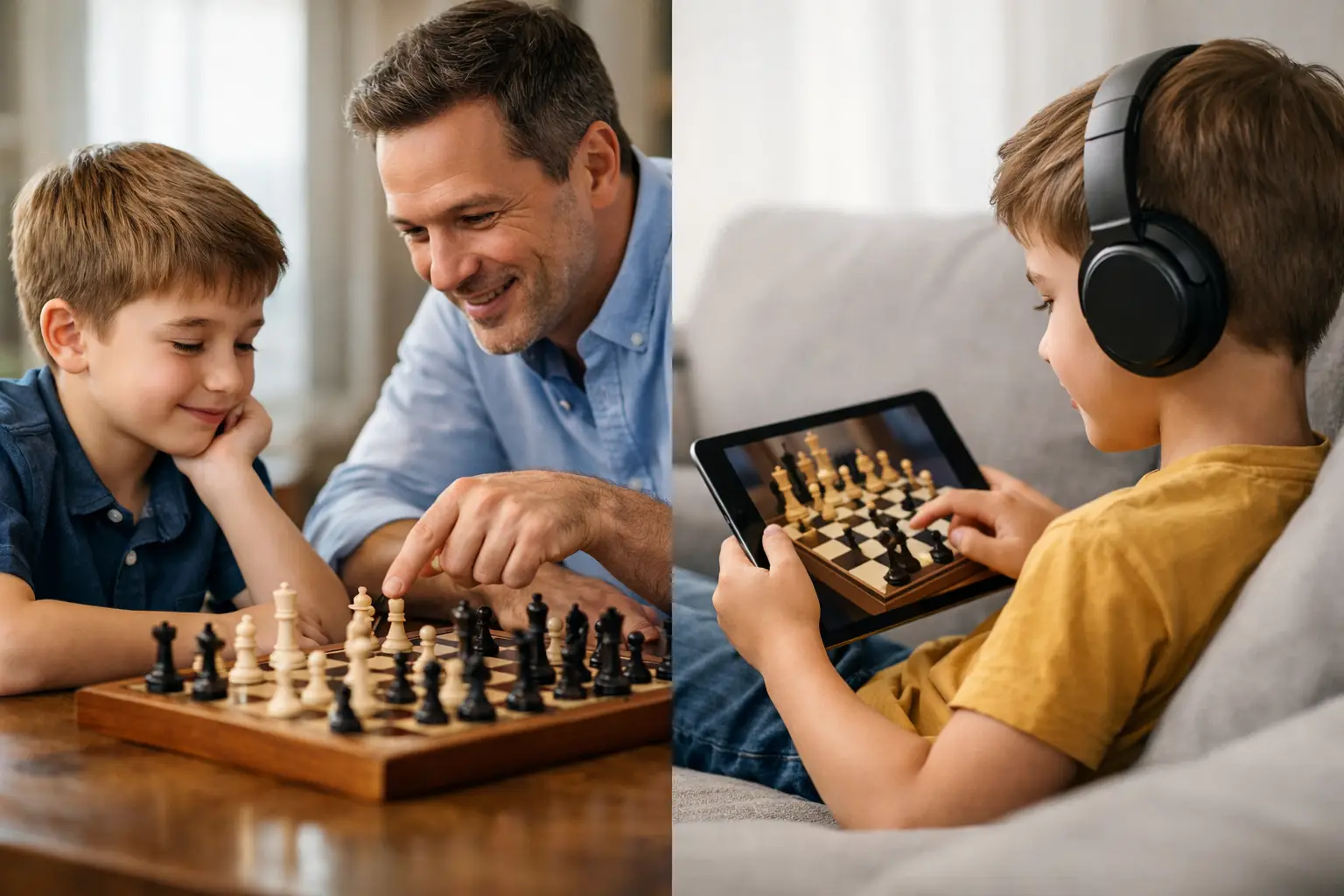
A child finishes every puzzle in a chess app, earns a new badge, and still freezes when an opponent makes an unexpected move. That gap is where the private chess tutor versus apps question becomes real for parents. Both can introduce chess and make practice more accessible. But they teach children in very different ways.
Apps are convenient, colorful, and often motivating at the start. A live coach brings something an app cannot: a patient expert who sees how a child thinks, spots the reason behind a mistake, and adjusts the next lesson in real time. The right choice depends on your child’s age, goals, attention span, and whether chess is meant to be an occasional hobby or a skill they will build over time.
What Chess Apps Do Well
Chess apps can be a helpful first stop, especially for a curious beginner. Many teach the names of the pieces, legal moves, basic checkmates, and simple tactics through short lessons and puzzles. For a child who enjoys screens and likes quick challenges, that immediate feedback can make the first few weeks of chess feel exciting.
They also work well for short, independent practice. Waiting for a sibling’s activity? Ten minutes of puzzles can be a better use of screen time than another video. Older children who already understand the basics may enjoy solving tactical problems, playing casual games, or reviewing a new opening idea between lessons.
The limitation is that apps usually respond to the move, not the child. They can tell a student that a move was inaccurate. They are less able to explain why the child missed a threat, rushed the position, misunderstood a pattern, or became discouraged after losing. Those details matter because they shape how a young player learns.
Private Chess Tutor Versus Apps: The Biggest Difference
The main difference is not simply live instruction versus software. It is personalized teaching versus standardized feedback.
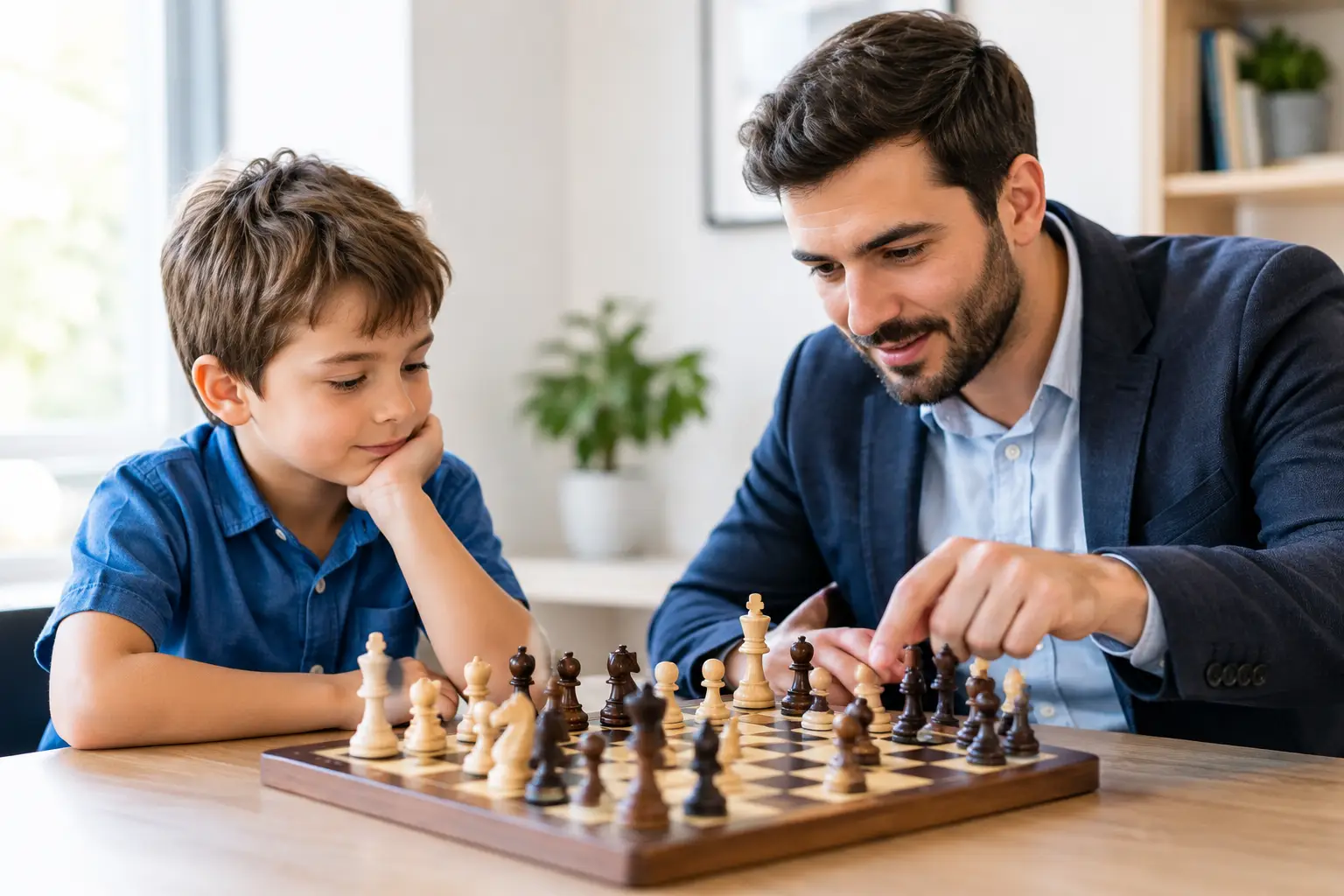
A skilled private tutor watches for patterns that do not show up on a score screen. Maybe a beginner knows how the knight moves but forgets to check whether a piece is protected. Maybe an advanced player understands tactics but plays too quickly in tournament games. Maybe a six-year-old needs lessons broken into small, playful challenges, while a 13-year-old wants a clear plan for improving rating and competitive results.
A coach can respond right away. They can pause a game, ask a thoughtful question, and let the child discover the answer instead of clicking through an explanation. They can slow down when a concept is new, then move faster when confidence grows. That is how children build understanding rather than memorizing the next correct move.
For parents, this also creates clarity. Instead of wondering whether a child is progressing because they completed another level, you can understand what they are learning, what needs practice, and what comes next.
Why Young Players Need Feedback They Can Understand
Chess is full of moments that look simple to an experienced player but feel confusing to a child. A student may lose a queen and say, “I didn’t see it.” That may mean they did not scan the whole board. It may mean they do not yet recognize a pin. Or it may mean they were focused on their own attack and never paused to ask what the opponent wanted.
Those are different problems, so they need different teaching.
An app may offer another puzzle with a similar pattern. A tutor can say, “Before every move, let’s look for checks, captures, and threats from your opponent.” Then the coach can guide the child through practice games until that habit starts to stick. This kind of feedback builds focus, patience, and resilience alongside chess ability.
Live teaching is especially valuable after a loss. Children can take a mistake personally, especially if they are competitive or new to the game. A supportive coach helps them separate the result from the lesson: the game is over, but the learning continues. That mindset can make the difference between a child who quits after a frustrating game and one who becomes more confident through challenge.
Structure Matters More Than Extra Content
Most chess apps contain plenty of content. The harder question is whether the content appears in the right order for your child.
A strong beginner pathway usually starts with board confidence, piece movement, basic checkmates, and simple tactics. From there, students learn opening principles, how to protect pieces, how to make a plan, and how to review their own games. Children who move too quickly into advanced puzzles often develop gaps that show up later in real games.
A private coach can create a path based on the child in front of them. If your child is just learning the rules, lessons can be engaging and visual without being overwhelming. If they are already playing online or at school, the coach can identify the biggest opportunities for growth instead of repeating what they know.
At Savushkin Chess, that structure begins with understanding the student’s current level and goals, then building lessons around clear next steps. For families, this means less guesswork and more visible progress.
When an App May Be Enough
There are situations where an app is the practical choice. If your child simply wants to try chess, is not ready for scheduled lessons, or needs a few fun activities to reinforce what they learned at school, an app can be useful. It may also be enough for a child who enjoys casual play and has no interest in deeper instruction or tournament preparation.
The best app experience usually has a parent nearby at first. Young beginners may click through lessons without understanding the board, become distracted by rewards, or accidentally start games that are too difficult. A little guidance helps turn screen time into real learning.
Apps are also a smart supplement for coached students. Short puzzle sessions can reinforce tactical patterns. Online games can provide material for a coach to review. The goal is not to treat technology as the enemy. It is to use it for what it does best: repetition, quick practice, and convenient play.
When a Private Tutor Is Worth It
Private instruction becomes especially valuable when a child needs attention, accountability, or a more meaningful challenge. Consider a tutor if your child knows the basics but keeps making the same mistakes, loses interest when learning alone, or wants to play in school events and tournaments.
It is also a strong fit for children with very different learning styles. Some need frequent encouragement. Some want to ask lots of questions. Some learn best by playing a game with a coach who talks through each decision. In a one-on-one lesson, the teaching can match the child instead of asking the child to match the program.
For busy families, online private lessons can be easier to sustain than driving to an activity each week. A 30-, 45-, or 60-minute format lets parents choose a pace that fits their child’s age and schedule. The most important factor is consistency. One focused lesson each week, paired with small amounts of practice, can create much more progress than occasional bursts of app use.
How to Choose Without Guessing
Start with your child’s reaction to chess. Do they light up when they solve a puzzle but lose focus after five minutes? An app may be a good starting point. Do they enjoy playing but become upset when they lose or ask why a move was wrong? They may benefit from live guidance.
Next, consider the goal. For casual enrichment, an app and family games may be enough. For strong foundations, strategic thinking, confidence in real games, or tournament readiness, coaching offers a clearer route. A quality trial lesson or assessment can be helpful because it shows you how your child responds to a coach before you make a larger commitment.
Finally, look beyond ratings and trophies. Chess should challenge children, but it should also feel encouraging. The best learning environment helps them think independently, recover from mistakes, and enjoy the process of getting better.
A chess app can put thousands of positions in front of a child. The right coach can help them learn how to think through one position at a time - with curiosity, discipline, and growing confidence that reaches far beyond the board.

Ready to see chess click for your child?
Book a free 20–30 minute trial lesson with one of our coaches — no commitment, no payment needed.