
Structured Online Chess Curriculum for Kids
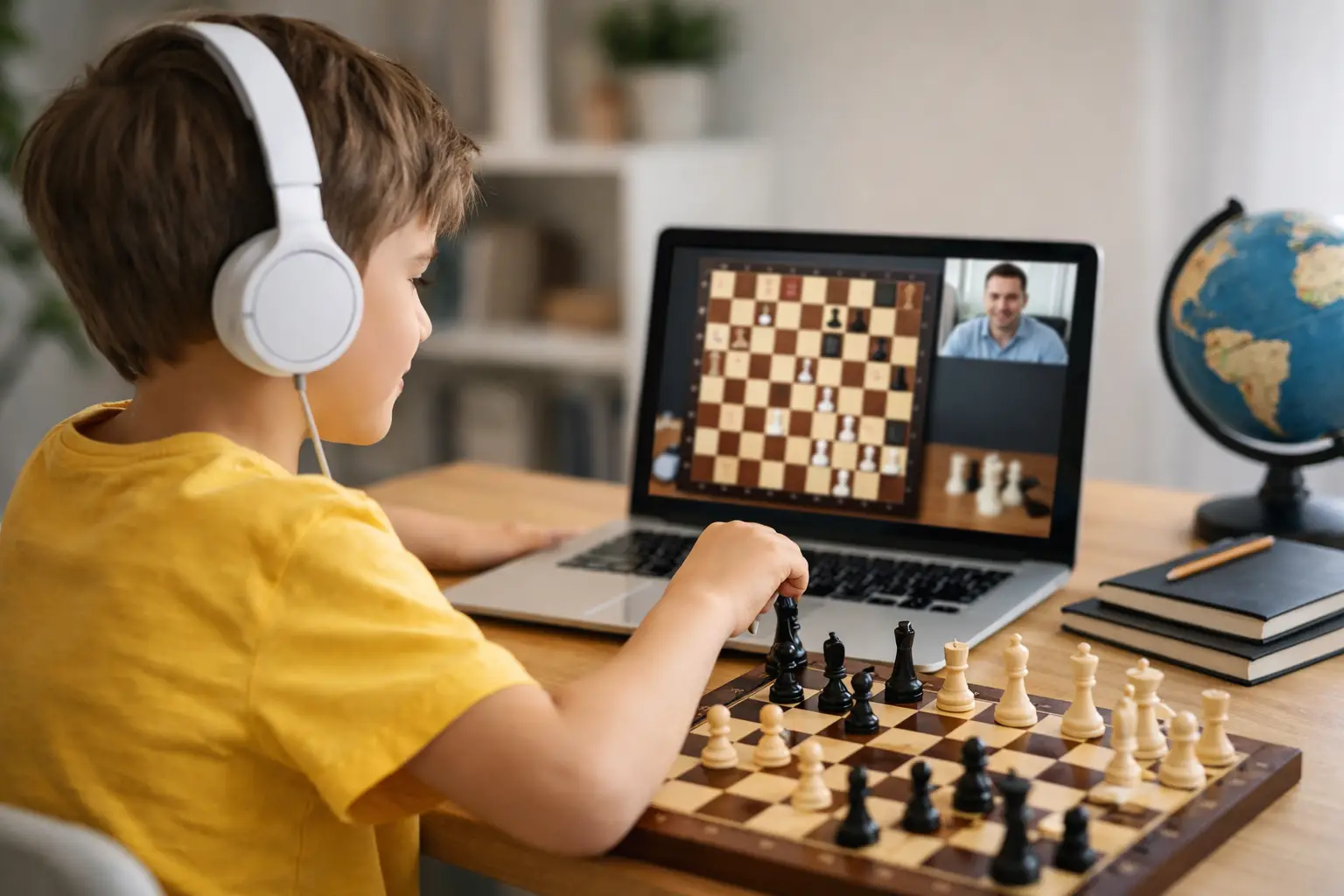
Some kids learn the knight move in five minutes and ask for their first game right away. Others need time, repetition, and a teacher who knows how to keep things fun while building real skill. That is exactly why a structured online chess curriculum matters. For parents, it turns chess from a random screen activity into a clear learning path with visible progress.
A lot of online chess options promise flexibility. That part is easy to find. What is harder to find is a program that knows what to teach first, what to delay until later, and how to keep a child motivated from one lesson to the next. Structure is what makes the difference between a child who dabbles in chess and a child who steadily improves.
What a structured online chess curriculum actually means
A structured online chess curriculum is not just a series of chess puzzles or a coach showing up and deciding what to cover that day. It is a step-by-step learning system built around progression. Each lesson connects to the next, and each skill is introduced when the student is ready to use it.
For a beginner, that usually starts with piece movement, check, checkmate patterns, board awareness, and simple opening principles. For a more experienced child, the curriculum shifts toward tactics, positional thinking, notation, time management, game analysis, and tournament preparation. The key is that the order is intentional.
That matters because chess builds on itself. If a student skips core concepts, advanced material can quickly become frustrating. On the other hand, if lessons stay too basic for too long, motivated kids get bored. Good structure keeps both problems in check.
Why structure matters more for children than adults
Adults can often fill in gaps on their own. Kids usually need more guidance, more repetition, and more encouragement. They also respond better when expectations are clear. If a child knows, "First I learn how to protect my pieces, then I learn basic tactics, then I start playing longer games," the process feels manageable.
That sense of progress is powerful. It builds confidence, especially for younger students who may be trying chess for the first time. A child who can see improvement is much more likely to stay engaged.
There is also a practical benefit for parents. A coach-led program with a real curriculum gives families a better answer to a simple question: What is my child actually learning? Instead of vague reassurance, parents can see milestones. Maybe their child can now solve forks consistently, record games correctly, or play with a plan instead of moving pieces at random.
The best structured online chess curriculum is never one-size-fits-all
This is where some programs miss the mark. They hear the word structure and turn it into rigidity. That does not work well for children.
A strong curriculum should be organized, but it should also adjust to the student. A six-year-old beginner and a twelve-year-old beginner do not need the same pace, language, or examples. A child who loves competition may be eager to jump into practice games. Another may need confidence-building before they are ready to face stronger opponents.
So yes, structure matters. But personalization matters too. The best online chess programs combine both. They have a roadmap, and they know when to slow down, review, or move faster.
What parents should look for in a coach-led program
If you are comparing options, it helps to look beyond flashy claims about "fun lessons" or "expert coaches." Those things are nice, but they are not enough by themselves.
A real curriculum should show clear progression. Early lessons should build fundamentals. Middle stages should introduce tactics, decision-making, and pattern recognition. Later stages should include deeper strategy and practical game experience. If everything feels random, it probably is.
Coach involvement also matters. Recorded videos can help with review, but children usually improve faster when a live teacher can correct mistakes in real time. A coach can spot habits a child may not even notice, like hanging pieces, moving too quickly, or ignoring the opponent's threats.
Communication with parents is another good sign. Families do not need a lecture after every lesson, but they do need a clear sense of progress. The strongest programs explain what the student is working on, where improvement is happening, and what comes next.
How a structured online chess curriculum supports faster improvement
Children do not improve just by playing more games. They improve when play, instruction, and review work together.
That is one of the biggest benefits of a structured online chess curriculum. It gives every lesson a purpose. A student might learn a tactical idea, practice it in puzzles, use it in a game, and then review where it appeared. That cycle helps ideas stick.
Without structure, kids often repeat the same mistakes for months. They may keep attacking too early, forgetting king safety, or trading pieces without understanding why. Simply playing game after game does not always fix that. Guided instruction does.
This is also why tournament readiness should not be rushed. Some children are excited to compete right away, which can be great. But if they have not built enough board vision, emotional control, or basic strategic habits, tournaments can feel discouraging. A good curriculum prepares children before it pushes them.
Online learning works well for chess - if the teaching is right
Parents sometimes worry that online lessons will feel passive or disconnected. That can happen, but it is not a problem with online chess itself. It is usually a problem with how the lessons are taught.
When instruction is interactive, online chess can be extremely effective. Coaches can share boards, annotate games, assign training exercises, and play practice positions live. Kids can learn from home, avoid long drives, and still receive focused attention.
For busy families, that flexibility matters. But convenience should not come at the cost of quality. The best programs use the online format to make learning easier, not looser.
Signs your child needs more structure in chess
Sometimes the need for a better system becomes obvious. A child knows the rules but keeps making the same basic mistakes. They enjoy chess but are not improving. They bounce between apps, videos, and casual games without any real direction.
Other times the signs are subtler. A student may be improving in short bursts but plateauing often. They may understand tactics in puzzles and then fail to spot them in real games. They may love lessons one week and resist them the next because the learning experience feels inconsistent.
In those cases, more content is not necessarily the answer. Better sequencing often is.
Why parents care about more than chess results
Most families do want to see rating gains, stronger play, and maybe tournament success over time. But that is not the whole picture.
A well-built chess program can also strengthen focus, patience, planning, and resilience. Kids learn to slow down, think before acting, and recover from mistakes. Those are valuable habits whether a child becomes a serious tournament player or simply enjoys chess as a long-term activity.
That is one reason many families prefer a structured, encouraging environment over a purely competitive one. Results matter, but kids usually do best when progress feels achievable and supported.
At Savushkin Chess, that balance is a big part of the approach. Children get real coaching, a clear progression path, and lessons that are designed to keep them engaged rather than overwhelmed.
Choosing the right fit for your child
Not every child needs the same lesson length, pace, or level of intensity. A younger beginner may thrive in shorter sessions with lots of interaction and repetition. An older student aiming for tournament play may benefit from longer lessons, deeper analysis, and more serious game review.
That is why trials and assessments are so helpful. They give families a chance to see whether the coach connects well with the child and whether the learning plan makes sense. A good program should be able to explain where your child is starting and what progress should look like over time.
Parents do not need fine print or inflated promises. They need straight answers. What will my child learn first? How will lessons adapt if they progress quickly or struggle with a concept? How will I know it is working?
Those are the right questions, and strong programs should be ready to answer them clearly.
Chess is at its best when kids feel both challenged and capable. A structured path gives them that balance. It turns interest into momentum, and momentum into skill. If your child enjoys chess and you want that interest to grow into something lasting, the right curriculum can make all the difference.

Ready to see chess click for your child?
Book a free 20–30 minute trial lesson with one of our coaches — no commitment, no payment needed.


