
How to Teach Chess Sportsmanship to Kids Well
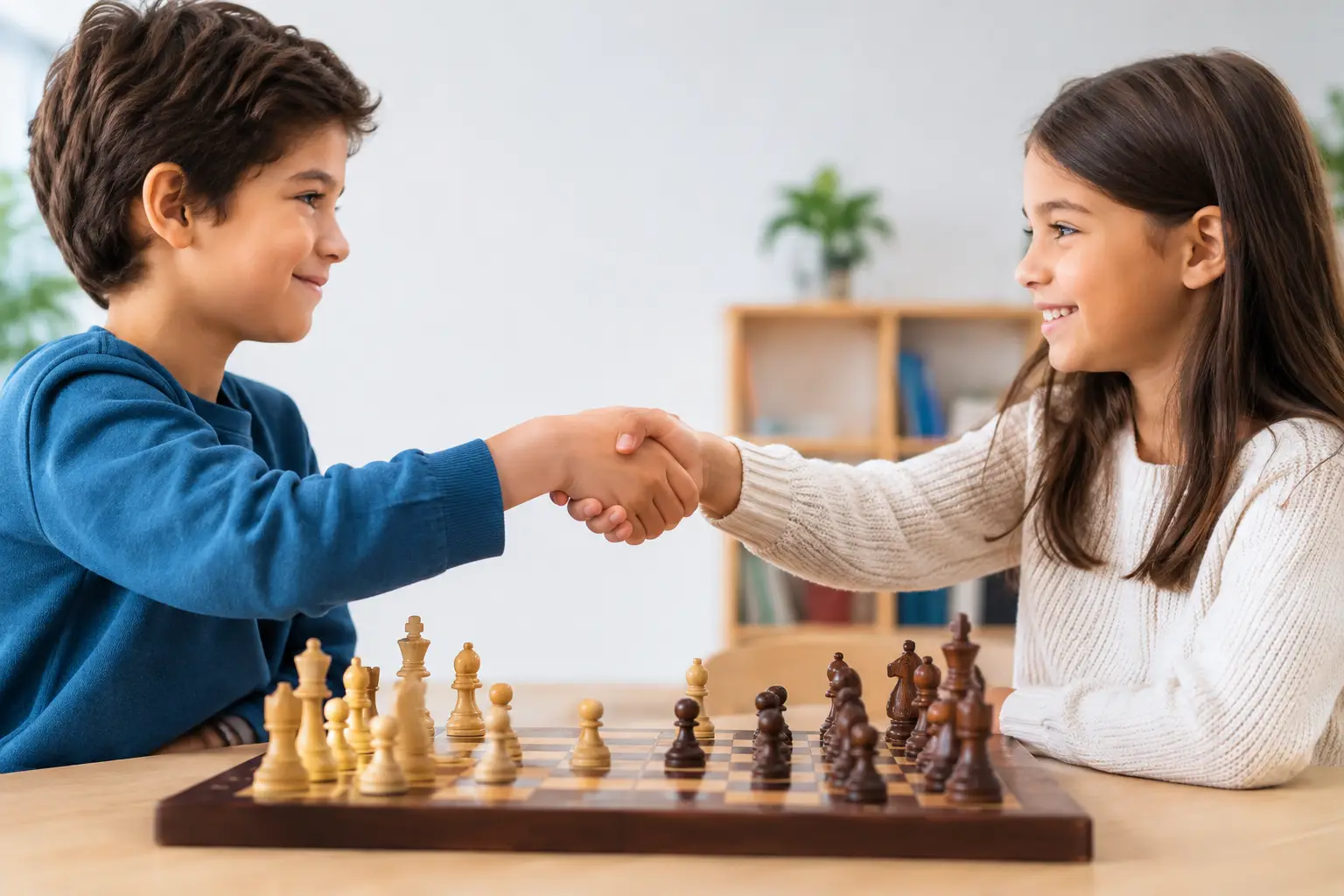
A child has just lost a game after missing a queen. They push back from the board, cross their arms, and say, “That was unfair.” It is a tough moment, but it is also a teaching moment. Knowing how to teach chess sportsmanship to kids gives parents and coaches a way to turn disappointment into real growth.
Chess makes emotions visible. A child can feel proud after a clever checkmate, frustrated by one mistake, or nervous when the clock is running. Those feelings are normal. Sportsmanship is not asking kids to feel nothing. It is helping them choose respectful actions when feelings are big.
For young players, this skill matters just as much as learning how the knight moves. A child who can win kindly, lose calmly, and learn from a game will enjoy chess longer and be better prepared for school, sports, friendships, and tournament play.
Why Chess Is a Powerful Place to Build Character
Chess has a clear result. One player wins, one player loses, or the game ends in a draw. There is no teammate to blame and no referee call to argue about. That clarity can feel intense, especially for children who care deeply about doing well.
That is exactly why chess is such a useful setting for practicing accountability. When a child says, “I lost because I rushed,” instead of “You distracted me,” they begin to see that mistakes are information. A thoughtful coach does not shame the mistake. They help the child find it, understand it, and try a better choice next time.
Sportsmanship also protects the fun of the game. Children are more willing to play with a sibling, classmate, or online opponent when they know the experience will stay respectful. Competitive drive and good manners are not opposites. The strongest young competitors learn to want the win while treating every opponent with dignity.
Teach Chess Sportsmanship to Kids Before the Game Starts
The best time to discuss behavior is not right after a painful loss. Set expectations before pieces are moved, when your child is calm and ready to play. Keep the message short and repeat it often.
A simple family or class rule can be: “We play our best, we respect the other player, and we learn from every result.” Children remember routines better than lectures. In a live online lesson, a coach can model this from the first game by greeting the student warmly, explaining the rules, and showing what a respectful ending looks like.
For younger children, make expectations concrete. Instead of saying “be a good sport,” explain what they can do: say hello, take turns without grabbing pieces, use a calm voice, and say “good game” when the game ends. For older children, add tournament habits such as recording moves carefully, asking the tournament director for help instead of arguing, and not commenting on another player’s position.
It helps to explain the reason behind each rule. A handshake or a friendly greeting says, “I see you as a person, not just someone standing between me and a win.” Keeping quiet during a game helps both players think. Saying “good game” recognizes effort, even when the result hurts.
Four Routines That Make Respect Automatic
Children do not become sportsmanlike through one conversation. They improve through small, repeated routines that happen in ordinary games.
- Begin with a greeting. At the board, this may be a handshake and “Good luck.” In online chess, a child can say hello on camera or type a brief, friendly greeting if chat is allowed. This creates a positive tone before competition begins.
- Practice a pause after mistakes. Teach your child to put both hands in their lap, take one slow breath, and look at the board before reacting. They do not need to pretend they are happy about a blunder. They simply need a safe response that prevents tears, angry words, or quitting.
- End every game with the same words. “Good game” works well because it is easy to remember. If a child loses, they can add, “Nice move.” If they win, they can say, “Thanks for playing.” Consistency matters more than a perfect speech.
- Review one lesson, not every error. After the game, ask, “What is one move you would try differently next time?” This shifts attention from who won to what the child can control. It also prevents post-game analysis from feeling like punishment.
At first, these routines can feel scripted. That is okay. Children learn social skills the same way they learn opening principles: with clear instruction, repetition, and encouragement. Over time, the behavior becomes natural.
How to Respond When Your Child Loses Poorly
Even well-supported children will occasionally cry, complain, or refuse to say good game. A hard loss can overwhelm a child, particularly one who is tired, hungry, or playing above their current level. The goal is not to excuse disrespect, but to respond without turning one difficult game into a bigger battle.
Start by naming the feeling: “You worked hard, and losing feels disappointing.” Then hold the boundary: “It is okay to be upset. It is not okay to slam the pieces or insult your opponent.” Once your child is settled, have them complete the ending routine. That might mean returning to say “good game,” sending a short message after an online match, or practicing the words with you if the moment has passed.
Avoid a long analysis while emotions are high. A child who is crying after checkmate is not ready to hear three reasons their opening was weak. Give them a brief reset, then come back to one useful learning point later. This is not lowering standards. It is teaching self-control in a way a child can actually use.
If the same reaction happens regularly, look for patterns. Are games too long? Is the child playing only stronger opponents? Are adults focusing so heavily on results that every loss feels like failure? The answer may be a shorter time control, more casual practice games, or clearer praise for effort and composure.
Winning Well Is a Skill Too
Parents often focus on helping children handle defeat, but winning deserves coaching as well. A child who wins may be tempted to brag, replay the opponent’s mistake, or announce that the game was easy. These habits can make other children avoid playing with them.
Teach a better response: enjoy the win privately, thank the opponent, and let the game speak for itself. Your child can be proud without being loud. A useful phrase is, “I’m happy with how I played.” It celebrates effort and progress without putting down someone else.
Be careful with adult praise, too. “You crushed them!” may sound exciting, but it frames the opponent as someone to embarrass. Try, “You stayed focused and found a strong tactic,” or “I noticed you kept your cool when the position got complicated.” Specific praise tells children which behaviors are worth repeating.
Model the Behavior You Want to See
Kids notice how adults talk about competition. If a parent blames a referee after a sports game, mocks an opponent, or becomes visibly upset over a child’s rating, the lesson at the chessboard will not stick. Parents do not need to be perfect. They do need to show how to recover when emotions rise.
When watching a game, try comments that support thinking rather than pressure. “Take your time,” “Stay with the position,” and “Whatever happens, finish respectfully” are far more useful than calling out moves from the sidelines. Afterward, ask about the child’s experience before asking about the result.
A good chess coach does the same. At Savushkin Chess, young players are encouraged to compete with purpose while learning that a loss is part of progress, not proof that they are incapable. Structured instruction gives children a safe place to make mistakes, receive clear feedback, and return to the board with more confidence.
When Sportsmanship Needs a Firmer Boundary
Most poor behavior is a sign that a child needs practice and support. Still, there are moments when a firmer response is appropriate. Repeated insults, cheating, deliberately distracting another player, or throwing pieces should end the game immediately. The consequence should be calm, predictable, and connected to the behavior: “We can play again when you are ready to follow the rules that keep chess fair and safe.”
Do not force a child into tournament play before they can handle the basic emotional demands of a casual game. Some children are ready for competition quickly; others need more time. Tournament readiness is not just about tactics and checkmates. It also means sitting through a loss, following procedures, and respecting the player across the board.
The next time your child finishes a chess game, make the final thirty seconds count. A calm breath, a sincere “good game,” and one thoughtful lesson can teach far more than a lecture ever will. Those small moments help children become players others enjoy facing and people others enjoy being around.

Ready to see chess click for your child?
Book a free 20–30 minute trial lesson with one of our coaches — no commitment, no payment needed.


