What a Youth Chess Coach Should Do for Your Child
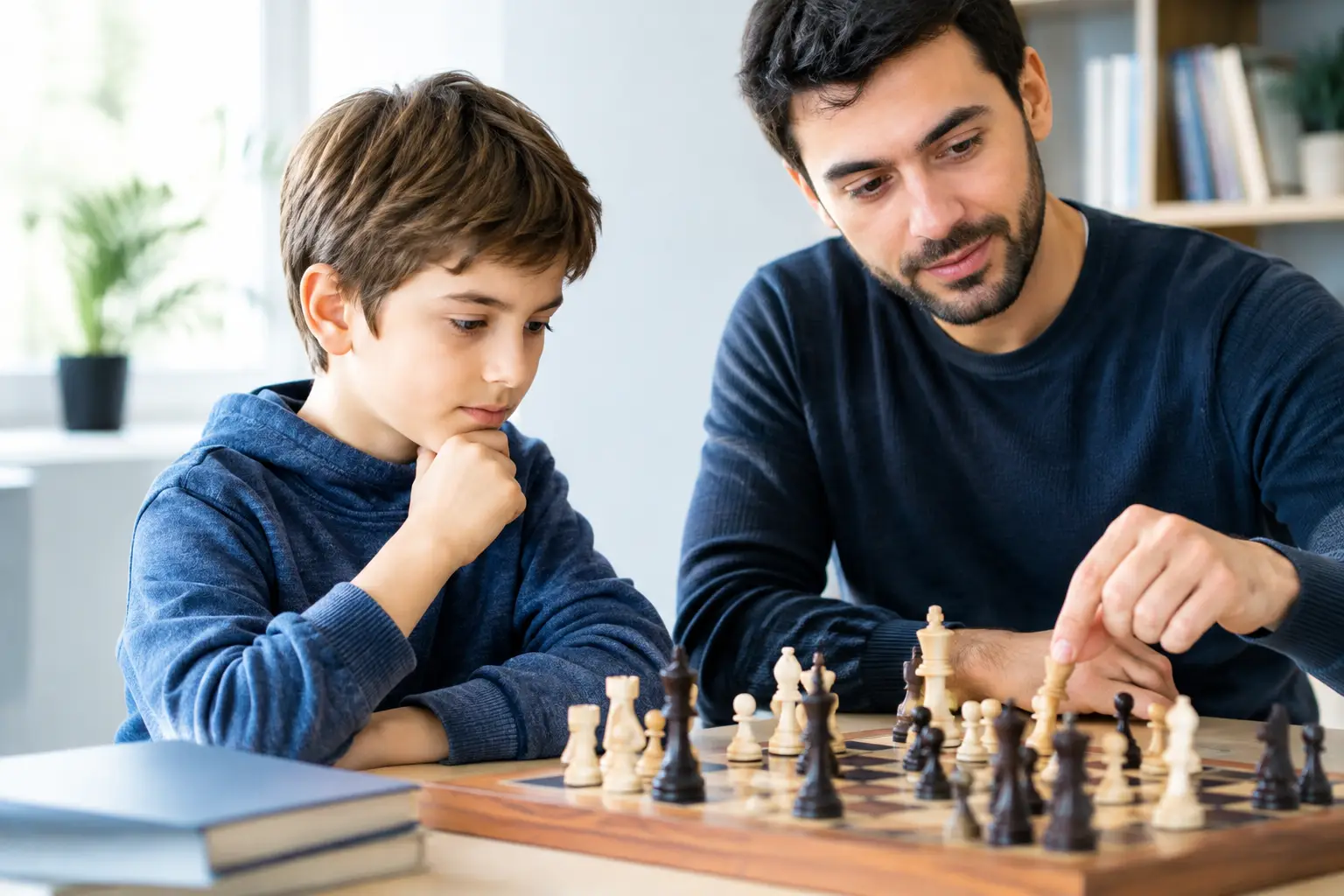
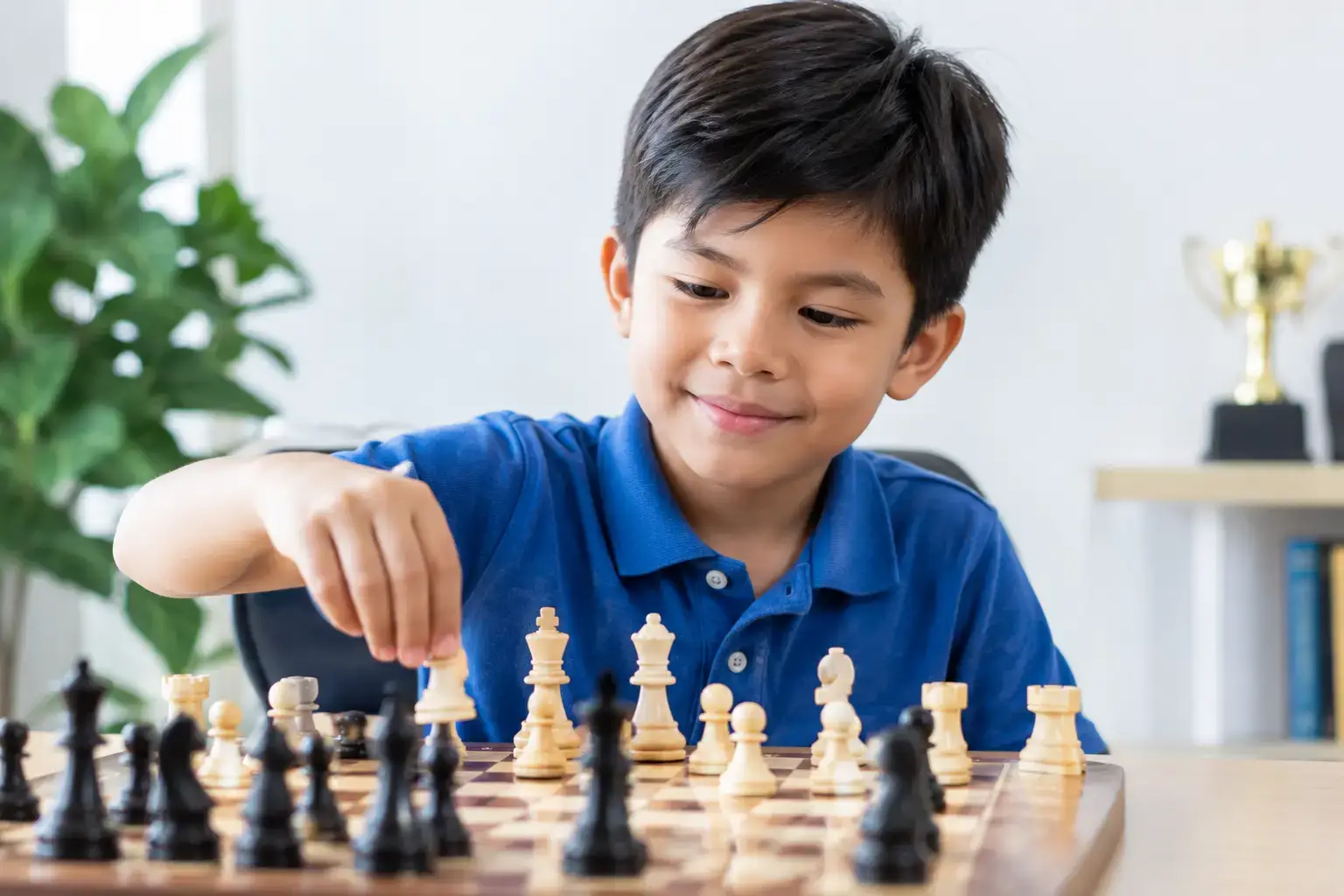
A child can learn how the pieces move in an afternoon. Learning how to pause before a risky move, recover after losing a queen, and make a real plan takes more guidance. A good youth chess coach turns early curiosity into steady progress without making chess feel like another school assignment.
For parents, the question is not simply whether a coach knows chess. It is whether that coach can teach your child at the right pace, keep lessons encouraging, and show clear growth over time. That matters whether your child is four years old and learning to sit through a short game or 14 and preparing for a first rated tournament.
A youth chess coach teaches more than moves
Chess has plenty of rules, openings, patterns, and tactics. But children do not benefit from having all of that information delivered at once. They benefit when a coach chooses the next skill that makes sense for their current level.
For a beginner, that may mean learning to check for hanging pieces before moving, spotting a one-move checkmate, or understanding why controlling the center matters. For a more experienced player, it may mean calculating two or three moves ahead, reviewing tournament games, or building an opening repertoire that fits their style.
The best youth chess coaching is structured, but never mechanical. A child who loves attacking may need help with patience and defense. A careful child may need encouragement to play more actively. The coach should recognize those tendencies and use them to build a stronger, more complete player.
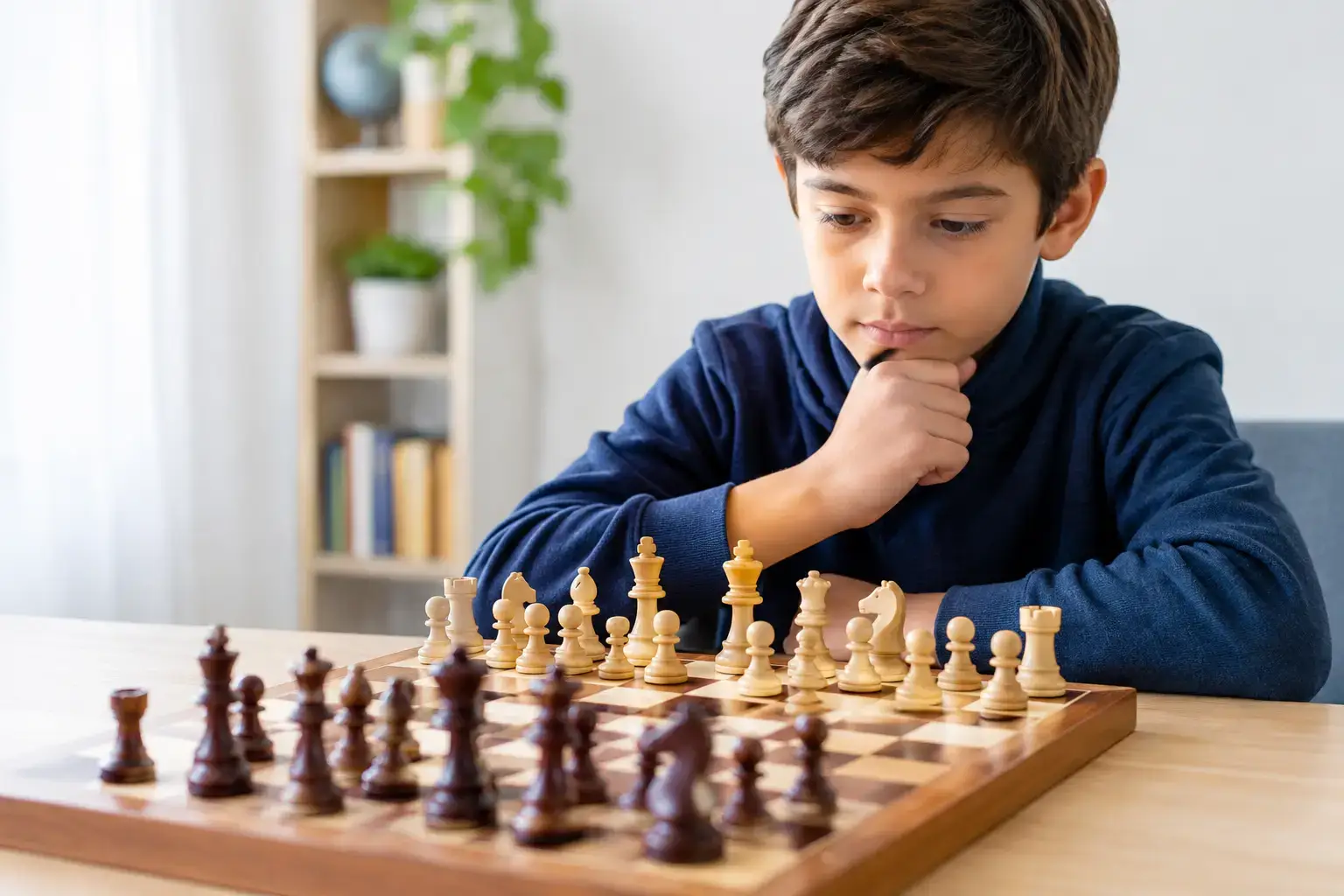
Just as importantly, chess lessons give children a safe place to practice decision-making. Every game includes choices, mistakes, surprises, and chances to start again. A thoughtful coach helps a child see a lost game as useful information, not a personal failure.
What effective chess lessons look like for kids
A productive lesson should feel active. Kids learn chess by seeing positions, talking through ideas, solving problems, and playing. Long explanations without interaction can lose even a motivated student, especially online.
For younger children, a coach may use mini-games, simple challenges, visual board exercises, and short practice games. A 30-minute lesson can be a better fit than an hour if attention is still developing. Short lessons, held consistently, often produce more progress than an occasional marathon session.
Older children can usually handle deeper work, including game analysis and tournament preparation. Even then, variety matters. A strong session may include a quick puzzle warm-up, one focused strategic idea, a few moves from a student game, and a practical assignment for the week.
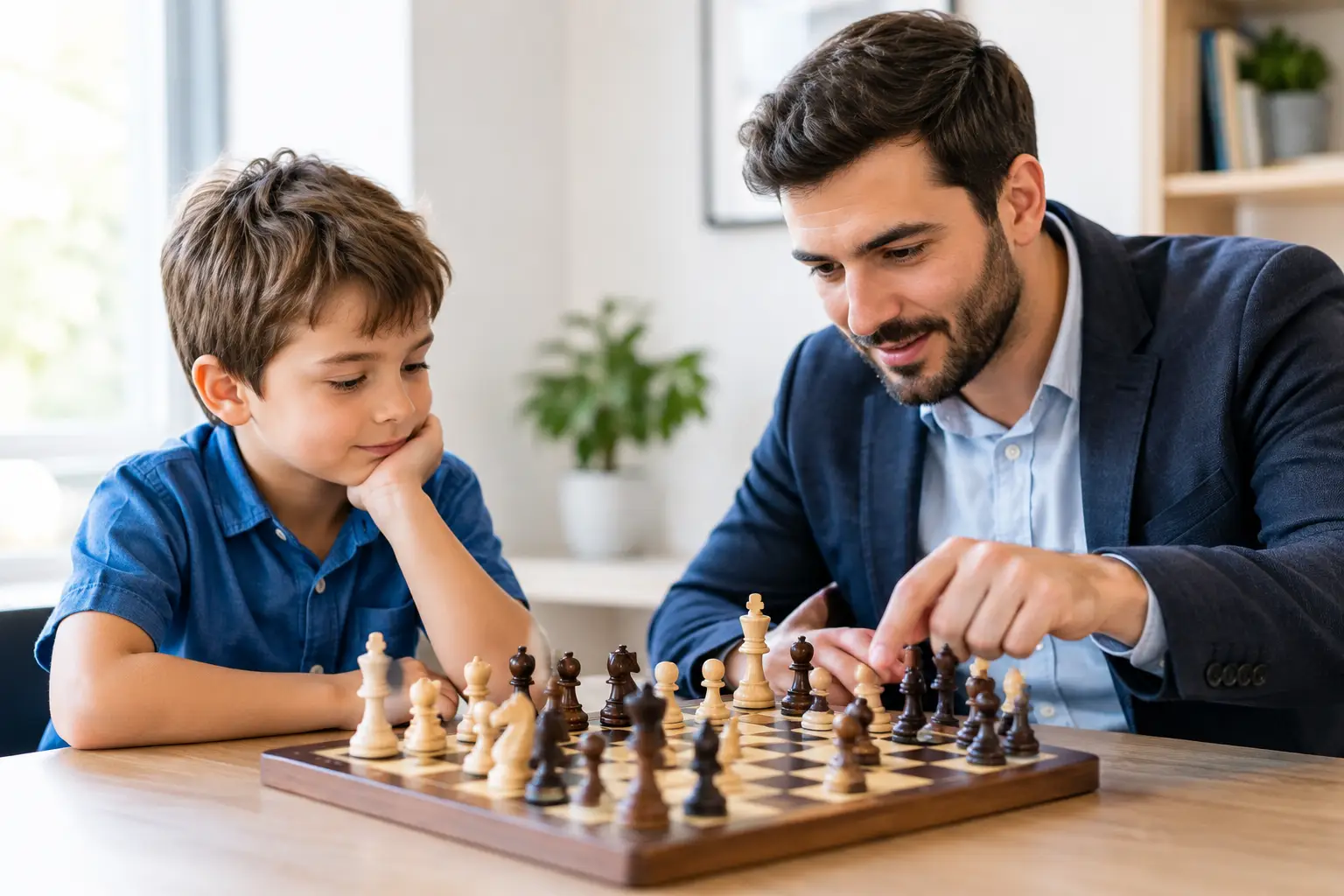
A coach should also explain ideas in language a child can use at the board. Instead of saying only that a move is inaccurate, they might ask: What is your opponent threatening? Which piece is not protected? If you trade here, who benefits? Questions build independent thinking. Giving every answer builds dependence.
Progress should be visible, not vague
Parents do not need to become chess experts to know whether lessons are helping. You should be able to see signs of progress over time: your child checks for threats more often, finishes games with more confidence, recognizes familiar tactical patterns, or can explain a simple plan.
Clear communication makes a big difference. After lessons, a parent should understand what was covered, what the child did well, and what to practice next. For competitive students, the coach should also be able to discuss realistic tournament goals and the skills needed to reach them.
Ratings can be one measure of progress, but they are not the only measure. A rating can rise and fall with tournament results. Better habits, stronger focus, and more confident decision-making are often the foundation that leads to rating gains later.
How to choose a youth chess coach
Credentials matter, particularly for families with tournament goals. A coach with competitive experience understands the pressure of real games and can teach practical habits that puzzles alone cannot provide. Still, chess strength is only part of the equation.
A very strong player is not automatically a strong teacher for children. Look for someone who can adjust their explanations, stay patient when a child repeats a mistake, and make the game enjoyable without lowering expectations.
Before committing to a package, a trial lesson or assessment is useful. It lets the coach see the child’s actual level rather than guessing from age or how long they have played. It also lets your child decide whether the teaching style feels comfortable. For many families, that first session answers questions that a biography or rating never can.
During a trial, pay attention to a few practical details. Does the coach speak directly to your child rather than only to the parent? Do they ask questions and wait for answers? Do they identify a starting point that feels specific? Does your child leave the lesson eager to show what they learned?
At Savushkin Chess, this child-centered assessment is designed to give families straight answers about level, goals, and the best next step, with no payment or commitment required.
The right pace depends on the child
There is no single lesson schedule that works for every young player. A motivated beginner may thrive with a weekly 30-minute session and simple practice between lessons. A child preparing for a tournament may benefit from 45- or 60-minute lessons, more frequent game review, and a focused training plan.
Consistency is usually more valuable than intensity. Chess is pattern recognition. Children need time to see an idea, use it in a game, forget part of it, and return to it with better understanding. Weekly coaching creates that rhythm.
Practice should be manageable. Asking a busy child to complete an hour of chess homework every night can turn a favorite activity into a burden. A better approach might be a handful of puzzles, one short game, and a single lesson idea to remember during play. The amount should fit the child’s age, interest, and schedule.
It also depends on the family’s goal. If chess is mainly an enriching hobby, lessons can prioritize enjoyment, basic strategy, and confidence. If a child wants to compete, coaching should gradually add tournament etiquette, time management, opening principles, calculation, and post-game analysis. Both paths are worthwhile. The key is being honest about which path your child wants right now.
Online coaching can be highly personal
Some parents worry that online chess lessons will feel distant or distracting. That can happen when instruction is poorly organized. In a well-run live lesson, however, the digital board becomes a shared workspace where coach and student can move pieces, mark key squares, solve puzzles, and review games together.
Online learning also removes a common obstacle: travel. Families can schedule lessons around school, sports, and dinner without losing time in the car. For children who are shy at first, learning from home can make it easier to ask questions and take risks.
The format does require the right setup. A quiet place, reliable internet, and a parent nearby for very young children help lessons run smoothly. For students under seven, parents may need to assist with logging in or keeping attention on the board. That support can usually fade as the child becomes more independent.
When tournament coaching becomes useful
Tournament readiness is not about pushing every child into competition. Some children enjoy casual games for years, and that is completely fine. But when a child starts asking to play in events, a coach can make the first experience far less intimidating.
Tournament preparation includes more than stronger moves. Children need to know how to use a clock, record moves when appropriate, respond calmly to a loss, and stay focused after an opponent makes an unexpected move. They should understand that one bad game does not define the day.
A youth chess coach can review tournament games in a constructive way. Rather than focusing only on blunders, the coach can identify a missed opportunity, praise a good decision, and choose one or two priorities for the next event. That approach protects confidence while keeping improvement concrete.
The right coach gives your child something more lasting than a collection of chess tricks: the habit of thinking carefully, trying again, and enjoying the challenge of getting better. When lessons are patient, personal, and purposeful, the next move becomes something your child is excited to find.

Ready to see chess click for your child?
Book a free 20–30 minute trial lesson with one of our coaches — no commitment, no payment needed.