
Why Does My Child Blunder in Chess So Often?
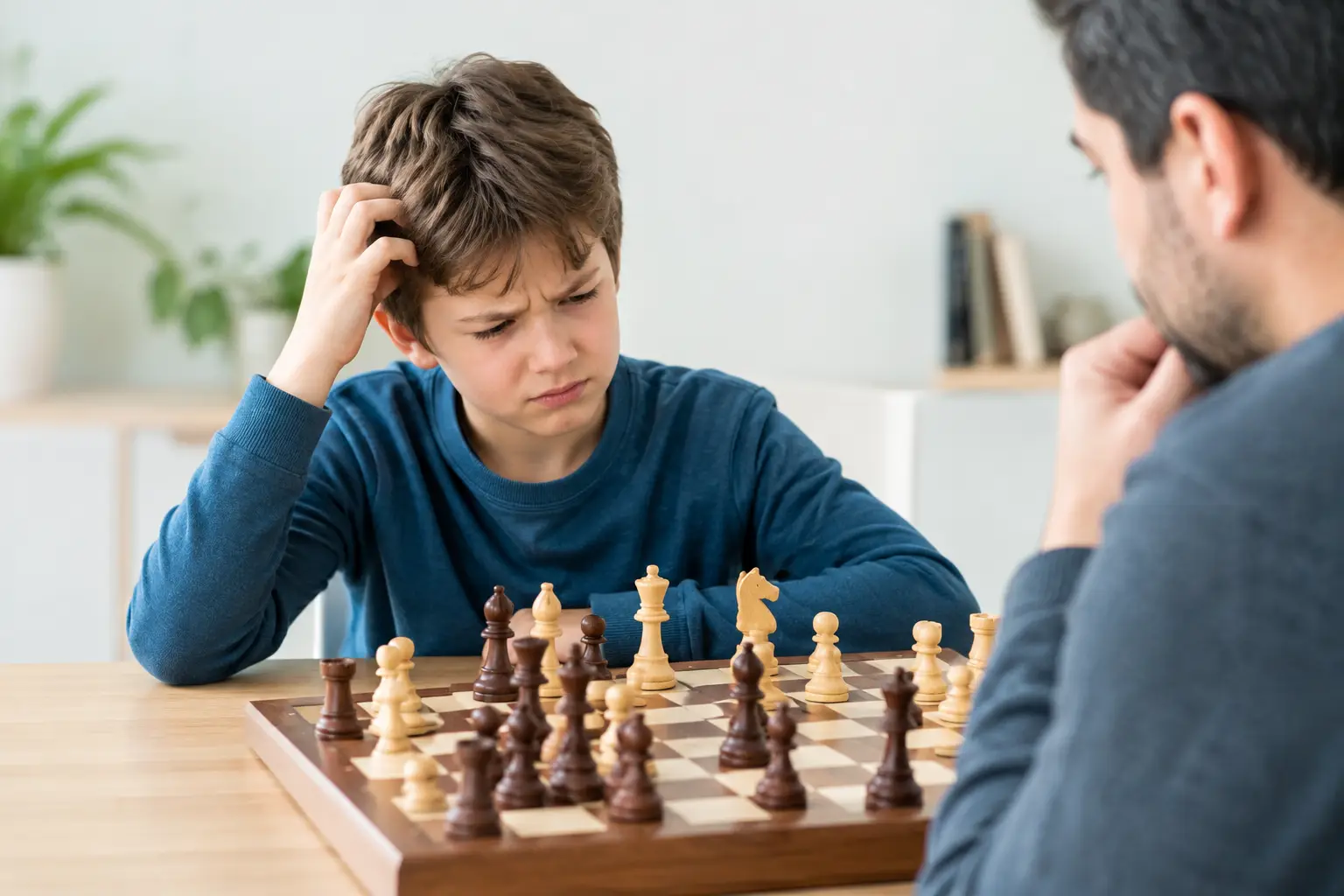
A child sees a queen hanging, captures it instantly, and then realizes their own queen was undefended. The disappointment can be huge, especially when they knew better the moment after they moved. If you have asked, “why does my child blunder in chess?” the reassuring answer is that blunders are usually part of learning, not proof that your child lacks ability.
A blunder is simply a move that loses significant material, misses a direct threat, or allows checkmate. Young players make them for predictable reasons: they are still learning what to notice, how to slow down, and how to manage the excitement of a real game. With the right habits and patient coaching, those mistakes become some of the fastest opportunities for growth.
Why does my child blunder in chess?
Most child blunders are not caused by a lack of chess knowledge. A child may know how every piece moves and still overlook a bishop attacking their queen. Knowing a rule is different from applying it under time pressure, while trying to plan, remember ideas, and handle the emotions of competition.
At beginner level, children often focus on what they want to do. They spot a check, an attack, or a tempting capture and move quickly. What they have not yet built is the pause to ask, “What can my opponent do next?” Chess requires this switch in perspective on every move. It takes repetition before it feels natural.
Young players also tend to scan the board in pieces rather than as a whole. They may look at the center, then at their knight, but fail to notice a long diagonal from the other side of the board. This is especially common online, where the board may feel smaller and the child may be tempted to click before fully looking.
Fatigue matters too. A 30-minute lesson or game can demand serious concentration from a six-year-old, while a tournament game can be mentally demanding even for an experienced teenager. A blunder late in a game may say more about attention and stamina than chess understanding.
The most common reasons children make blunders
They move before they check threats
The classic mistake is making a move based only on an exciting idea. Your child may see that their knight can fork two pieces but miss that the knight is pinned, or capture a pawn without seeing that a rook is waiting behind it.
Before moving, a player needs a simple threat check: Is my king safe? Is any of my piece attacked? What checks, captures, or threats does my opponent have? This process sounds basic, but it is the foundation of careful chess.
They play too fast when the position becomes exciting
Speed can feel like confidence to a child. Sometimes it is. More often, a rushed move is simply an unchecked move. Children may also play fast because they worry about the clock, want to finish quickly, or feel embarrassed after making an earlier mistake.
The goal is not to make every move painfully slow. Some positions are simple and deserve a quick response. The goal is to recognize the moments that require a pause: captures, checks, moves near the king, and any move that places a valuable piece on a new square.
They have not learned piece safety automatically
A beginner may understand that a queen is valuable but still leave it where a pawn can capture it. That is normal. Piece safety becomes automatic only after many examples, puzzles, guided games, and reviews.
Parents sometimes assume a repeated hanging-piece mistake means a child was not listening. More often, the child needs practice that is specific enough to build a new pattern. “Watch your queen” is less useful than showing them how to identify every attacker and defender before a capture.
They miss long-range pieces
Bishops, rooks, and queens cause many early blunders because their attacks travel across multiple squares. A child may see a piece in front of them and forget to look beyond it. When one piece moves, a line can open suddenly, exposing a king, queen, or rook.
Learning to notice open files, ranks, and diagonals takes time. A coach can slow the position down and ask a child to trace each long-range piece’s path. Soon, they begin doing that scan on their own.
They are emotionally reacting to the game
Chess can feel very personal to children. After losing a piece, some players rush to “get it back.” After missing a winning move, they may become frustrated and stop checking the board carefully. Even a child who is calm at home can feel pressure in a tournament or against a sibling.
A blunder in this moment is not only a chess issue. It is also a reset skill. Strong players learn to take a breath, accept the position, and find the best next move instead of trying to repair everything at once.
How to help without making chess feel stressful
The words you use after a blunder can shape whether your child stays curious or becomes afraid to take risks. Try not to lead with, “How did you miss that?” They may already feel upset, and the question can make them more focused on avoiding mistakes than learning from them.
A better response is calm and specific: “Let’s look at what changed after that move,” or “What was your opponent threatening?” This turns the moment into a puzzle rather than a judgment. Let your child explain their thought process first. You may discover that they saw a good idea but skipped one crucial safety check.
Avoid analyzing every move immediately after a tough loss. Younger children, in particular, may need a snack, a break, or a chance to talk about something else before they are ready to learn. Reviewing one key moment is often more valuable than replaying an entire game while emotions are still high.
It also helps to praise the process, not only the result. If your child paused before a difficult move, checked an opponent’s threat, or recovered after losing material, point that out. Those are the habits that reduce blunders over time.
A simple anti-blunder routine for young players
A reliable routine gives children something concrete to do when the board feels complicated. Before every important move, encourage them to use this four-step check:
- Look for checks, captures, and threats from the opponent.
- Check whether their king, queen, rooks, or loose pieces are attacked.
- Ask what the opponent’s best reply would be.
- Look once more at the square where they plan to move.
At first, this routine may make games slower. That is a worthwhile trade-off. Careful play comes before fast play. As a child practices, the questions become quicker and more automatic without losing accuracy.
For very young beginners, simplify the language. “Stop, look, check” can be enough. Ask them to point to the piece they want to move, then identify which opponent pieces could capture it. Keep the practice short and upbeat. Five focused minutes of finding hanging pieces can teach more than a long lecture after a loss.
Practice that actually reduces blunders
Puzzles are useful when they match the problem. A child who repeatedly misses one-move captures needs simple “find the loose piece” exercises, not advanced checkmate puzzles that feel impossible. A child who misses opponent threats needs positions where they must first answer, “What is attacked?” before looking for their own move.
Slow games are also powerful. Give your child permission to take time and talk through a few moves aloud. They can say, “My bishop is attacked, and if I move my knight, the rook will see my queen.” This verbal process helps organize attention. Once the habit is secure, they can practice applying it quietly in regular games.
Reviewing their own games is where improvement becomes personal. Do not label every error a blunder. Choose one or two turning points and ask what they noticed, what they missed, and which question from their routine would have helped. This keeps review constructive and manageable.
A structured coach-led lesson can be especially helpful when mistakes repeat. A good chess coach does more than point out the best move. They identify whether a child is struggling with board vision, tactics, impulsive play, time management, or confidence, then adjust the next lessons accordingly. At Savushkin Chess, that personalized progression helps children build practical habits while keeping the game enjoyable.
When should a parent worry about frequent blunders?
Usually, you should not. Frequent blunders are expected during the learning process, including for children who are talented and enthusiastic. Improvement is rarely a straight line. A child may play carefully one week, then make several quick mistakes after learning a new opening or facing stronger opponents.
Pay attention instead to the pattern. Is your child making the same mistake in nearly every game? Are they rushing because they do not know what to do? Do they become so upset that they no longer enjoy playing? These are useful signals that they need a simpler routine, better-matched practice, or supportive instruction.
The best sign of progress is not a perfect game. It is the moment your child catches a threat they would have missed last month, pauses before grabbing a pawn, or calmly keeps playing after an error. Give those small wins room to matter. Every careful move is building the focus, patience, and confidence that stronger chess requires.

Ready to see chess click for your child?
Book a free 20–30 minute trial lesson with one of our coaches — no commitment, no payment needed.


