
Zoom Chess Classes for Kids That Build Real Skills
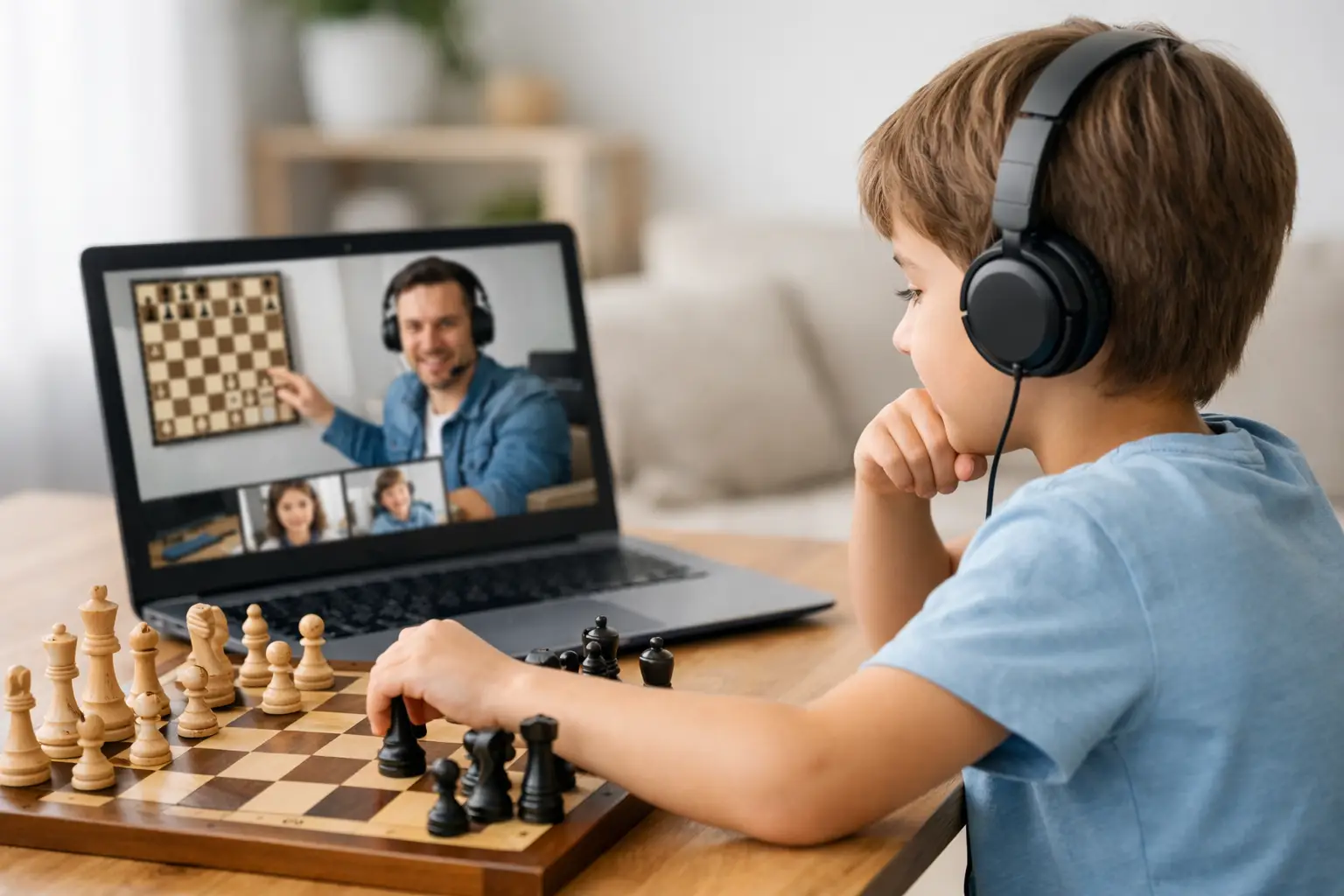
A child spots a clever checkmate on the screen, sits up a little taller, and cannot wait to show a parent what happened. That moment is one reason zoom chess classes for kids can be far more than screen time. With the right coach and structure, online lessons turn a familiar game into a steady practice in focus, confidence, and thoughtful decision-making.
For busy families, the format also solves a practical problem. There is no commute, no rushing across town after school, and no need to fit a child into a one-size-fits-all club session. But convenience alone does not create progress. A strong online chess program gives children personal attention, clear next steps, and enough real play to make every new idea stick.
What Makes Zoom Chess Classes for Kids Work?
Chess is naturally suited to online teaching when lessons are live and coach-led. A coach can share a board, move pieces in real time, ask a child to explain a choice, and instantly adjust the lesson when something is unclear. The child is not just watching a video or clicking through puzzles. They are thinking aloud, responding, and learning from feedback.
That interaction matters, especially for beginners. A young child may know how the pieces move but still miss why a rook should not be left unprotected. An experienced coach can catch that gap quickly, return to a simple position, and make the idea feel manageable. In a large group, that moment may pass unnoticed. In a personalized lesson, it becomes the lesson.
Online learning also makes it easier to keep the board visible. Children can see the position clearly, follow variations one move at a time, and use arrows or highlights when appropriate. For visual learners, this can be more helpful than trying to see across a crowded physical board.
Still, the screen is not magic. The quality of the lesson depends on the coach, the plan, and the child’s engagement. A 60-minute class may be a great fit for a tournament-focused teenager but too long for a first-time six-year-old. Good programs match lesson length and pace to the student, rather than asking every child to learn the same way.
A Good Lesson Has Structure, Not Just Puzzles
Children enjoy chess most when they can feel themselves improving. That requires a sequence. Random puzzles may be entertaining, but they do not always build the foundation needed for real games.
For a complete beginner, the first goals are straightforward: learn the board, understand how each piece moves, recognize check and checkmate, and practice basic opening habits. The child should begin playing short, supported games early. Waiting until every rule is perfect can make chess feel like homework.
Once those basics are comfortable, lessons can move into the habits that separate casual play from purposeful play. A child learns to look for checks, captures, and threats before moving. They begin to notice loose pieces, protect their king, develop pieces efficiently, and avoid giving away material in one move.
As a player grows, the work becomes more individualized. One student may need help slowing down and checking every move. Another may understand tactics but struggle in endgames. A third may be ready for tournament preparation, including time management, notation, opening principles, post-game analysis, and handling a tough loss with composure.
At Savushkin Chess, this progression is built around live coaching and an individual learning plan, so children have a clear path from first moves to confident real-game play. Parents should be able to understand that path too. Clear communication about what a child is learning and what comes next helps families see more than a weekly activity. They see growth.
The Skills Parents Often Notice First
Parents may sign up for chess because their child enjoys the game. Over time, they often notice benefits that reach beyond the board.
Chess gives children a reason to pause before acting. That habit can be especially valuable for kids who tend to rush, whether in games, schoolwork, or everyday decisions. They learn that a fast move is not always a strong move, and that taking a few seconds to look carefully can change the result.
The game also gives feedback without much ambiguity. If a piece is left unprotected, the opponent may capture it. If a player spots a tactic, they see the reward immediately. This helps children connect choices with outcomes while learning that mistakes are information, not a reason to quit.
Confidence grows in small, believable steps: recognizing a pattern, winning a pawn, surviving a difficult position, or explaining a plan to a coach. For children who are hesitant about competitive activities, chess offers a useful balance. It is challenging, but improvement is visible and personal.
Of course, chess is not a shortcut to perfect concentration or instant academic results. Children still need rest, encouragement, and time to develop. What well-taught chess does offer is a regular, enjoyable place to practice patience, planning, resilience, and independent thinking.
How to Choose an Online Chess Coach for Your Child
Before committing to a package, look beyond a coach’s rating or tournament record. Strong playing experience matters, but teaching young children is its own skill. The right coach knows how to explain an idea simply, keep the lesson moving, celebrate effort, and challenge a child without making them feel overwhelmed.
A trial assessment is one of the most useful ways to evaluate fit. It lets the coach see what your child already knows, even if they are a complete beginner. It also lets you observe the tone of the lesson. Does your child answer questions? Do they seem comfortable making mistakes? Does the coach have a plan, or are they filling time?
Pay attention to how specific the feedback is. “Your child did great” is encouraging, but it is not enough by itself. Helpful feedback might explain that your child understands piece movement, needs practice with king safety, and is ready to begin simple tactical patterns. That gives parents straight answers and a realistic picture of progress.
Scheduling and lesson length deserve attention as well. Shorter sessions can work beautifully for younger learners or children with packed afternoons. Older students may benefit from more time for game analysis and advanced strategy. Consistency is usually more valuable than cramming. A focused weekly lesson, paired with small amounts of practice, can create meaningful momentum.
Help Your Child Get More From Each Lesson
Parents do not need to know chess to support a child’s progress. The best support is usually calm, practical, and low-pressure.
Set up a quiet space with a reliable device and a place for your child to sit comfortably. Encourage them to join a few minutes early, have water nearby, and use headphones if household noise is a distraction. Those small details help a child arrive ready to think.
After class, ask a simple question rather than turning the lesson into a test. “What was the coolest position today?” or “What will you look for before your next move?” often leads to a better conversation than “Did you win?” A child who can explain one idea has started to own it.
If the coach recommends practice, keep it manageable. Ten focused minutes of puzzles, a short game, or reviewing one mistake can be enough. Too much pressure can drain the fun, while no practice at all makes it harder for new patterns to stay familiar. The right balance depends on your child’s age, goals, and interest level.
For children who want to compete, online classes can become a bridge to tournaments rather than a replacement for them. Coaching can prepare them for the practical side of competition: using a clock, recovering after a blunder, respecting opponents, and reviewing games with curiosity instead of frustration.
When Online Chess Is the Right Fit
Zoom lessons are especially helpful for families who want expert instruction without adding another commute to the week. They can be an excellent fit for a shy beginner who benefits from one-on-one attention, a motivated player ready for structured advancement, or a child whose local options are limited.
They may be less ideal if a child is not ready to engage with a coach on screen at all. In that case, a shorter lesson, a more interactive teaching style, or a little time playing casual games at home may be the better starting point. There is no prize for forcing the format too early.
The goal is not to create a grandmaster overnight. It is to give your child a place where effort turns into visible progress, mistakes become teachable moments, and every thoughtful move feels like something they earned.

Ready to see chess click for your child?
Book a free 20–30 minute trial lesson with one of our coaches — no commitment, no payment needed.


